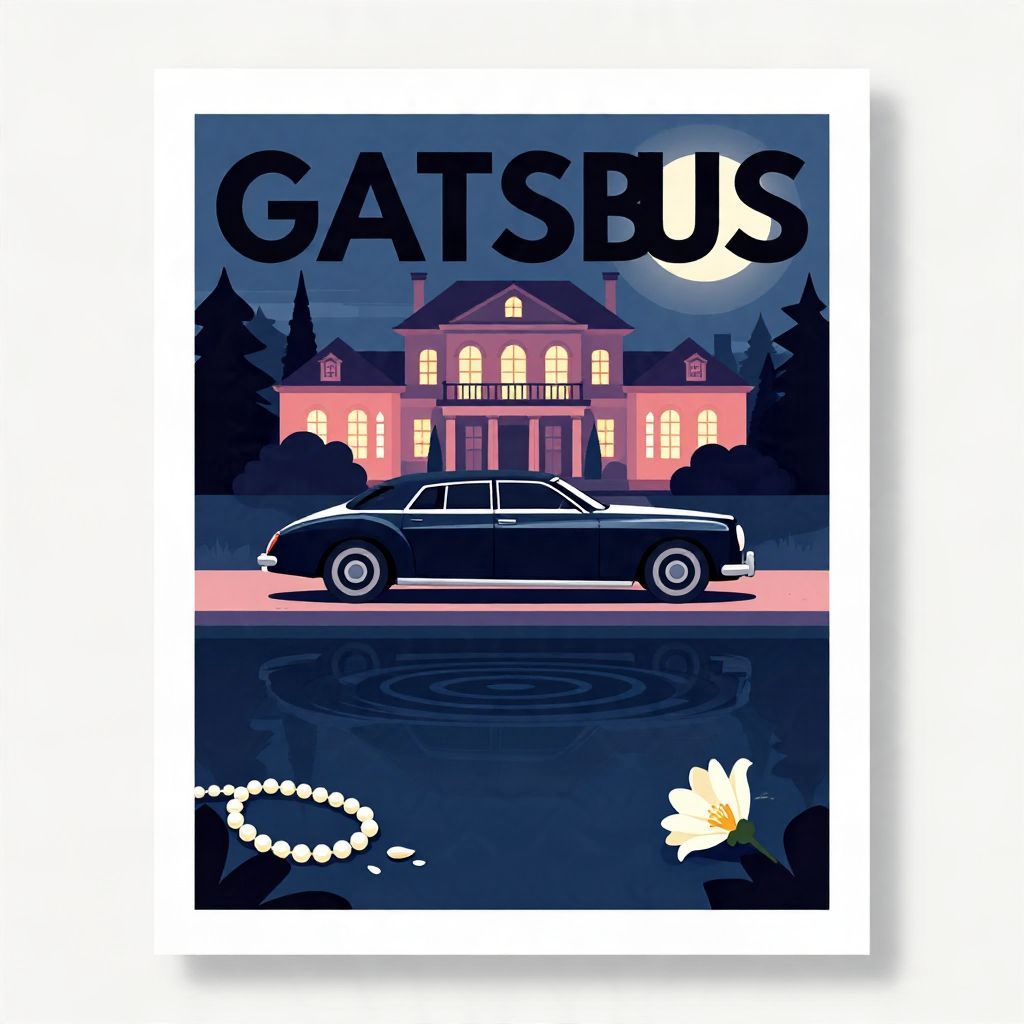
If you’re asking how Gatsby dies, the answer is one of the most famous and tragic moments in American literature. In F. Scott Fitzgerald’s The Great Gatsby, Jay Gatsby is shot and killed at the end of the novel after being mistaken for the person responsible for Myrtle Wilson’s death.
His death is not just a plot event; it completes Fitzgerald’s critique of wealth, illusion, and the fragility of the American Dream.
How does Gatsby die in The Great Gatsby?
Gatsby dies when George Wilson shoots him at Gatsby’s mansion pool, then kills himself. Wilson believes Gatsby was driving the car that struck Myrtle Wilson, though the real driver was Daisy Buchanan. Gatsby’s death is the novel’s final tragedy, exposing how carelessness, class privilege, and misdirected blame destroy lives.
What leads to Gatsby’s death?
The death is the result of a chain of misunderstandings and moral evasions. After Myrtle is killed, Gatsby protects Daisy by taking responsibility for the accident, which leaves him vulnerable to George Wilson’s grief and rage.
The car accident and the cover-up
Earlier in the novel, Daisy is driving Gatsby’s car when it strikes Myrtle Wilson. Gatsby chooses to shield Daisy, even though he knows the truth. That decision reflects both his devotion to Daisy and his willingness to sacrifice himself for the dream he has built around her.
George Wilson’s mistaken revenge
George, devastated by Myrtle’s death, is manipulated by the evidence he sees and by his own desperation. He tracks the car to Gatsby and then shoots him before turning the gun on himself. Fitzgerald makes the killing feel sudden, but it is carefully prepared by the novel’s themes of illusion, guilt, and social irresponsibility.
Why Gatsby’s death matters
Gatsby’s death is central to the meaning of the novel. It shows that his glamorous life is built on unstable foundations: reinvention, secrecy, longing, and a romantic fantasy that cannot survive reality.
The collapse of the American Dream
Gatsby is often read as a self-made dreamer, but Fitzgerald complicates that image. Gatsby’s rise suggests possibility, yet his end reveals how wealth alone cannot purchase love, moral security, or belonging.
Love as illusion
Gatsby dies while still emotionally attached to Daisy, even though she has already chosen the safety of her own world. His death underscores the novel’s painful idea that Gatsby is in love not only with Daisy, but with the past he believes she can restore.
Class and abandonment
One of the bleakest aspects of the ending is that Gatsby is left almost entirely alone. The people drawn to his parties disappear, and the Buchanans retreat into privilege. Fitzgerald uses this isolation to show how shallow many of Gatsby’s social connections really are.
Book summary: the ending in context
The Great Gatsby follows Nick Carraway as he becomes drawn into the world of Jay Gatsby, a wealthy and mysterious man who throws lavish parties in hopes of reconnecting with Daisy Buchanan. As the novel unfolds, Nick learns that Gatsby’s wealth, identity, and social performance are all tied to his dream of recovering the past.
By the final chapters, that dream has collapsed. The confrontation between Gatsby, Daisy, Tom Buchanan, and the Wilsons leads to Myrtle’s death, Gatsby’s murder, and the novel’s quiet aftermath, in which Nick reflects on the emotional and moral emptiness left behind.
Main characters connected to Gatsby’s death
- Jay Gatsby — the novel’s central figure, whose dream of Daisy and reinvention ends in tragedy.
- Daisy Buchanan — Gatsby’s love interest, whose choices and silence help set the final events in motion.
- George Wilson — Myrtle’s husband, driven to revenge by grief and confusion.
- Myrtle Wilson — her death triggers the final chain of events.
- Nick Carraway — the narrator, whose perspective frames Gatsby’s life and death as a moral lesson.
Themes revealed by Gatsby’s death
Illusion versus reality
Gatsby’s end exposes the gap between the life he imagines and the world as it actually is. He has built himself into a figure of possibility, but the novel insists that fantasy cannot permanently override fact.
Responsibility and moral carelessness
Fitzgerald repeatedly shows characters avoiding consequences. Daisy retreats, Tom deflects blame, and Gatsby takes responsibility for someone else’s crime. The tragedy is not only that Gatsby dies, but that the people with the most power remain protected.
Time and the impossibility of return
Gatsby’s death confirms one of the novel’s deepest ideas: the past cannot be perfectly recovered. His longing to repeat an earlier moment with Daisy is emotionally powerful, but it is also doomed.
Symbols and literary techniques in the final chapters
The green light
The green light has often been read as a symbol of desire, hope, and distance. By the time Gatsby dies, that hope has become tragically unreachable, making the symbol feel less like promise and more like illusion.
The pool
Gatsby’s death in the pool is especially significant because water in the novel often suggests both beauty and danger. The setting is calm and reflective, which makes the violence feel even more abrupt and ironic.
Nick’s retrospective narration
Because Nick tells the story after the fact, Gatsby’s death is filtered through memory and reflection. This technique gives the ending a mournful tone and allows Fitzgerald to connect personal tragedy to broader social criticism.
How to read Gatsby’s death: common interpretations
Readers often see Gatsby’s death in more than one way. Some view it as the final punishment for living inside an illusion; others see it as a deeply unfair death that reveals how little justice exists in the novel’s world.
Both readings can be true at once. Gatsby is naïve about Daisy and the past, but Fitzgerald also presents him as more hopeful, vulnerable, and emotionally sincere than the people who survive him.
Review: why the ending still resonates
The ending of The Great Gatsby remains powerful because it is both intimate and symbolic. Gatsby’s death is a personal loss, but it also feels like the death of a dream America keeps trying to revive: reinvention without moral reckoning, desire without truth, and success without consequence.
Fitzgerald’s prose in the final chapters is restrained rather than melodramatic, which makes the tragedy more lasting. Instead of offering closure, the novel leaves readers with emptiness, regret, and the sense that the most glittering surfaces can hide profound loneliness.
Quick takeaway
Gatsby dies because George Wilson mistakes him for Myrtle’s killer, but Fitzgerald uses that event to show much more than a murder. Gatsby’s death closes the novel’s exploration of love, class, illusion, and the failure of the American Dream.
If you want to go deeper into the ending itself, you may also find how The Great Gatsby ends and this related guide on how Gatsby dies helpful for a closer reading of the final chapters.