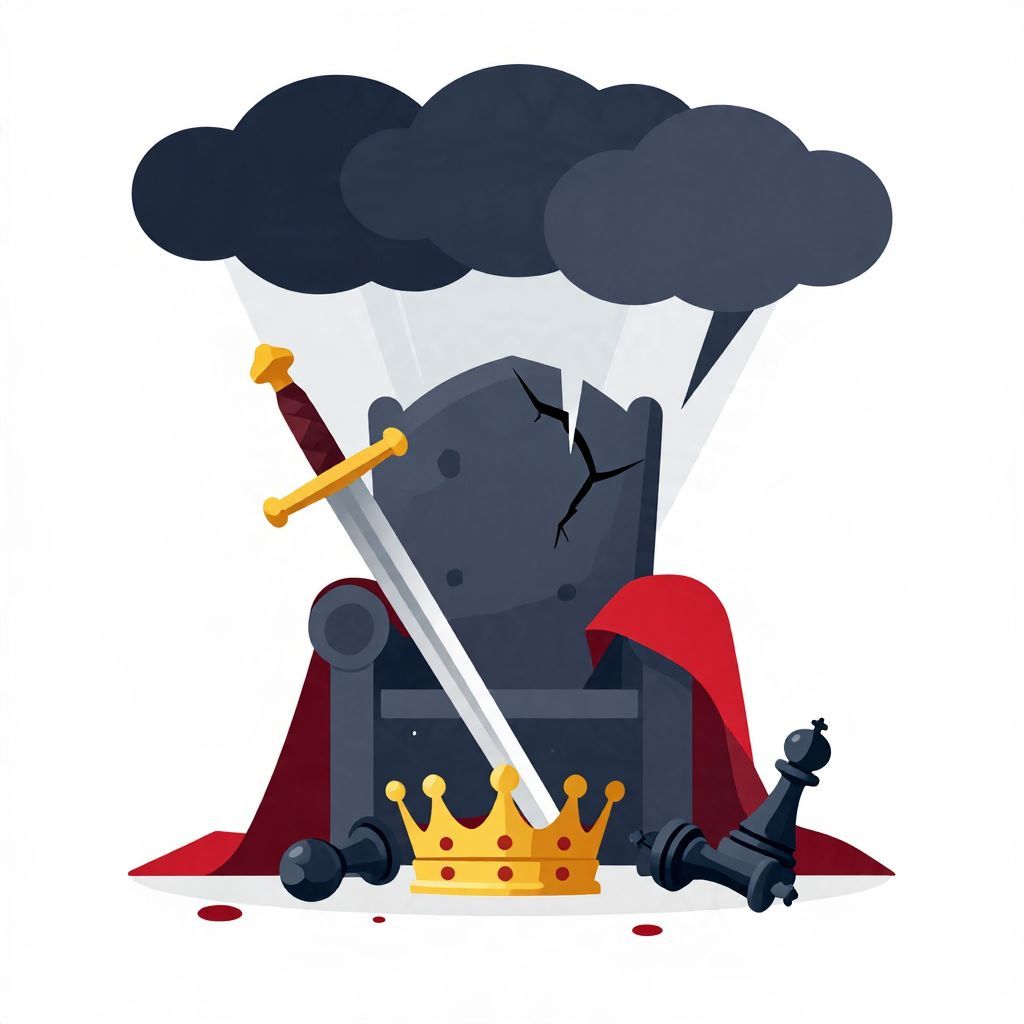
If you’re asking how Macbeth dies, the short answer is that he is killed in single combat by Macduff near the end of Shakespeare’s tragedy. The moment is the play’s final reversal: Macbeth, who has relied on prophecy and violence to secure power, is defeated by the man he thought could not harm him.
That ending is famous not only for the death itself, but for the way Shakespeare uses it to expose the limits of ambition, interpretation, and false security. Macbeth remains one of the most studied tragedies in English literature because its final scenes bring together prophecy, guilt, tyranny, and moral reckoning.
How does Macbeth die in Shakespeare’s play?
Macbeth dies in battle when Macduff kills him and brings his head to Malcolm. Macbeth initially believes he cannot be harmed by “any man of woman born,” but Macduff reveals that he was “from his mother’s womb untimely ripped,” meaning he was delivered by caesarean section. Shakespeare uses this twist to fulfill the witches’ prophecy while overturning Macbeth’s confidence.
What leads to Macbeth’s death?
Macbeth’s death is the end result of a chain reaction set in motion by ambition, murder, and paranoia. After hearing the witches’ prophecy, he murders King Duncan, then continues killing to protect his throne, including Banquo and Macduff’s family.
The rise of a tyrant
At first, Macbeth is a celebrated warrior. Once he chooses murder as a path to power, however, he becomes increasingly isolated and suspicious, ruling through fear rather than loyalty.
The collapse of his moral world
Each crime makes the next one easier, but also more desperate. By the final act, Macbeth is no longer a heroic figure in control of events; he is a ruler trapped by his own choices and by the consequences of his violence.
Spoiler context: the final battle and Macbeth’s last moments
In the play’s closing movement, Scottish nobles turn against Macbeth and join Malcolm’s forces. As Macbeth’s support disappears, he clings to the witches’ promises, especially the idea that no man born of woman can defeat him.
Why Macbeth thinks he is safe
The witches’ prophecies are technically true but deliberately misleading. Macbeth misreads them as guarantees, which is one of the tragedy’s central ironies: he trusts language that is designed to be ambiguous.
Macduff’s revelation
When Macbeth and Macduff meet in combat, Macduff explains that he was not “born” in the ordinary sense. This revelation breaks Macbeth’s last defense and turns the prophecy against him.
The death itself
Macduff kills Macbeth offstage in the sense that the decisive blow happens in combat, and the play then reports the result. Macbeth’s head is carried onstage, symbolizing the end of his reign and the restoration of political order.
Why Macbeth’s death matters thematically
Macbeth’s death is more than a plot ending. It resolves the play’s central concerns about ambition, kingship, guilt, and the danger of trusting appearances.
Ambition without restraint
Macbeth begins with a desire for greatness, but he mistakes power for fulfillment. His death shows that ambition pursued through murder destroys the very stability it seeks to create.
Appearance versus reality
Shakespeare repeatedly warns that things are not what they seem. The witches speak in riddles, Macbeth misreads prophecy, and even his confidence in battle is based on a false understanding of language.
Justice and restoration
While the play is dark, Macbeth’s death also signals a return to legitimate rule under Malcolm. In tragic terms, order is restored, but only after enormous suffering.
Macbeth as a tragic character
Macbeth is compelling because he is not simply evil from the start. He is a brave soldier whose imagination, insecurity, and moral weakness make him vulnerable to temptation.
His inner conflict
Before Duncan’s murder, Macbeth knows the act is wrong. That awareness makes him a tragic figure: he understands the moral cost, yet still chooses the path that leads to ruin.
His final state
By the end, Macbeth is hardened but also emptied out. He speaks with grim resignation, and his death feels less like a sudden punishment than the inevitable conclusion of a life built on betrayal.
Key characters connected to Macbeth’s death
- Macduff — the avenger who kills Macbeth and restores the moral balance of the play.
- Malcolm — Duncan’s son and rightful heir, whose return marks political renewal.
- The witches — supernatural figures whose prophecies shape Macbeth’s choices without forcing them.
- Lady Macbeth — Macbeth’s partner in ambition, whose earlier collapse mirrors the psychological cost of their crimes.
Symbols and motifs around the ending
Shakespeare reinforces Macbeth’s fall through recurring images that culminate in the final act.
Blood
Blood represents guilt, violence, and the impossibility of washing away wrongdoing. By the time Macbeth dies, blood has become the play’s dominant sign of moral corruption.
Sleep
Sleep is associated with peace and innocence, both of which Macbeth and Lady Macbeth lose after Duncan’s murder. Their inability to rest reflects the psychological damage caused by guilt.
Armor and battle
Macbeth’s armor suggests outward strength, but it cannot protect him from the consequences of his actions. The battlefield becomes the place where his false security is finally exposed.
Literary techniques Shakespeare uses in Macbeth’s death scene
Shakespeare makes the ending memorable through dramatic irony, prophecy, and sharp contrast between expectation and outcome.
Dramatic irony
The audience understands that the witches’ words are slippery long before Macbeth does. That gap between audience knowledge and Macbeth’s belief creates tension throughout the final act.
Prophecy and equivocation
The play’s language often works by double meaning. “None of woman born” and the forest moving toward Dunsinane are examples of equivocation, where words are true but not in the way Macbeth assumes.
Tragic structure
Macbeth’s death completes the arc of a classical tragedy: a high-status figure falls because of a fatal flaw, and the ending brings both catastrophe and moral clarification.
What readers often ask about Macbeth’s death
Does Macbeth die onstage?
His death occurs in combat, and the play then immediately presents the result. Shakespeare focuses less on graphic detail than on the symbolic and political meaning of the moment.
Is Macbeth’s death deserved?
From the play’s moral perspective, yes: Macbeth has committed murder after murder to seize and keep power. At the same time, Shakespeare preserves a tragic complexity that keeps him from becoming a simple villain.
Why does Shakespeare end the play this way?
The ending resolves the prophecy, removes the tyrant, and restores rightful rule. It also leaves readers with the unsettling sense that language, ambition, and belief can be dangerously easy to misread.
Book summary and review in brief
Macbeth is a fast-moving tragedy about a nobleman who becomes king through murder and then loses everything. Its power comes from the speed of Macbeth’s moral collapse, the eerie atmosphere of the witches, and the psychological intensity of the central couple.
As a reading experience, the play is both accessible and layered. Beginners can follow the plot as a suspenseful rise-and-fall story, while more advanced readers can explore its treatment of fate, free will, masculinity, kingship, and conscience.
Why Macbeth still matters
Macbeth’s death continues to resonate because it dramatizes a timeless warning: power gained without justice is unstable, and self-deception can be fatal. The play is not only about one man’s end, but about the cost of choosing ambition over conscience.
If you want to explore related questions, you may also enjoy how Lady Macbeth dies and how Macbeth dies for a closer look at the tragedy’s final consequences.