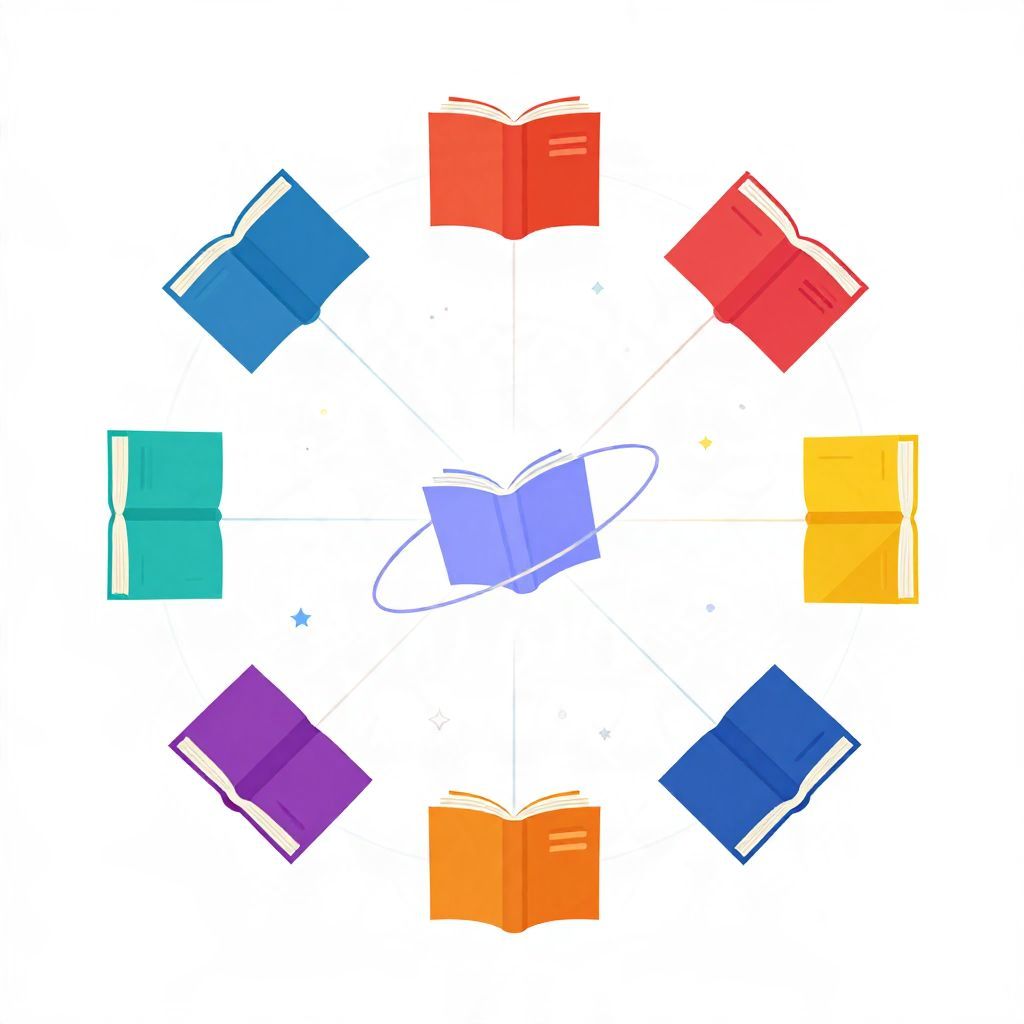
If you’ve ever wondered whether the Sarah J. Maas books are connected, the short answer is yes—but not all in the same way. Her major series are best understood as separate storylines that gradually reveal a larger shared universe, especially through recurring worldbuilding details, characters, and cross-series references.
That connection is part of what makes her fiction so addictive for fantasy readers. You can read each series on its own, but the experience changes if you notice how the books echo, overlap, and sometimes reframe one another.
Are the Sarah J. Maas books connected?
Yes, many of Sarah J. Maas’s books are connected through a shared fantasy universe, but they are not all one continuous plot. The strongest links appear between Throne of Glass, A Court of Thorns and Roses, and House of Earth and Blood, which share thematic and worldbuilding connections. Some series can be read independently, but the connections become clearer as you read more of her work.
Which Sarah J. Maas series are connected?
Sarah J. Maas has written multiple fantasy series, and readers often group them by how directly they relate to one another. The most important thing to know is that some books are standalone within their own arc, while others sit inside a wider cosmology.
The main series to know
- Throne of Glass — an epic fantasy series centered on assassin Celaena Sardothien and a sprawling political and magical conflict.
- A Court of Thorns and Roses — a romantasy series that begins with a Beauty and the Beast-inspired setup and expands into a larger fae-centered world.
- Crescent City — a more urban fantasy series beginning with House of Earth and Blood, set in a different-feeling world but tied to the broader Maas multiverse.
These series are not simply repeated versions of the same story. They differ in tone, structure, and genre emphasis, but readers have identified meaningful links across them, especially as the later books develop.
What about the earlier books?
Maas also wrote the Catwoman novel Catwoman: Soulstealer, which is separate from her main fantasy universe. It is best treated as its own project rather than part of the interconnected series structure readers usually mean when they ask this question.
How the connections work
The connections between Sarah J. Maas’s books are layered rather than obvious. Some are direct, while others are more like shared mythology, repeated symbols, or subtle references that reward close reading.
1. Shared worldbuilding elements
One of the clearest signs that the books are connected is the way Maas builds a larger cosmology around magic, ancient powers, and parallel realms. Different series may begin in distinct settings, but they increasingly suggest that those settings belong to a wider whole.
This is especially important in Crescent City, where the structure of the world encourages readers to think beyond a single setting. By the time the series reaches later installments, the connections are difficult to miss.
2. Recurring motifs and symbols
Across Maas’s fiction, readers often encounter repeated ideas: stars, fire, bargains, courts, gates, fate, and the tension between power and sacrifice. These are not random decorations. They help create a recognizable literary signature and make the books feel thematically linked even when the casts differ.
3. Cross-series references
Some of the strongest links are explicit references to people, places, or concepts that appear to connect separate series. These moments are part of why fans debate reading order so intensely. They can change how earlier scenes are interpreted once a reader reaches later books.
Because these references can function as revelations, many readers prefer to experience the books in publication order rather than trying to rearrange them by internal chronology.
Do you need to read Sarah J. Maas books in order?
Not every Sarah J. Maas book must be read in a strict order, but reading by series and then by publication order gives the clearest experience. Each main series has its own central arc, so you do not need to finish one series to begin another. Still, publication order is the safest way to preserve major reveals and cross-series surprises.
Recommended reading approach
- Read each series in its own internal order.
- If you care about crossover reveals, follow publication order across the major series.
- Save discussion-heavy deep dives until after you finish the relevant books, especially for Crescent City.
This approach works well because Maas writes with long-term payoff in mind. Even when a book can stand alone, later installments may reinterpret earlier details.
Why readers think the books are connected
Part of the appeal of Sarah J. Maas’s fiction is that it invites pattern recognition. Readers notice repeated terminology, similar magical structures, and emotional arcs that seem to rhyme across different series.
The shared emotional architecture
Even when the plots differ, Maas often writes about similar emotional struggles: trauma, chosen family, identity, loyalty, and the cost of power. That consistency makes the books feel connected on a deeper level than simple cameo appearances.
The multiverse effect
Later books encourage readers to think in terms of multiple worlds or overlapping realities. That does not mean every series was originally designed as one single story from page one, but it does mean the books increasingly behave like parts of a larger narrative system.
For many readers, that is the real answer to “Are the Sarah J. Maas books connected?” They are connected not just by references, but by an expanding sense of shared stakes.
How the series differ from one another
Knowing the books are connected is only part of the picture. It also helps to understand how each series stands apart, because the reading experience changes depending on which one you start with.
Throne of Glass
This series leans into epic fantasy, court intrigue, prophecy, and a broad cast of characters. It begins with a more assassin-centered premise and grows into a much larger story about power, history, and resistance.
A Court of Thorns and Roses
This series is more romance-forward and atmospheric, especially at the start, though it expands into war, political conflict, and mythic stakes. It is often the series readers associate most strongly with Maas’s romantasy style.
Crescent City
This is the most contemporary-feeling of the three in terms of setting, even though it remains firmly fantasy. It blends investigation, urban life, and supernatural politics, and its later books are especially important for understanding the larger connected framework.
What order should new readers choose?
If you are new to Sarah J. Maas, the “best” order depends on what you want most: emotional clarity, publication context, or crossover surprises. There is no single perfect route for every reader.
- For the simplest experience: read one series at a time, starting with the one that most interests you.
- For the fullest context: follow publication order across the major series.
- For avoiding spoilers: do not jump ahead in Crescent City if you want the connections to unfold naturally.
If you enjoy discovering hidden links, publication order is usually the most satisfying choice. If you mainly want to enjoy one story at a time, series order is perfectly fine.
Why the connection matters to readers
The connected structure is more than a fandom puzzle. It shapes how readers interpret character growth, worldbuilding, and emotional payoff. A detail that seems small in one book may become meaningful later, which gives rereads a layered quality.
That is one reason Maas’s books inspire so much discussion. They reward attention, and they make readers feel as though each series is both complete and part of something larger.
Bottom line
Yes, Sarah J. Maas’s books are connected, but the connection is gradual and layered rather than one single straight storyline. You can read the series separately, yet the strongest reading experience often comes from noticing how the books build toward a shared universe through recurring themes, symbols, and cross-series links.
If you want to explore the topic further, you may also like how Sarah J. Maas books connect and whether Sarah J. Maas books are connected.