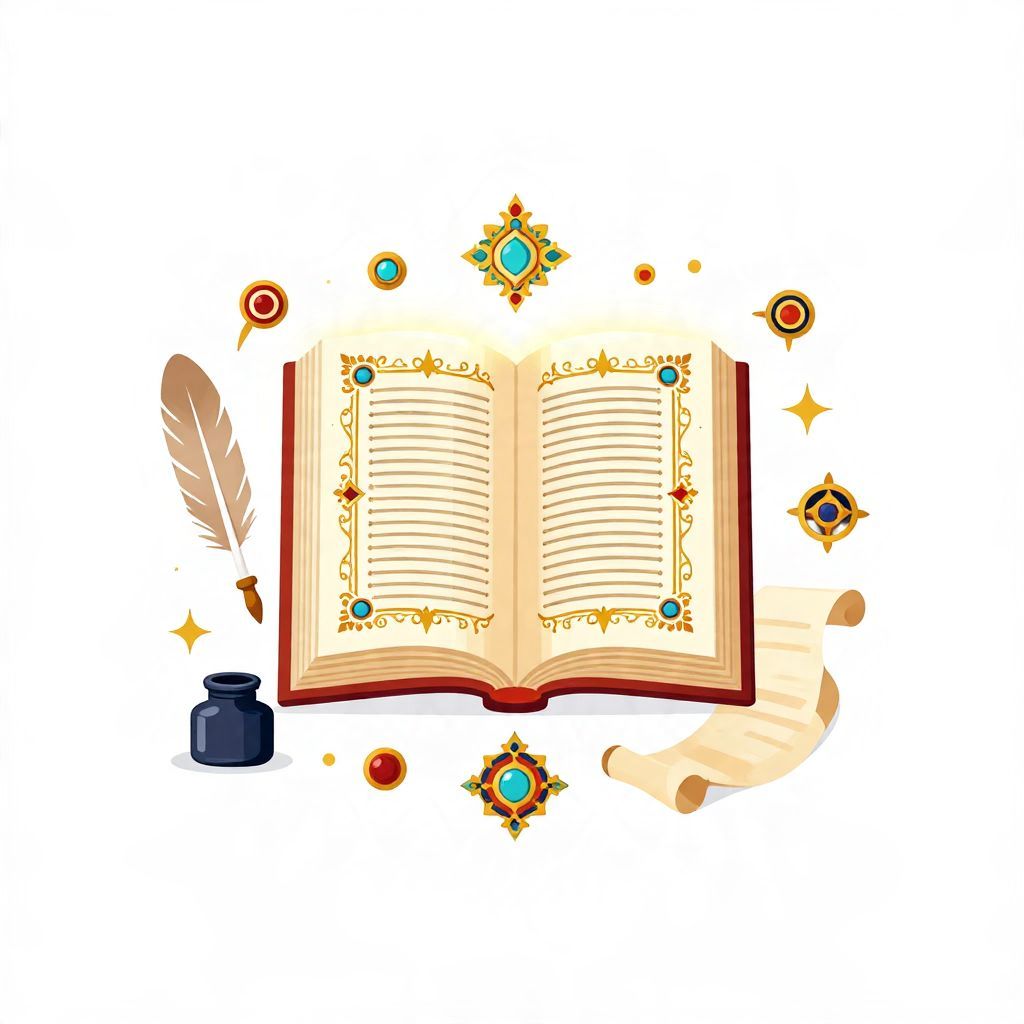
If you’ve ever seen a medieval page glowing with gold leaf, vivid initials, and tiny painted scenes, you’ve already encountered the world of illuminated manuscripts. These works are not just old books; they are handcrafted objects in which text and image were designed to work together.
So what is an illuminated manuscript, exactly? The term refers to a handwritten book decorated with gold, silver, or bright pigments, especially in the Middle Ages. Illuminated manuscripts were used for religious, literary, legal, and scholarly texts, and their visual richness made them both practical books and works of art.
What is an illuminated manuscript?
An illuminated manuscript is a handwritten book enhanced with decorative elements such as gilded initials, borders, miniature illustrations, and ornamental designs. The word illuminated originally suggests the shimmering effect of gold and bright color, though it now broadly refers to any richly decorated manuscript.
How were illuminated manuscripts made?
Illuminated manuscripts were created before printing presses made books easier to reproduce. Scribes copied the text by hand, often on parchment or vellum, and artists added decoration afterward. In many cases, different specialists handled the writing, illustration, and gilding.
Materials and techniques
- Parchment or vellum: animal skin prepared for writing.
- Ink: used for the main text, often in brown or black.
- Gold leaf: applied to catch the light and create a luminous effect.
- Painted pigments: bright colors used in initials, borders, and illustrations.
- Decorative initials: enlarged letters that often introduced chapters or important passages.
The process was slow and expensive, which is one reason illuminated manuscripts were often commissioned by wealthy patrons, monasteries, churches, or royal courts. Their beauty reflected not only devotion or learning, but also status and power.
Why were illuminated manuscripts important?
Illuminated manuscripts mattered because they preserved knowledge before mass printing and turned reading into a visual experience. They were central to medieval religious life, scholarship, and court culture, and they remain vital evidence for the history of art, literacy, and bookmaking.
Religious and cultural significance
Many surviving illuminated manuscripts are Christian devotional works, such as psalters, gospel books, and prayer books. Their imagery helped readers meditate on sacred stories, while their craftsmanship signaled reverence for the text.
But illuminated manuscripts were not limited to religion. Some contained poetry, histories, scientific writing, law, or romances, showing that decoration could accompany many kinds of literature.
What makes a manuscript “illuminated” rather than simply illustrated?
All illuminated manuscripts may include illustration, but not every illustrated manuscript is considered illuminated. The key distinction is the presence of decorative enhancement—especially gold or elaborate ornamental work—that transforms the page into a visually radiant object.
In practice, the categories can overlap. A manuscript with no gold but with dense decorative initials and border painting may still be discussed as illuminated, especially in broader art-historical usage.
Literary examples of illuminated manuscripts
Because illuminated manuscripts are physical books rather than single literary works, examples usually refer to famous surviving manuscripts of literary or religious texts. These examples show how illumination shaped the reading of different genres.
The Book of Kells
Often cited as one of the most famous illuminated manuscripts, the Book of Kells is a richly decorated Gospel book associated with Insular art. Its elaborate initials, intricate patterns, and symbolic imagery make it a landmark in manuscript illumination.
The Lindisfarne Gospels
This Gospel book is another celebrated example of early medieval manuscript art. Its visual style combines Christian text with intricate ornament, revealing how sacred writing could be transformed into a highly symbolic visual object.
The Luttrell Psalter
The Luttrell Psalter is known for its lively marginal scenes and vivid depictions of everyday life, labor, and fantasy creatures. It is especially useful for readers interested in how medieval manuscripts could mix devotion with social commentary and humor.
Roman de la Rose manuscripts
Copies of the medieval French allegorical poem Roman de la Rose were often illuminated with scenes that helped readers navigate its dreamlike, symbolic world. In such manuscripts, images could clarify the text, emphasize themes, or shape interpretation.
How illumination changes the reading experience
Illumination does more than beautify a page. It guides attention, marks structure, and adds layers of meaning that can influence how a text is understood.
Visual hierarchy
Large initials, decorated headings, and marginal ornament help readers find their place in a manuscript. In a culture without modern page design, these visual cues were essential for navigation.
Symbolism and interpretation
Images in illuminated manuscripts often do interpretive work. A painted scene may highlight a moral lesson, reinforce a theological point, or connect a text to a broader cultural tradition.
Memory and devotion
For readers who used manuscripts in prayer or study, decoration could support memorization and contemplation. The page became a space for reflection as well as reading.
Illuminated manuscripts in literary history
Illuminated manuscripts belong to the broader history of the handwritten book, especially in Europe from late antiquity through the Middle Ages and into the Renaissance. They represent a period when books were rare, labor-intensive objects and reading was often tied to manuscript culture rather than print.
The rise of printing gradually reduced the need for hand-copied books, but illuminated manuscripts did not disappear overnight. Some later works, especially luxury books and devotional texts, continued to be decorated by hand even after print became dominant.
Common themes found in illuminated manuscripts
Illuminated manuscripts reflect the values of the communities that made and used them. Across genres, several recurring themes appear.
- Faith and devotion: especially in prayer books, psalters, and Gospel books.
- Authority and prestige: seen in royal commissions and expensive presentation copies.
- Learning and preservation: manuscripts as vehicles for transmitting texts.
- Order and structure: decoration organizing the page and the reader’s experience.
- Imagination and symbolism: fantastical creatures, allegory, and visual play.
How to identify an illuminated manuscript
If you are looking at a manuscript and want to know whether it is illuminated, look for more than just handwriting. The strongest signs are decorative initials, gold or silver accents, ornate borders, and painted miniatures integrated into the text.
- Check whether the book is handwritten rather than printed.
- Look for gold leaf or metallic highlights.
- Notice decorated initials or elaborate chapter openings.
- See whether images are woven into the text layout.
- Observe whether the decoration appears functional, symbolic, or both.
Why readers still care about illuminated manuscripts
Modern readers are drawn to illuminated manuscripts because they reveal how books once existed as handcrafted art objects. They also show that literature has never been purely verbal; for many centuries, reading involved image, texture, color, and design as much as words.
For students of literature, illuminated manuscripts are especially valuable because they preserve the visual culture surrounding texts. They remind us that interpretation is not only about what a work says, but also about how it is presented.
Quick takeaway
An illuminated manuscript is a handwritten book decorated with gold, color, and ornament, usually from the medieval period. It is both a literary artifact and a visual artwork, offering insight into how people once read, valued, and preserved texts.
If you’d like to explore more book-history basics, you may also enjoy this guide to illuminated manuscripts and what a chapbook is.