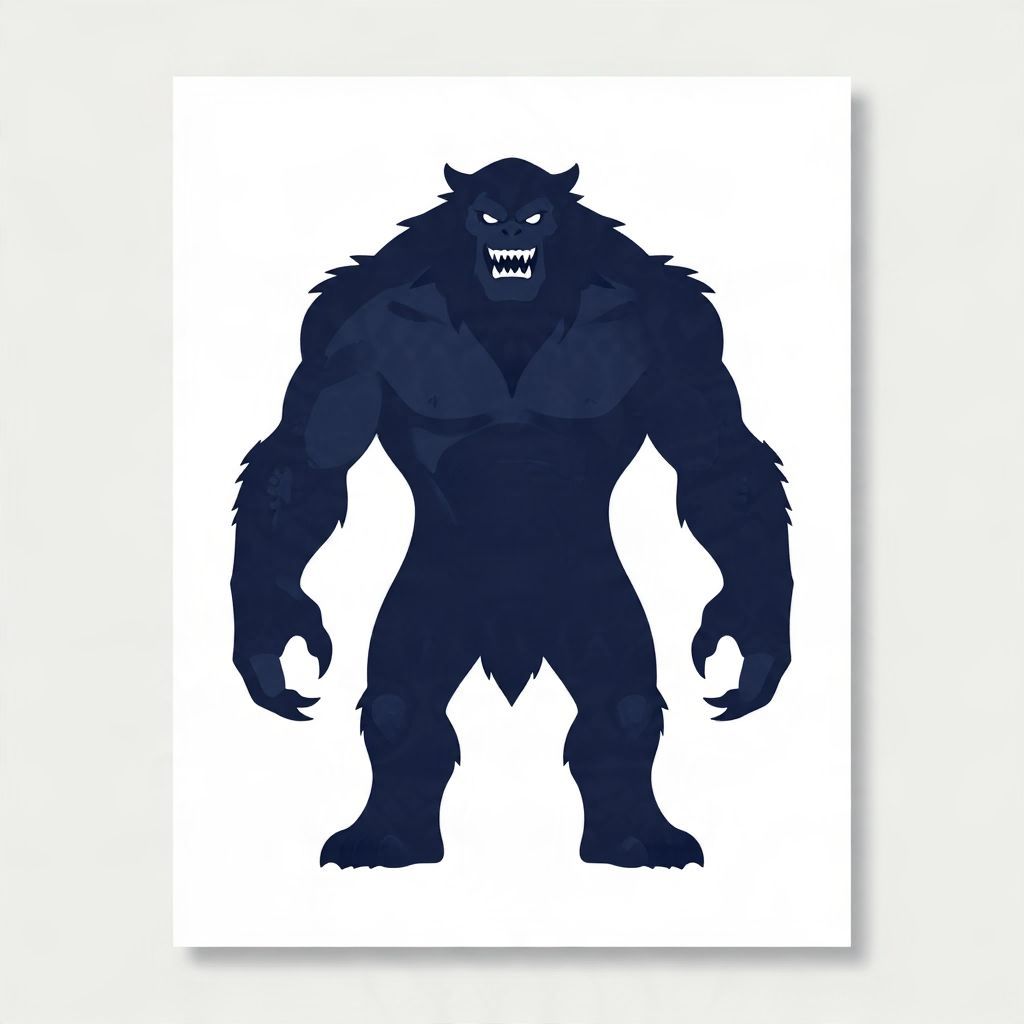
If you’re asking what Grendel looks like, the answer depends on which version of the story you mean. In the Old English epic Beowulf, Grendel is a monstrous, humanlike creature described through fear, darkness, and physical menace rather than a precise visual portrait.
That vagueness is part of the point: Grendel is less a fully detailed “character design” than a symbol of exile, violence, and otherness. Later retellings, especially John Gardner’s Grendel, keep that uncertainty alive while giving him a more reflective, psychologically complex presence.
What does Grendel look like in Beowulf?
In Beowulf, Grendel is presented as a huge, terrifying, humanlike monster with a powerful body, clawed hands, and a connection to the dark and marshy wilderness. The poem emphasizes his menace more than exact features, making him seem both physical and symbolic: a creature outside human society, language, and law.
A monster described through effect, not detail
The poem does not give readers a neat, full-body portrait. Instead, it shows what Grendel does: he stalks Heorot, kills warriors, and inspires dread.
That technique matters. By withholding a clear image, the poet makes Grendel feel even more frightening, because he remains partly unknown.
Common visual traits associated with Grendel
- Large and powerful in build
- Humanlike, but distorted and monstrous
- Clawed hands or grasping limbs
- Dark, swamp-dwelling associations
- Separated from human community by nature and behavior
These traits come from the poem’s language and later artistic tradition. Different translations and adaptations may make him look more ape-like, troll-like, or even vaguely human.
Why is Grendel’s appearance so hard to pin down?
Grendel is intentionally described in an unstable way because he functions as both a literal enemy and a moral symbol. The poem associates him with Cain’s line, exile, and the margins of the human world, so his appearance reflects his role as an outsider rather than a realistic creature study.
The power of ambiguity
Medieval literature often uses monsters to embody abstract fears. Grendel’s unclear appearance lets him stand for multiple anxieties at once: violence, chaos, loneliness, and the threat of the unknown.
In other words, the poem asks readers to feel Grendel before they fully “see” him.
What does Grendel look like in John Gardner’s Grendel?
John Gardner’s novel Grendel does not radically redefine his body with a fixed, realistic description. Instead, it presents him as a thinking, speaking being whose appearance is filtered through his own consciousness and through the fear of others. He is still monstrous, but the novel shifts attention from external shape to inner life.
A more psychological monster
Gardner’s version makes Grendel feel less like a simple beast and more like a self-aware outcast. That changes how readers imagine him: his body matters, but his mind matters more.
This is one reason the novel is often studied as a modern reinterpretation of the epic. It turns a feared creature into a tragic, questioning narrator.
Is Grendel human, animal, or something in between?
Grendel is best understood as in-between. He is not a normal human, but he is not a mindless animal either. That liminal quality is central to his meaning in the story, because it makes him unsettling and difficult to classify.
Why the in-between quality matters
Stories about monsters often blur categories on purpose. Grendel’s mixed nature suggests that he belongs to the border between civilization and wilderness, order and chaos, speech and silence.
This is why readers and artists have imagined him in so many different ways over time.
What does Grendel symbolize?
Grendel symbolizes more than physical danger. In Beowulf, he can represent exile, resentment, social disorder, and the fear of what lives beyond the hall’s protection. His appearance supports that symbolism: he seems shaped by darkness, isolation, and hostility to human community.
Key symbolic meanings
- Exile — cut off from fellowship and belonging
- Chaos — a force that disrupts social order
- Otherness — what a community cannot easily understand
- Violence — the physical threat that haunts heroic culture
Because of this, asking what Grendel looks like is really also asking what the poem wants him to mean.
How do literary techniques shape our image of Grendel?
The poem uses imagery, epithets, and contrast to create Grendel’s presence. He is often defined against light, warmth, song, and hall-life, which makes him seem even more alien when he enters the human world.
Contrast with Heorot
Heorot is a place of light, feasting, music, and social bonds. Grendel comes from the opposite realm: darkness, solitude, and the swamp.
That contrast is visual as well as thematic. Even without a detailed portrait, readers can picture him through the world he opposes.
Sound and atmosphere
In many readings, Grendel is also built through sound: the crashing of violence, the silence after attack, and the poem’s repeated emphasis on fear. The result is a monster who feels larger than any single description.
Why do adaptations show Grendel differently?
Adaptations often make Grendel more visually specific because modern readers expect a clear image. Films, illustrations, and stage versions may give him tusks, fur, reptilian features, or an ogre-like body, but these are interpretive choices rather than definitive text-based facts.
Different versions, different priorities
- Epic tradition focuses on menace and symbolic force
- Modern novels often emphasize psychology
- Visual adaptations usually need a concrete design
So if you encounter a specific “look” for Grendel, it is usually one artist’s or adapter’s interpretation of the poem’s ambiguity.
What should readers take away from Grendel’s appearance?
Grendel’s appearance is meant to be unsettling, not neatly defined. He is large, dark, and monstrous in the broadest sense, but the deeper literary point is that he embodies what human society fears when it confronts the unknown.
That is why the question “What does Grendel look like?” leads to a richer answer than a simple description. He looks like a monster, but he also looks like alienation, rage, and the shadow side of heroic culture.
If you’re interested in how literary meaning is shaped by language and genre, you may also enjoy reading about what historical fiction means and what smut means in books.