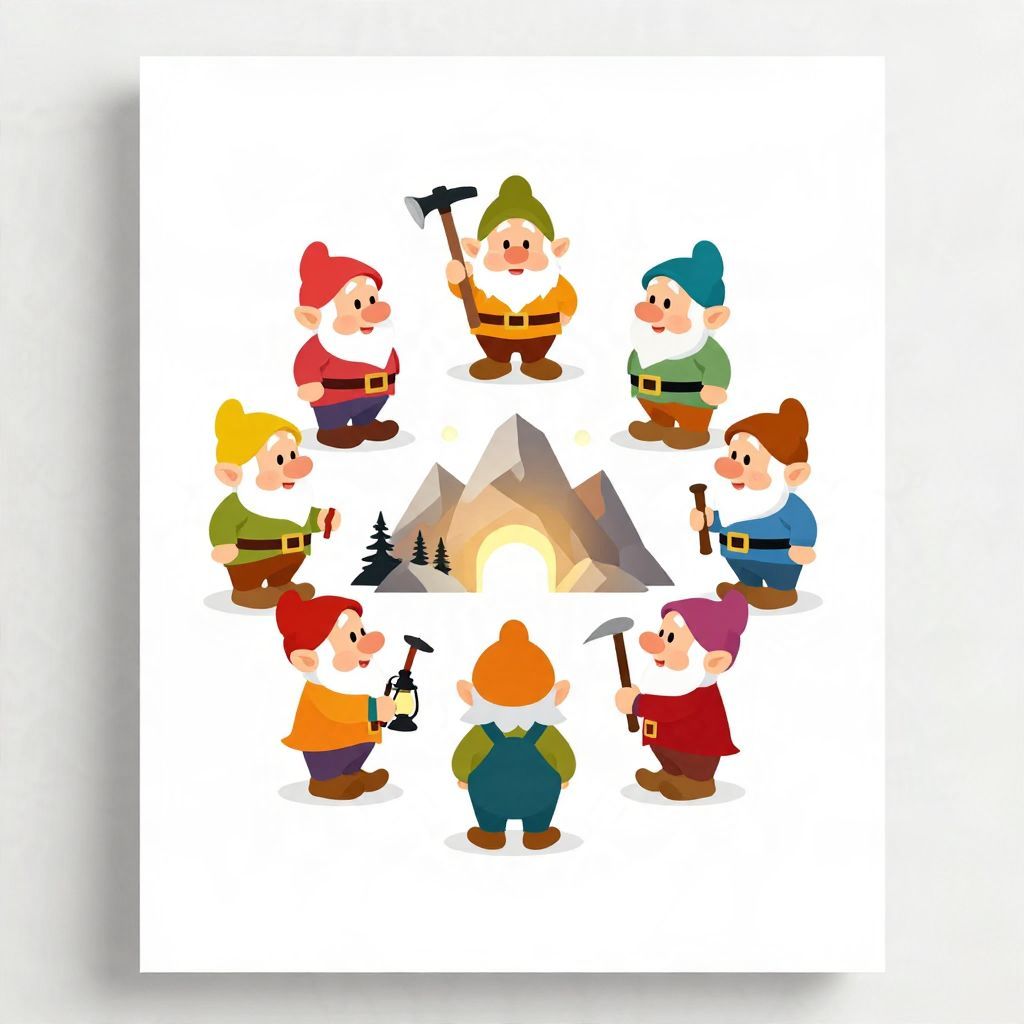
If you’re asking who are the Seven Dwarfs, you’re usually looking for the seven memorable characters from the classic fairy tale Snow White. They are a group of miners who live together in the forest, and each one has a distinct personality and name in modern retellings. Their role is central to the story’s tone, symbolism, and lasting popularity.
Because the tale has been adapted many times, the dwarfs can vary a little from version to version. Still, their basic function remains the same: they provide shelter, comic relief, and moral contrast to the danger surrounding Snow White.
Who are the Seven Dwarfs in Snow White?
The Seven Dwarfs are the seven forest-dwelling companions who welcome Snow White into their home after she flees the queen. In the best-known modern version, they are named Doc, Grumpy, Happy, Sleepy, Bashful, Sneezy, and Dopey. Their names reflect exaggerated traits, making them easy to remember and giving the story a playful, fairy-tale rhythm.
Where do the Seven Dwarfs come from?
The dwarfs appear in the traditional European fairy tale Snow White, most famously associated with the Brothers Grimm’s version. The story circulated in oral and literary forms before becoming widely known in print, and later adaptations, especially Disney’s, fixed the seven-character lineup and their individual names in popular culture.
Are their names in the original tale?
Not exactly. In the Grimm version, the dwarfs are not given the now-famous personality names. Those names became standard through later retellings, especially in the 20th century. So when people ask who the Seven Dwarfs are, they are often referring to the familiar named group from modern adaptations rather than the earliest text alone.
What are the Seven Dwarfs like as characters?
Each dwarf is built around a simple, recognizable trait, which helps the story feel vivid and memorable. Together, they form a balanced household of personalities, from the practical leader to the comic outsider.
The seven dwarfs at a glance
- Doc – often treated as the leader or spokesperson.
- Grumpy – skeptical, irritable, and resistant at first.
- Happy – cheerful and optimistic.
- Sleepy – perpetually tired or drowsy.
- Bashful – shy and easily embarrassed.
- Sneezy – defined by constant sneezing.
- Dopey – silent, childlike, and innocent in manner.
These traits are broad by design. In a fairy tale, characters often work as symbolic types rather than psychologically complex individuals, and the dwarfs fit that tradition well.
What role do the Seven Dwarfs play in the story?
The dwarfs are more than side characters. They create the safe space where Snow White can survive, and they also sharpen the contrast between domestic protection and the queen’s jealousy. Their cottage becomes a temporary refuge, a place of order and labor set against the queen’s vanity and violence.
Why are they important to the plot?
Without the dwarfs, Snow White would have no sanctuary in the forest. They also help move the story from danger to temporary safety, making the middle of the tale feel like a pause before the queen’s final attempt to destroy Snow White. In many versions, they also warn her not to trust strangers, though she does not always heed them.
What do the Seven Dwarfs symbolize?
The dwarfs can be read in several ways, depending on the version and the reader’s focus. They often symbolize community, labor, protection, and the variety of human temperament. Their small stature may also suggest humility and the hidden value of those who are overlooked.
Common symbolic readings
- Community – they live and work together as a functioning household.
- Protection – they shelter Snow White when she has nowhere else to go.
- Difference – each dwarf embodies a distinct temperament.
- Labor and order – their mining and domestic routines contrast with the queen’s excess.
Because fairy tales often work through contrast, the dwarfs help define what the story values: kindness, cooperation, and steadiness over vanity and cruelty.
How do the Seven Dwarfs affect the tone of the tale?
They lighten the mood. Their names, habits, and group dynamic add humor and warmth to a story that also contains jealousy, attempted murder, and deathlike sleep. That tonal balance is one reason the tale has endured for children and adults alike.
Why does the story need them?
Fairy tales often combine fear with comfort. The dwarfs make the forest feel less threatening and give the story a domestic center. Their presence allows the tale to move between danger and safety, which keeps the emotional rhythm varied and memorable.
Why are the Seven Dwarfs so famous?
The dwarfs became especially iconic through adaptation, illustration, and film. Their simple names and distinct personalities make them easy to recognize, and they have become one of the most familiar character groups in children’s literature and popular culture. For many readers, they are inseparable from the story of Snow White itself.
What makes them memorable?
Three things stand out: their repetition as a group, their instantly readable traits, and their role as helpers rather than heroes. They are not the center of the plot, but they are essential to its emotional structure and visual identity.
How should readers think about the Seven Dwarfs today?
Modern readers often notice that the dwarfs are stylized figures rather than realistic characters. That is part of their fairy-tale function. They should be understood as literary types shaped by oral tradition and adaptation, not as fully developed novelistic personalities.
A note on interpretation
Some readers enjoy them as comic relief, while others focus on their symbolism or on how later versions simplified older material. Both approaches are valid. What matters most is that the dwarfs help transform Snow White from a dark warning tale into a story with warmth, rhythm, and a memorable supporting cast.
Quick answer: who are the Seven Dwarfs?
The Seven Dwarfs are the seven forest companions in Snow White: Doc, Grumpy, Happy, Sleepy, Bashful, Sneezy, and Dopey. In the story, they shelter Snow White, shape the tone of the tale, and stand for community, difference, and protection.
If you’re exploring fairy tales and their symbols, you may also enjoy related reading on the seven Horcruxes in Harry Potter or the White Rabbit as a literary figure.