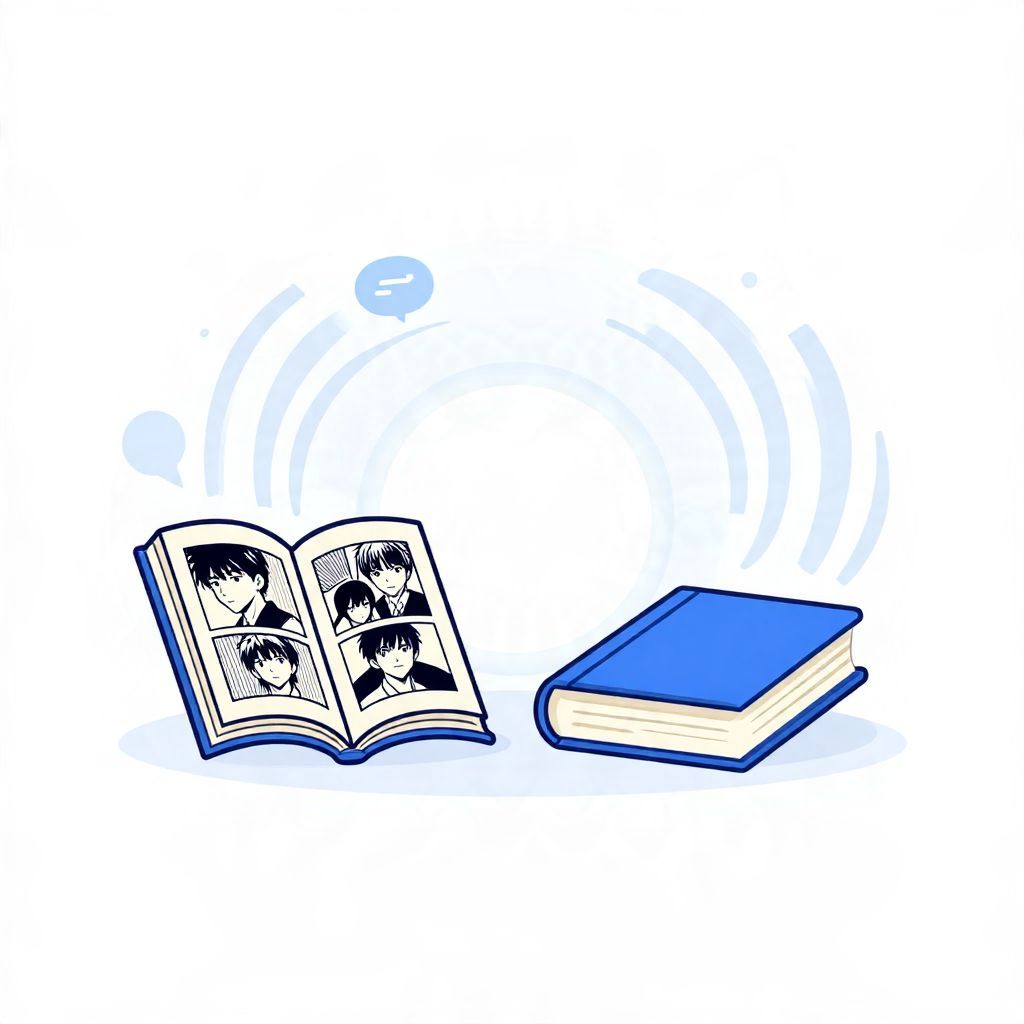
If you’ve ever wondered whether manga “counts” as a book, you’re not alone. The short answer is yes: in most literary, publishing, and library contexts, manga is generally treated as a type of book, though its format, reading direction, and visual storytelling make it different from a traditional prose novel.
That difference is exactly why the question comes up. Manga sits at the intersection of literature, art, and sequential storytelling, so whether it “counts” can depend on context: school assignments, library cataloging, bookstore organization, or casual conversation.
Does manga count as a book?
Yes, manga usually counts as a book. Most manga is published in bound volumes, has an ISBN, is cataloged by libraries and bookstores, and is read cover to cover like other books. The main difference is that manga tells its story through a combination of images and text rather than dense prose alone.
Why manga is considered a book
Manga is not just a comic strip or a magazine feature; it is typically published as a collected volume or series of volumes. That makes it functionally similar to other books in the way readers buy, shelve, borrow, cite, and discuss it.
Publication format matters
Many manga titles are released as tankōbon volumes, which are standalone book-format editions that compile serialized chapters. Even when a series begins in a magazine, the collected edition is still a book in the practical sense most readers mean.
Libraries and bookstores treat it as a book
Libraries usually catalog manga as part of their book collections, often in graphic novel or comics sections. Bookstores also shelve manga alongside other books, which reinforces its status as a published book product rather than a separate category outside books altogether.
It has narrative structure
Manga typically includes characters, plot development, pacing, themes, and visual symbolism. Those are all core features of literature, even if the storytelling tools include panels, speech bubbles, and expressive artwork.
What makes manga different from a novel?
Manga counts as a book, but it is not the same kind of reading experience as a prose novel. Its form changes how readers move through the story, how meaning is built, and how information is delivered.
Visual storytelling is central
In manga, the art carries as much narrative weight as the words. Facial expressions, panel layout, page turns, and visual metaphors often communicate mood or plot in ways that prose would describe more directly.
Reading direction can be different
Many English-language editions preserve the original right-to-left reading order. That can make manga feel unfamiliar at first, but it does not make it less of a book; it simply reflects the conventions of the medium and its source culture.
Serial structure is common
A manga series may unfold across many volumes, sometimes with long arcs and cliffhangers. This serialized format is common in book publishing too, but in manga it is especially important to the reading experience.
Why people debate whether manga counts
The debate usually comes from narrow ideas about what a “book” should look like. If someone imagines a book only as pages of uninterrupted prose, manga may seem like something else. But that definition is too limited for modern publishing and literary culture.
Some people mean “novel” when they say “book”
In everyday speech, people sometimes use “book” to mean “prose novel,” especially in school settings. By that definition, manga may not fit the category, because it is a graphic narrative rather than a prose-only novel.
Others use “book” more broadly
In broader literary and publishing terms, a book is a bound, readable work published for an audience. Under that definition, manga clearly qualifies. The disagreement is often about language, not about the object itself.
Academic and library contexts are more flexible
In education, media studies, and library science, manga is commonly discussed as graphic literature or sequential art. These fields recognize that books can take many forms, including illustrated narratives, comics, and hybrid formats.
Is manga literature?
Manga can absolutely be studied as literature, though not every manga is treated the same way in literary criticism. Like prose fiction, it can explore identity, grief, conflict, social pressure, history, fantasy, or coming-of-age themes with real artistic complexity.
Literary themes are common in manga
Many manga series address themes such as friendship, ambition, family, trauma, morality, and belonging. Some lean toward action or comedy, while others are deeply reflective and character-driven.
Style and form shape meaning
Because manga uses images and text together, it often relies on visual irony, pacing, silence, and symbolism. A blank panel, a repeated motif, or a dramatic shift in line work can function much like figurative language in prose.
Not all manga aims for the same literary effect
Some manga are primarily entertainment-driven, while others are more experimental or introspective. That range is similar to the range you find in novels, short stories, or poetry: not every work has the same ambitions, but all can still belong to the broader world of books.
How manga is classified in real-world settings
If you are asking the question for a practical reason, the answer depends on context. In most everyday and institutional settings, manga is counted as a book, but sometimes it is placed in a subcategory.
In school assignments
If a teacher asks for a book, manga is often acceptable unless the assignment specifically requires a prose novel. If the instructions are unclear, it is wise to ask whether graphic novels or manga are allowed.
In libraries
Libraries usually count manga as part of their book holdings, though it may be shelved separately from novels. This helps readers find it, but it does not remove it from the book collection.
In reading challenges and personal goals
For a reading challenge, manga generally counts as reading a book unless the challenge rules say otherwise. If your goal is to build a reading habit, manga can be an excellent and legitimate part of that practice.
Manga, graphic novels, and comics: what’s the difference?
These terms overlap, but they are not identical. Manga is the Japanese tradition of comics and graphic storytelling, while graphic novel is a broader term often used for book-length comics, and comics is the widest umbrella term of all.
Manga
Manga usually refers to Japanese comics or works influenced by Japanese comic conventions. It can include many genres, from romance and fantasy to horror, sports, and slice of life.
Graphic novel
Graphic novel often refers to a longer, book-length comic work. Some manga volumes fit this description in structure, though the term is not always used interchangeably with manga.
Comics
Comics is the broadest category and includes newspaper strips, superhero books, webcomics, and manga. In that sense, manga is one branch of a much larger storytelling form.
Why manga matters as a book form
Manga has helped broaden the idea of what reading can look like. It brings in readers who may be new to books, offers visual pathways into complex stories, and shows that literary value is not limited to prose-only formats.
It can support reluctant readers
Because manga combines art and text, it can feel more accessible to readers who are building confidence or who struggle with dense prose. That accessibility does not make it lesser; it simply means the medium meets readers in a different way.
It can deepen visual literacy
Reading manga teaches readers to interpret panel flow, composition, gesture, and visual symbolism. Those are real interpretive skills, and they can enrich the way readers understand other forms of narrative too.
It expands literary culture
Manga has influenced publishing, translation, fandom, and classroom reading lists around the world. Its popularity has helped push the conversation beyond outdated assumptions about what books should be.
So, should you count manga as reading a book?
In almost all practical senses, yes. If you read a manga volume from beginning to end, you have read a book-length narrative work. The only time the answer changes is when a specific rule excludes graphic narratives or requires a prose-only text.
A simple rule of thumb
- For libraries: yes, manga is part of the book collection.
- For most reading challenges: yes, unless rules say otherwise.
- For school assignments: usually yes, but check the prompt.
- For literary discussion: yes, though it may be classified as graphic literature or comics.
Final takeaway
Manga does count as a book in the overwhelming majority of literary and practical contexts. It is a published, bound narrative work with characters, themes, and structure, even though it tells its story through images as well as words. If you’re exploring how books are defined more broadly, you may also enjoy reading about what counts as a library and how many books you need to have a library.