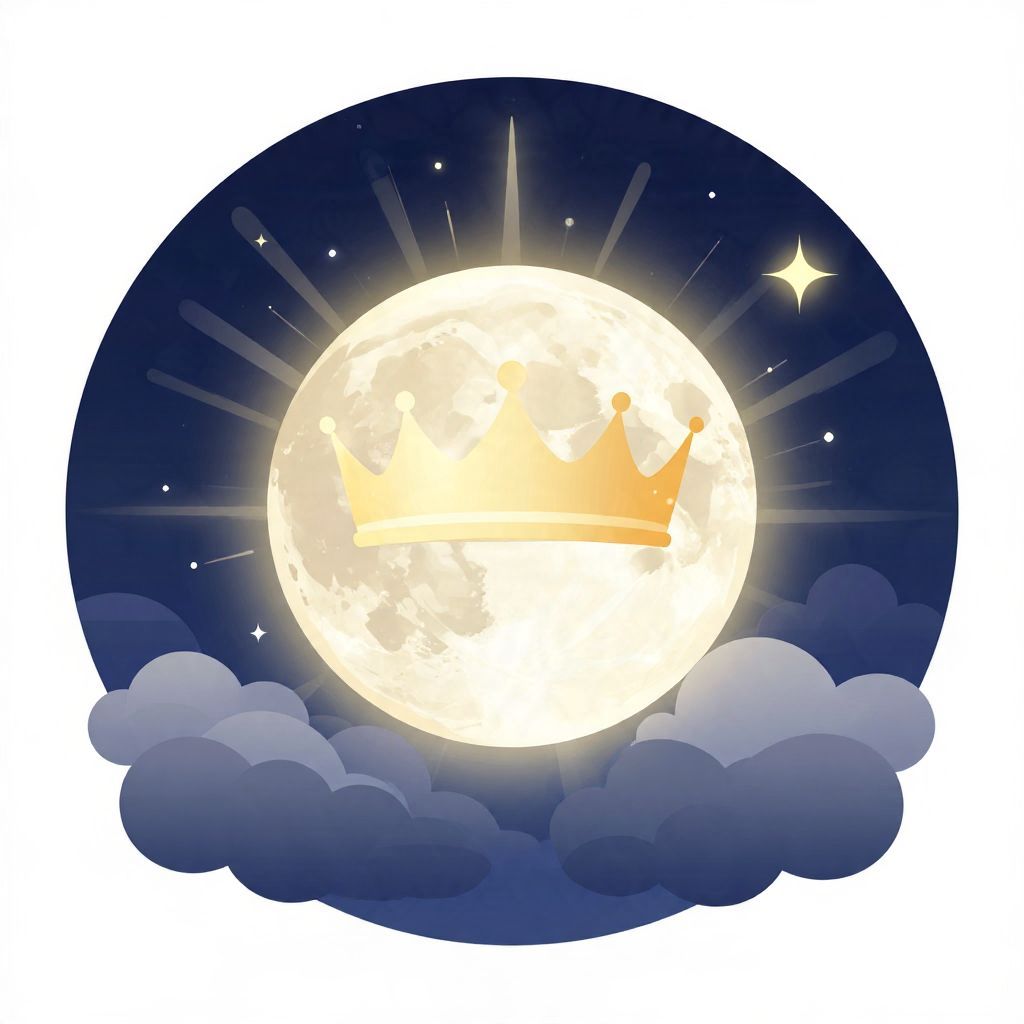
If you’ve come across When The Moon Hides Her Crown and want to understand what it is, what it suggests, or how to approach it as a reader, the key is to separate title, context, and interpretation. Because the phrase can be used in literary discussion, poetry-like writing, or a book-related search, the most useful explanation is careful and text-aware.
This article gives you a clear way to think about When The Moon Hides Her Crown: what the title implies, how to read its imagery, and what kinds of themes and literary techniques it may signal. Where publication or author details are not firmly established, it avoids guessing and focuses on the language itself.
What does When The Moon Hides Her Crown mean?
As a phrase, When The Moon Hides Her Crown suggests concealment, change, and a shift in visibility or power. The moon is often associated with cycles, femininity, reflection, and hidden influence, while a “crown” evokes authority, identity, and radiance. Together, the image implies a moment when something usually luminous or sovereign is obscured.
Is When The Moon Hides Her Crown a novel, poem, or another kind of work?
The title itself does not confirm a single genre. In literary searches, it may refer to a poem, a chapter title, a lyric phrase, or a book whose full bibliographic details are not immediately clear. If you are trying to identify a specific text, the safest approach is to look for the author name, publisher, or a line of publication information alongside the title.
How to identify the work accurately
- Check whether the title appears on a book cover, table of contents, or online catalog entry.
- Look for an author attribution, since titles alone can be reused or quoted in different contexts.
- Note whether the phrase is presented as a standalone title or as part of a larger work.
What themes does the title point toward?
Even without a confirmed plot summary, the imagery in When The Moon Hides Her Crown strongly points to several literary themes. These include hidden identity, cyclical transformation, loss and renewal, and the tension between appearance and inner truth.
1. Concealment and revelation
The phrase “hides her crown” suggests that something powerful is present but not fully visible. In literature, this often becomes a metaphor for emotions, memory, trauma, or identity that cannot be expressed directly.
2. Feminine symbolism
Because the moon is traditionally gendered feminine in many poetic traditions, the title may carry associations with womanhood, intuition, and quiet endurance. The possessive “her” gives the image a personal, almost mythic quality.
3. Cycles and impermanence
The moon changes phase, so the title may imply that obscurity is temporary. A hidden crown can suggest a period when power is dormant rather than absent, which is a common motif in lyrical and symbolic writing.
What literary devices are suggested by the title?
The title is rich in figurative language. It works less as a literal statement and more as a symbolic frame that prepares readers for atmosphere, mood, and layered meaning.
Metaphor
The moon is not literally wearing a crown, so the phrase operates metaphorically. A crown can stand for sovereignty, beauty, or selfhood, while the moon becomes a figure for hidden brilliance.
Personification
By giving the moon a “her” and a crown she can hide, the title personifies a celestial body. This creates intimacy and makes the image feel emotionally charged rather than purely astronomical.
Imagery
The visual contrast between moonlight and concealment invites readers to imagine darkness, cloud cover, eclipse, or a dimmed sky. That sensory quality is often used in poetry and literary fiction to establish mood quickly.
If this is a book, what kind of reading experience might it offer?
Titles like When The Moon Hides Her Crown usually signal a reflective, symbolic, or atmospheric reading experience. Readers might expect language that values mood, interiority, and image-driven meaning over fast-paced action.
Possible narrative qualities
- Lyrical prose or poetic phrasing
- Symbolic structure, where objects and images carry emotional weight
- Introspective tone, especially if the work focuses on memory or identity
- Ambiguous or dreamlike atmosphere, rather than straightforward realism
How should readers interpret the moon symbol?
The moon is one of literature’s most flexible symbols, so its meaning depends on context. In a title like this, it may represent hidden truth, emotional change, or a self that is temporarily obscured by circumstance.
Common literary associations of the moon
- Change — because of its phases and recurring cycle
- Reflection — because it does not produce its own light
- Feminine energy — a frequent symbolic tradition in poetry and myth
- Distance — something visible, but unreachable
When paired with a crown, the moon becomes more than a passive symbol. It suggests authority that is subtle, hidden, or even threatened, which can deepen the emotional stakes of the work.
What kinds of characters or conflicts might fit this title?
If When The Moon Hides Her Crown is a narrative work, the title suggests a central conflict involving concealment, identity, or a loss of status. The main character may be someone whose inner strength is not immediately recognized by others, or someone navigating a period of uncertainty.
Likely character dynamics
- A protagonist who appears quiet but carries hidden resilience
- A conflict between public image and private reality
- A relationship shaped by secrecy, distance, or misunderstanding
- A journey toward reclaiming voice, agency, or self-knowledge
How does the title work as literary framing?
A strong title does more than name a text; it establishes expectation. When The Moon Hides Her Crown frames the reading experience as one of mystery and symbolic depth, encouraging readers to look for patterns beneath the surface.
Why this matters for interpretation
Readers often use the title as a first clue to theme, tone, and structure. Here, the title encourages close reading for recurring images of light, darkness, visibility, and transformation.
What should you look for while reading?
If you are reading a work with this title, pay attention to how often the text returns to celestial imagery, concealment, and moments of transition. Those details are likely doing important interpretive work.
Helpful reading questions
- What does the “crown” seem to represent in the text?
- Is hiding presented as protection, loss, shame, or strategy?
- Does the moon symbolize a person, a state of mind, or a larger cycle?
- How does the tone shift when the hidden becomes visible?
Why readers are drawn to titles like this
Titles with mythic or poetic imagery often attract readers because they promise more than a simple premise. They suggest atmosphere, emotional complexity, and a work that may reward close attention to language.
That is especially true when a title like When The Moon Hides Her Crown balances beauty with uncertainty. It invites the reader to ask not only what happens, but what is being concealed, transformed, or recovered.
Bottom line: what is the key takeaway?
When The Moon Hides Her Crown is best understood as a symbol-rich title centered on concealment, change, and hidden power. If you are trying to identify a specific edition or author, look for bibliographic details; if you are reading it as literature, focus on the moon imagery, the crown metaphor, and the emotional tension between visibility and obscurity.
For more on how literary meaning is built through image and narrative, you may also enjoy what storytelling is and how it works and a look at how stories shape character and theme.