If you’ve ever looked at your shelves and wondered whether they count as a “home library,” you’re not alone. The phrase sounds simple, but it can mean different things depending on whether you mean a casual book collection, a dedicated reading room, or a truly substantial private library.
The quick answer: there is no official number of books that makes a home library. In everyday use, many people would call a collection a home library once it is organized, intentional, and large enough to function as a distinct book space—often anywhere from a few dozen books to several hundred, depending on the home and the owner’s habits.
How many books are considered a home library?
A home library is less about a fixed count and more about purpose. If your books are curated, shelved with some system, and used as a regular reading or reference resource, they can reasonably be called a home library even if the total is modest.
What the phrase usually means
In practical terms, people use “home library” to describe a personal book collection that feels organized and established rather than temporary or random. That can include fiction, nonfiction, children’s books, reference works, or a mix of all four.
Why there is no universal threshold
There is no library-board rule or publishing standard that says “X books = home library.” The label depends on context: a studio apartment with 80 carefully arranged books may feel like a library, while a large house may need several hundred volumes before the same phrase feels natural.
What factors matter more than the number?
If you want a more useful answer than a strict count, look at how the collection functions. A home library is often defined by organization, intention, and use more than by raw quantity.
1. Organization
Books arranged by genre, author, subject, color, or reading status suggest a library-like system. Even a small collection can feel library-like when it is easy to browse and retrieve.
2. Scope
A home library usually reflects breadth or depth in one or more areas. That might mean a strong fiction shelf, a focused academic collection, a family reading archive, or a mix of favorite and frequently consulted books.
3. Space
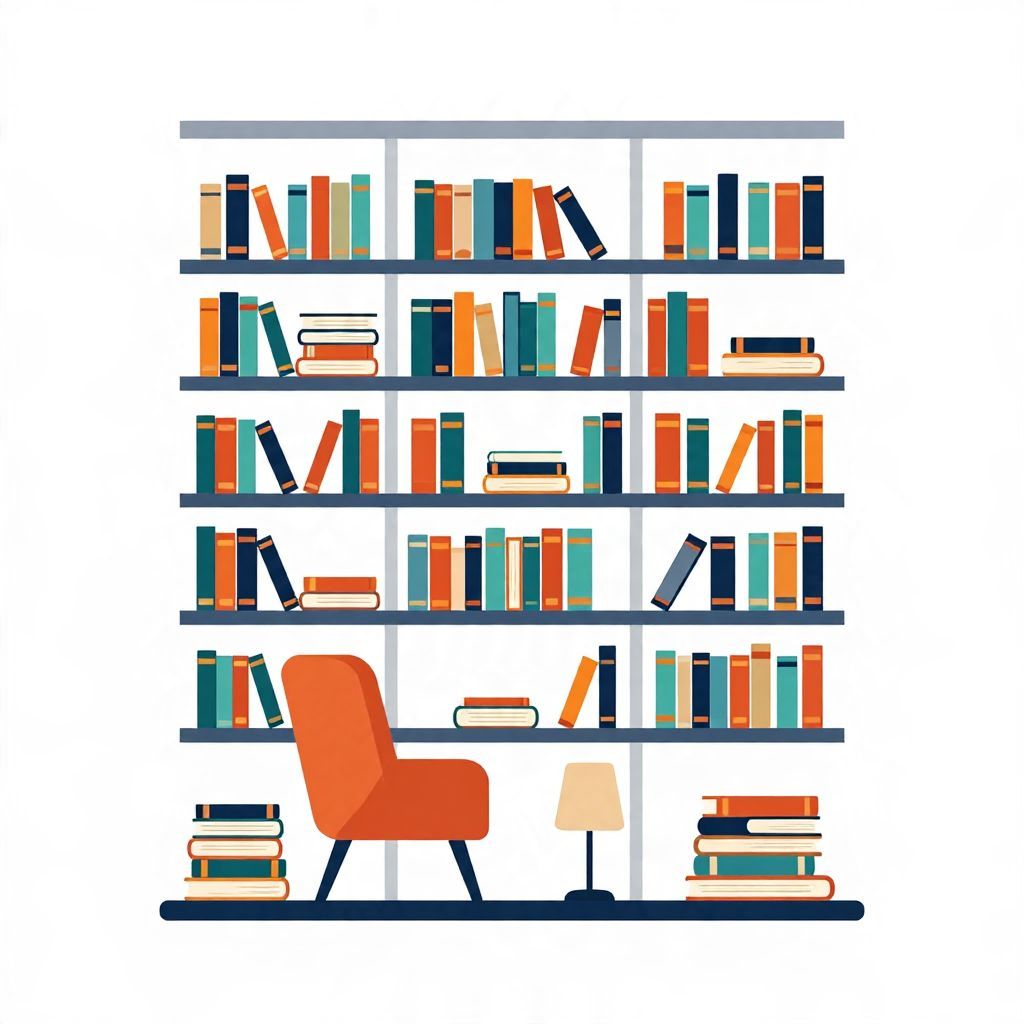
The physical setting matters. Dedicated shelves, a reading chair, labeled sections, or a separate room can make a collection feel like a home library even if the number of books is not especially high.
4. Purpose
A collection kept mainly for decoration feels different from one used for reading, study, or reference. The more a collection supports daily intellectual life, the more it resembles a library.
Common ways people think about home library size
Because the term is informal, people often use it in broad tiers rather than exact counts. These tiers are not official standards, but they can help you describe your own collection more clearly.
- Small home library: roughly 25–100 books, especially if well organized and actively used.
- Medium home library: roughly 100–500 books, often enough to fill multiple shelves or a dedicated wall.
- Large home library: 500+ books, especially when the collection has clear structure and room of its own.
These ranges are only practical shorthand. A carefully chosen 60-book collection can feel more like a library than a scattered 300-book pile.
Home library vs. personal library vs. book collection
The terms overlap, but they are not always identical. Understanding the difference helps if you are describing your shelves in writing, cataloging a collection, or simply deciding what to call it.
Book collection
This is the broadest term. It can mean any set of books owned by one person or household, whether small, large, organized, or not.
Personal library
This usually suggests a more deliberate and curated collection. It may be used interchangeably with home library, though “personal library” can sound slightly more formal or archival.
Home library
This phrase emphasizes place and function: a library located in the home. It often implies shelves, order, and ongoing use as a reading or research space.
Signs your book collection has become a home library
If you are unsure whether your shelves qualify, these signs can help. You do not need all of them, but the more boxes you check, the more “library” your collection feels.
- You can find books quickly because they are arranged in a system.
- You regularly borrow from your own shelves instead of only displaying them.
- Your collection includes more than a few impulse purchases.
- You have a dedicated place for reading or browsing.
- Your books reflect long-term interests, not just recent trends.
- Visitors can recognize the space as a book-centered room or area.
How to build a home library with intention
If your goal is to create a home library rather than just accumulate books, a little planning goes a long way. The best collections usually grow around reading habits, not random volume.
Start with a focus
Choose a few core categories: fiction, poetry, history, cookbooks, children’s books, or a favorite subject. A focused collection often feels more coherent and satisfying than an oversized but unfocused one.
Mix favorites with reference books
A strong home library usually includes both books you love to reread and books you consult when needed. That balance gives the collection both emotional and practical value.
Leave room for growth
Books tend to multiply. If possible, plan shelving with extra space so your library can expand without becoming cluttered.
Use a simple cataloging habit
You do not need professional library software, but a list, spreadsheet, or reading app can help track what you own. This is especially useful if you buy books often or share them with family members.
What makes a home library feel special?
The best home libraries are not necessarily the biggest ones. They are the ones that reflect a reader’s life, memory, and curiosity.
Personal meaning
Books signed by loved ones, inherited volumes, childhood favorites, and editions tied to important moments can give a collection character beyond its size.
Reading history
A home library often tells the story of a reader over time. Early favorites, academic texts, travel books, and recent discoveries together create a record of changing interests.
Atmosphere
Lighting, seating, shelving, and order all contribute to the feeling of a library. Even a compact corner can become a meaningful reading space when it is designed with care.
Quick answer: is there a minimum number?
No. There is no minimum number of books required to be considered a home library. In common usage, the term applies when a collection is substantial enough to be organized, regularly used, and set apart as a meaningful book space in the home.
Final takeaway
If you are asking how many books are needed to be considered a home library, the most honest answer is that the label depends more on purpose than on count. A small, well-loved shelf can qualify just as much as a room full of books if it functions like a library.
For a related look at the difference between a collection and a library, see how many books constitute a library and how many books is considered a personal library.