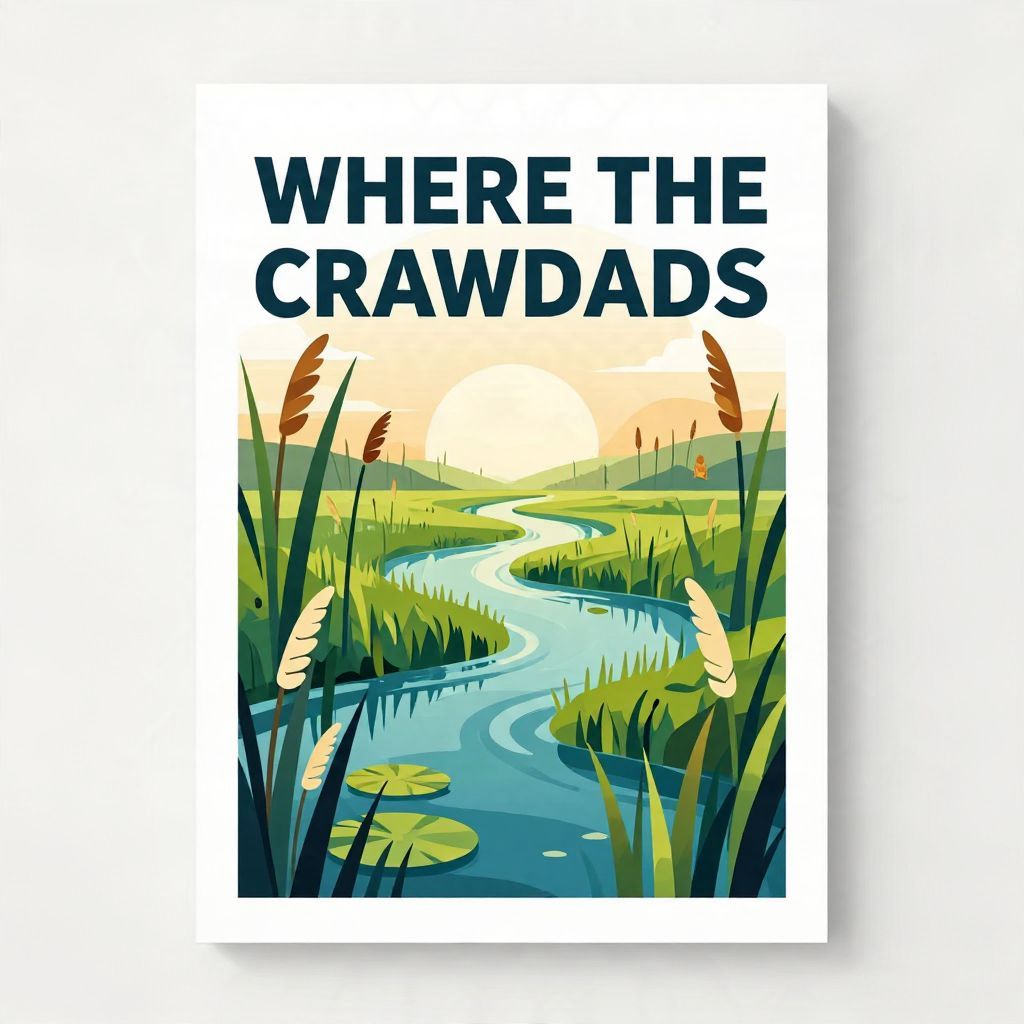
Are you trying to understand Where the Crawdads Sing—what it is about, why it became so widely discussed, and what readers should pay attention to? Delia Owens’s novel blends coming-of-age fiction, mystery, and nature writing into a story that is as much about loneliness and survival as it is about a crime.
This guide explains the book’s premise, major characters, themes, symbols, and literary style in a clear, spoiler-aware way. It is designed for readers who want a quick overview as well as a deeper look at what the novel is doing beneath its plot.
What is Where the Crawdads Sing about?
Where the Crawdads Sing is a 2018 novel by Delia Owens about Kya Clark, a girl who grows up isolated in the marshes of coastal North Carolina and becomes entangled in a murder investigation. The book combines a survival story, a love story, and a courtroom mystery while exploring how abandonment shapes a person’s life.
Who wrote it, and what kind of book is it?
Author and background
Delia Owens is best known as a writer with a background in wildlife biology and nature nonfiction, and that experience strongly influences the novel’s setting and descriptive detail. The marsh is not just scenery; it functions almost like a living presence in the story.
Genre and literary form
The novel is often described as a blend of literary fiction, mystery, and coming-of-age fiction. It moves between Kya’s childhood, her adult life, and the investigation surrounding a death, creating a layered structure that slowly reveals how the past shapes the present.
Who are the main characters?
- Kya Clark — the central character, often called the “Marsh Girl,” who learns to survive alone after her family leaves.
- Pa Clark — Kya’s father, whose violence and instability help explain the family’s collapse.
- Ma Clark — Kya’s mother, who leaves the household, deepening Kya’s isolation.
- Tate Walker — a boy who becomes important in Kya’s emotional and intellectual development.
- Chase Andrews — a local man whose death drives the mystery plot.
- Jumpin’ and Mabel — supportive figures who provide Kya with practical help and human connection.
How does the plot work without giving away too much?
The novel begins with Kya as a child in the marsh, abandoned by her family and forced to fend for herself. Over time, she learns to live off the land, observe wildlife, and protect her privacy from a town that treats her with suspicion and cruelty.
As Kya grows older, she forms relationships that offer brief possibilities for trust and belonging. At the same time, a death in the community leads to a criminal investigation, and Kya becomes the focus of rumors and accusations.
What themes are most important in the novel?
Isolation and belonging
One of the novel’s central concerns is what it means to be cut off from family and community. Kya’s loneliness is not presented as simple solitude; it is a condition that shapes her identity, her fears, and her way of relating to others.
Nature as refuge and teacher
The marsh offers Kya shelter, food, and a sense of order. The book repeatedly suggests that nature can be both harsh and sustaining, and that close attention to the natural world can become a form of knowledge and resilience.
Prejudice and social exclusion
The town’s treatment of Kya reflects how communities can turn difference into stigma. Her reputation as an outsider makes her vulnerable, and the novel shows how class, gender, and rumor influence who is believed.
Love, trust, and betrayal
Relationships in the novel are often fragile. The story asks whether love can heal abandonment, and whether trust is possible for someone who has been repeatedly hurt.
What symbols and motifs should readers notice?
The marsh
The marsh is the novel’s most important symbol. It represents freedom, danger, self-reliance, and emotional complexity all at once, mirroring Kya’s own life.
Birds and field guides
Birdwatching and naturalist observation matter because they reflect Kya’s desire to understand and classify the world. Birds also symbolize migration, vulnerability, and the tension between wandering and home.
Shells, feathers, and natural specimens
These recurring details reinforce the book’s attention to texture, pattern, and survival. They also suggest Kya’s habit of preserving what others overlook.
How is the novel written?
Owens uses a style that is descriptive and atmospheric, with strong emphasis on landscape, weather, and animal life. The prose often slows down to observe the marsh in detail, which gives the book its distinctive mood and helps readers feel the environment as part of the story’s emotional logic.
The structure also alternates between timelines, which creates suspense and allows the reader to compare Kya’s childhood with her later life. This dual movement gives the novel both intimacy and mystery.
Why did the book connect with so many readers?
Part of the novel’s appeal comes from its mix of accessible storytelling and emotional intensity. Readers are drawn to Kya’s survival, the tension of the mystery, and the vivid natural setting, while also responding to the book’s larger questions about abandonment, identity, and justice.
It is also a book that invites different kinds of reading. Some readers come for the suspense, while others are more interested in the emotional development or the environmental imagery.
What should first-time readers keep in mind?
- The novel is not just a mystery; it is also a character study.
- The marsh setting is central to the meaning of the book.
- Kya’s perspective is shaped by trauma, isolation, and self-education.
- The story explores how communities create outsiders.
- Its emotional and legal threads become more important as the book progresses.
How does it compare to similar books?
If you like novels that combine atmosphere, suspense, and a strong sense of place, Where the Crawdads Sing may appeal to you in the same broad way as other literary mysteries or survival-centered stories. What makes it distinctive is the extent to which the natural world is woven into the protagonist’s inner life.
Readers who prefer tightly plotted crime fiction may find the book more reflective than expected, while readers who enjoy lyrical setting and emotional backstory may find that balance especially rewarding.
What is the best way to approach the book?
A good way to read Where the Crawdads Sing is to pay attention to how the novel balances plot and atmosphere. The mystery matters, but so do the quieter scenes that show how Kya learns, adapts, and makes meaning from the world around her.
If you are reading for discussion or study, focus on how the book presents nature, social judgment, and loneliness as forces that shape both character and plot. Those elements are at the heart of the novel’s lasting appeal.
For readers who want to go further, you may also find a detailed look at the ending of Where the Crawdads Sing useful, or explore another atmospheric title with Where the Dark Stands Still.