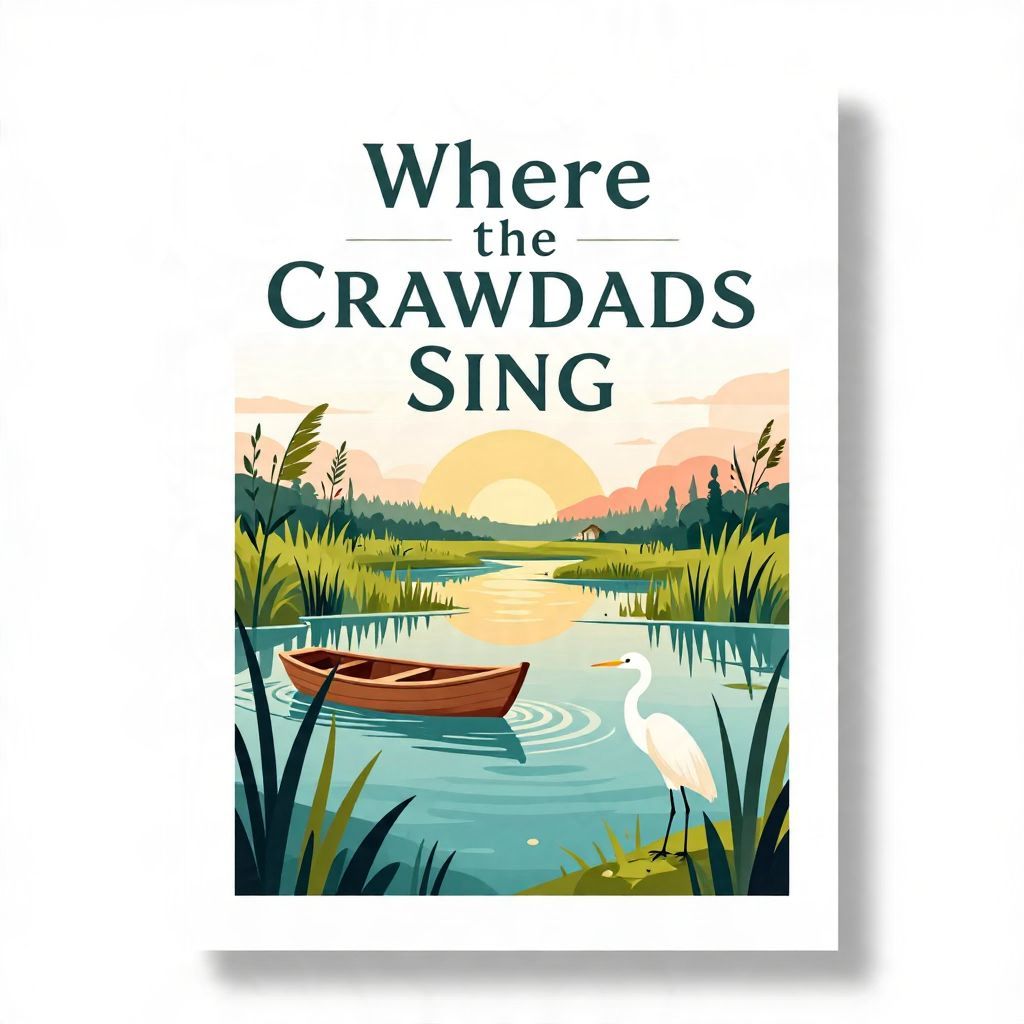
If you’re looking for a clear explanation of the Where the Crawdads Sing ending, the final chapters bring together the novel’s mystery, courtroom drama, and emotional resolution. Delia Owens’s story is not just about who died in the marsh; it is also about how isolation, love, and survival shape Kya’s life.
Below, we’ll break down the ending, explain the key revelations, and look at what the final twist means for the novel’s themes and characters.
What happens at the end of Where the Crawdads Sing?
The ending reveals that Kya is the one who killed Chase Andrews, but the novel leaves room for moral complexity. After Chase attacks her, Kya acts in self-defense and later ensures that the truth remains hidden, while the story also reveals that she lived a long life, found love, and became a respected naturalist.
Spoiler warning: the final reveal explained
For much of the novel, Chase’s death appears to be an unsolved murder, and Kya is the prime suspect because of her connection to him. The final reveal confirms that she did lure him to the marsh and kill him, but the book frames this less as a simple crime than as the desperate act of a woman protecting herself after repeated abuse.
Why Kya kills Chase
Chase’s violence toward Kya is central to the ending. He has controlled, deceived, and assaulted her, and the novel makes clear that the killing is tied to survival, not revenge in a conventional sense.
The act is also connected to Kya’s deep understanding of the marsh. She knows the landscape better than anyone, and that knowledge allows her to create a disappearance that looks like an accident.
How the novel handles the mystery
The courtroom sections build suspicion around Kya, but the final pages shift the emphasis from “whodunit” to “why did she have to do it?” The mystery is solved, yet the emotional question remains: what does justice look like for someone who has been abandoned by family, society, and the law?
What the ending means for Kya’s character
Kya’s ending is tragic and affirming at the same time. She survives a childhood of neglect, becomes a gifted observer of nature, and creates a life of independence, but she never fully escapes loneliness or the danger that follows her.
Her relationship with Tate
Tate is the novel’s clearest source of tenderness and stability. Their bond suggests the possibility of trust and belonging, and the ending shows that Kya eventually shares a lasting life with him, even if the path to that happiness is complicated.
Their relationship also reinforces one of the book’s major ideas: Kya can love deeply, but she cannot easily surrender her self-protective instincts. The marsh remains her truest home, and her emotional life is shaped by both intimacy and distance.
Her life as a naturalist
The ending confirms that Kya’s work matters. She is not only a figure of mystery; she is also a serious observer of the natural world whose drawings and studies give her purpose and recognition.
This matters because the novel repeatedly links knowledge of nature with survival. Kya’s scientific attention to detail is not just a hobby—it is part of how she understands herself and the world.
Key themes in the ending
- Isolation and belonging: Kya’s life is defined by exclusion, but she gradually builds her own form of belonging through the marsh and through selected relationships.
- Survival: The ending treats survival as both physical and emotional, showing how Kya endures abandonment, violence, and suspicion.
- Nature as refuge: The marsh is more than setting; it is a source of identity, protection, and knowledge.
- Justice and morality: The novel asks whether the legal system can fully account for self-defense, trauma, and abuse.
- Secrecy and identity: Kya’s hidden life mirrors the book’s larger pattern of concealed truths and misunderstood people.
How the final twist changes the reader’s view
The ending invites readers to reconsider everything that came before it. Chase is no longer just a victim in a murder mystery; he becomes part of a broader pattern of harm, while Kya’s silence looks less like guilt and more like the strategy of someone who has learned that institutions will not protect her.
At the same time, the reveal does not erase the fact that she kills him. The novel asks readers to hold two truths together: Kya is responsible for Chase’s death, and Chase’s violence helps explain why the novel treats that act with sympathy rather than simple condemnation.
Why the ending feels emotionally powerful
The emotional force of the ending comes from its balance of sorrow and closure. Kya’s life is marked by loss, yet the final sections suggest she found a measure of peace, love, and artistic achievement before her death.
That balance is part of what makes the ending memorable. It does not offer a neat moral lesson, but it does offer a full picture of a woman who was often misread by the world around her.
Symbolism in the final chapters
The marsh
The marsh symbolizes both isolation and freedom. In the ending, it remains the place where Kya can be herself, away from social judgment, and it also becomes the means by which she outsmarts those who underestimate her.
The firefly and other natural images
Owens uses recurring natural imagery to show how Kya sees life: as patterned, fragile, and interconnected. These details matter in the ending because they remind readers that Kya’s inner world is shaped by observation rather than by conventional social rules.
The shell necklace and small objects
Objects in the novel often carry emotional weight, and by the end they function like traces of memory. They help connect Kya’s private world to the people she loved and lost.
Is the ending happy or sad?
The ending is best described as bittersweet. Kya achieves love, work, and recognition, but those gains are shadowed by loneliness, secrecy, and the violence that shaped her life. The novel does not offer a purely happy ending, yet it does give Kya dignity and a sense of completion.
For many readers, that ambiguity is the point. Where the Crawdads Sing ends by showing that a person can be both wounded and resilient, both isolated and deeply connected to the world around her.
Quick recap of the ending
- Chase Andrews dies under suspicious circumstances.
- The novel eventually reveals that Kya killed him after enduring his abuse.
- Her actions are presented as self-protective, though morally complicated.
- Kya later builds a meaningful life with Tate and continues her naturalist work.
- The ending ties together the book’s themes of survival, nature, and misjudgment.
Final takeaway
The Where the Crawdads Sing ending is powerful because it refuses to reduce Kya to either victim or criminal. Instead, it presents her as a fully human character shaped by abandonment, intelligence, love, and the harsh logic of survival.
If you’re interested in more book-ending explanations and character-focused reading guides, you may also like What Happens at the End of Ugly Love? and Do Ben and Fallon End Up Together?