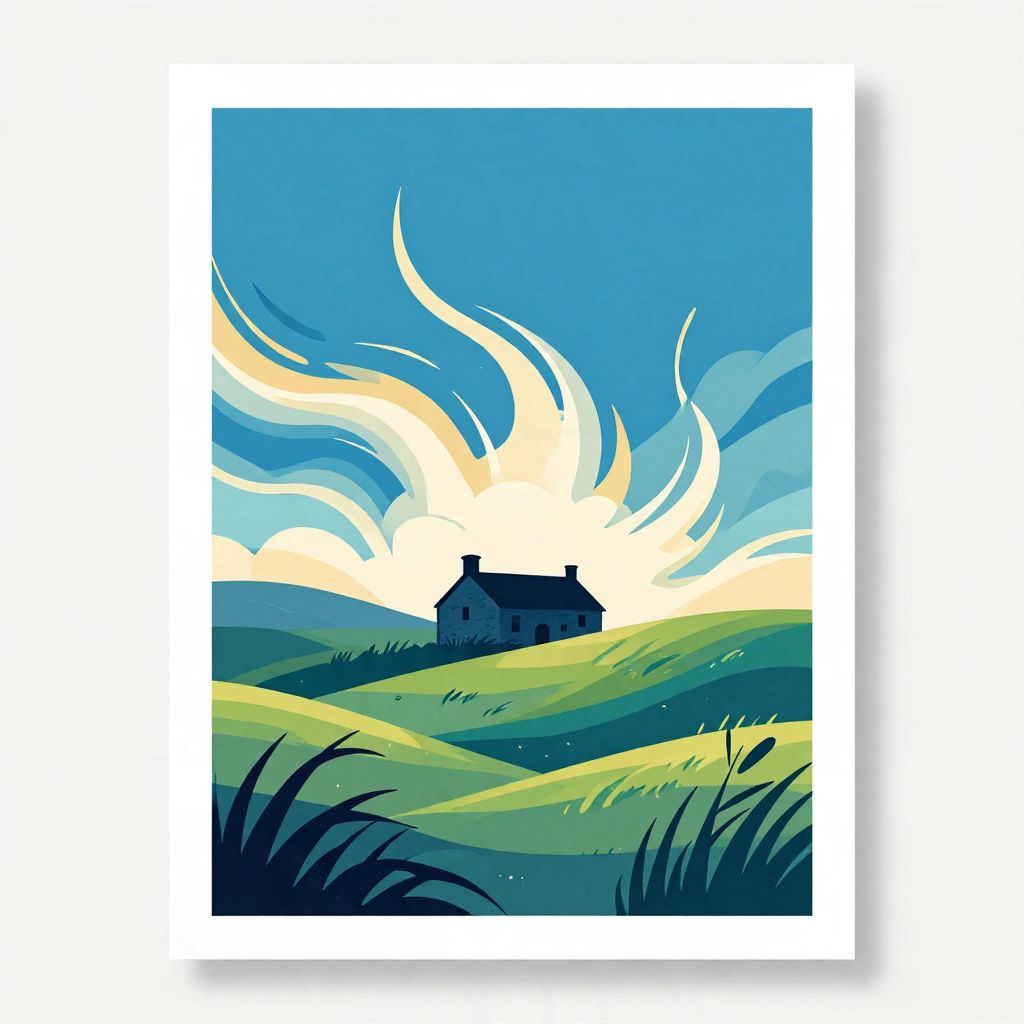
If you’ve come across Wuthering Heights and wondered what “wuthering” means, you’re asking about one of the novel’s most distinctive words. It is not a decorative title choice; it comes from the Yorkshire dialect and helps establish the novel’s weather-beaten, isolated atmosphere.
In simple terms, wuthering means being stormy, blustery, and exposed to strong wind. In Emily Brontë’s novel, the word captures both the harsh landscape around Wuthering Heights and the turbulent emotional world of the story.
What does “wuthering” mean in Wuthering Heights?
“Wuthering” refers to a place battered by wind and weather, especially on high ground. In the novel, it suggests a house and setting that are rough, exposed, and unsettled. The word also carries a sense of restless energy, which fits the intense relationships and conflicts at the center of the book.
Where does the word come from?
The term is associated with Yorkshire dialect, the regional speech of northern England where Emily Brontë lived. It is often explained as describing the sound and force of wind sweeping across open moorland.
That regional background matters because Brontë does not choose the title randomly. She uses a local word to root the novel in a specific landscape, making the setting feel authentic and inseparable from the story’s mood.
Why the title matters
The title Wuthering Heights does more than name a house. It signals that the novel will be shaped by climate, isolation, and emotional intensity, all of which are central to the book’s atmosphere.
- Literal meaning: windy, storm-beaten, exposed
- Setting meaning: the harsh moorland environment around the house
- Symbolic meaning: turbulence, unrest, and emotional violence
How does the meaning shape the novel’s atmosphere?
Brontë’s choice of “wuthering” helps readers feel the novel before they fully understand it. The word suggests a place where the weather is severe and life is not gentle, which mirrors the emotional severity of the characters’ lives.
The house called Wuthering Heights is not presented as a warm domestic refuge. Instead, it feels exposed, rugged, and almost defiant, as if the building itself has been shaped by the same forces that shape the people inside it.
Landscape and emotion
In Wuthering Heights, the moors are not just background scenery. They reflect the novel’s larger concerns: isolation, freedom, passion, and danger. The word “wuthering” captures that connection between outer weather and inner feeling.
That is one reason the title has remained memorable. It is both descriptive and symbolic, giving the novel its distinctive identity from the first page.
Is “wuthering” a real word?
Yes, but it is regional and old-fashioned rather than everyday modern English. Readers may not encounter it often outside Brontë’s novel or discussions of northern English dialect. That rarity adds to the title’s power and makes it feel rooted in a particular place and time.
Because the word is not common in standard usage, many readers first meet it through the novel itself. Its unfamiliarity can make the title seem mysterious, but the meaning is actually quite concrete once you know the dialect background.
What does the word suggest symbolically?
Beyond weather, “wuthering” suggests instability, force, and emotional turbulence. Those qualities are important to the novel’s characters, whose relationships are marked by passion, resentment, pride, and long memory.
The title therefore works on two levels at once: it describes a place and hints at the novel’s psychological intensity. That double meaning is part of what makes Brontë’s title so effective.
Common symbolic associations
- Storminess: emotional upheaval and conflict
- Exposure: vulnerability and lack of shelter
- Ruggedness: endurance, severity, and harshness
- Isolation: separation from ordinary social life
How is “wuthering” different from “heights”?
The second word in the title, “heights,” refers to elevation or high ground. Together, the two words create a vivid image: a high, wind-beaten place. The title is therefore both geographical and atmospheric.
“Heights” gives the location its physical shape, while “wuthering” gives it movement and sound. That combination is one reason the title feels so distinctive and memorable.
Why do readers often ask about this word?
Many readers encounter the title before they know the meaning of the dialect word, so “What does wuthering mean?” is a natural question. It is also a useful entry point into the novel, because understanding the title clarifies the book’s tone and setting.
For students and first-time readers, the word can serve as a key to the whole novel. Once you understand it, the harshness of the landscape and the emotional force of the story become easier to read together.
What does the meaning tell us about Emily Brontë’s style?
Brontë’s style often links nature and emotion, and “wuthering” is a perfect example of that method. She uses language that feels rooted in place while also carrying symbolic weight, which gives the novel its memorable atmosphere.
This is one reason the book is often discussed in relation to Gothic fiction and Romantic-era concerns, even though it also resists simple classification. The title itself suggests a world where environment and feeling are deeply intertwined.
In literary terms, the title does a lot of work
- It establishes setting immediately.
- It creates mood before the plot begins.
- It hints at the novel’s themes of passion and conflict.
- It reflects Brontë’s use of regional language.
Quick answer for students
If you need a short definition, use this: “Wuthering” means windy, stormy, and exposed to harsh weather, especially on high ground. In Wuthering Heights, it also suggests the novel’s emotional turbulence and bleak, untamed atmosphere.
That makes the title one of the best examples of a literary word doing both literal and symbolic work at once.
Takeaway
“Wuthering” means storm-beaten or blustery, and in Emily Brontë’s novel it captures both the harsh landscape and the passionate unrest within the story. If you remember that the word describes wind, exposure, and turbulence, you’ll understand a great deal about the novel’s mood from the title alone.
For more help with the novel’s ending and major events, you may also want to read how Wuthering Heights ends and what happens at the end of Wuthering Heights.