If you’re wondering what happens at the end of Wuthering Heights, the final chapters bring the novel’s long cycle of obsession, revenge, and grief to a quiet but unsettling close. Emily Brontë does not offer a neat resolution; instead, she leaves readers with a sense that the dead and the living remain spiritually entangled.
The ending matters because it resolves the fates of Heathcliff, Catherine’s legacy, and the younger generation while also deepening the novel’s central themes of love, violence, class, and haunting memory. Below is a clear summary of the ending, followed by its major themes and literary significance.
What happens at the end of Wuthering Heights?
Spoiler warning: by the end of the novel, Heathcliff abandons his campaign of revenge and dies after becoming consumed by grief and obsession. The younger generation—Hareton Earnshaw and Catherine Linton—are left free to marry, suggesting a possible ending to the family’s long cycle of suffering. The novel closes with an image of uneasy peace, not complete certainty.
Ending summary: the final events explained
Heathcliff’s decline
In the final stretch of the novel, Heathcliff becomes increasingly withdrawn and fixated on the memory of Catherine Earnshaw. His desire for revenge has already damaged the Earnshaw and Linton families, but near the end he seems less interested in punishing others than in being reunited with Catherine in death.
He stops eating properly, loses interest in the world around him, and appears haunted by visions of Catherine. Brontë presents his decline as both physical and psychological, making it difficult to separate illness, guilt, and supernatural longing.
The younger generation finds a way forward
While the older generation remains trapped in the consequences of the past, Hareton and the younger Catherine develop a relationship built on mutual respect rather than domination. Their bond contrasts sharply with the destructive love between Heathcliff and Catherine Earnshaw.
Hareton’s education and Catherine’s softening attitude signal a break from inherited cruelty. By the end, they are preparing to marry, which suggests that the next generation may finally escape the emotional violence that shaped the novel’s earlier events.
Heathcliff’s death
Heathcliff is found dead in Catherine Earnshaw’s old room, with the window open. The novel strongly implies that he has died while still consumed by the desire to join her, and the circumstances invite both realistic and supernatural interpretations.
His death does not feel like triumph or punishment in any simple sense. Instead, it reads as the collapse of a man who has spent his life trying to master loss and has ultimately been mastered by it.
The final burial and the lingering atmosphere
The ending includes the suggestion that Heathcliff and Catherine may rest near one another, and local rumor continues to surround their graves. The novel closes with a narrator’s reflection on the landscape, which remains beautiful but shadowed by memory.
That final mood matters: Brontë does not erase the past. She leaves readers with the sense that the land itself remembers what happened there.
Why the ending feels so haunting
Love is not neatly redeemed
Wuthering Heights is often called a love story, but the ending shows how destructive love can become when it is fused with possession, pride, and revenge. Heathcliff and Catherine’s bond is powerful, yet it has damaged everyone around them.
Rather than offering romantic closure, Brontë presents love as something that can outlast death but still fail to create peace.
Revenge finally exhausts itself
Heathcliff spends much of the novel using inheritance, marriage, and emotional cruelty as tools of revenge. By the end, however, that project has emptied him out. He no longer seems energized by punishment; he seems consumed by a deeper fixation on absence.
This shift is important because it shows revenge as self-destructive. The harm he inflicts on others eventually circles back and leaves him spiritually ruined.
The ending suggests partial healing, not perfect harmony
The marriage of Hareton and Catherine Linton offers hope, but it is not a magical cure for the past. The novel’s final tone is one of cautious restoration rather than full closure.
Brontë allows the younger pair to begin again, yet the memory of what came before remains embedded in the setting and in the family history.
Main themes in the ending
1. Love and obsession
The ending sharpens the difference between love as care and love as fixation. Heathcliff’s attachment to Catherine has become inseparable from grief, possession, and identity loss.
By contrast, Hareton and Catherine’s relationship grows through patience and mutual change, making it feel more balanced and humane.
2. Death and the possibility of reunion
Death in the novel is not simply an ending. For Heathcliff especially, it seems to represent the only imaginable release from separation.
At the same time, Brontë keeps the supernatural ambiguous. The ending invites readers to ask whether reunion is literal, spiritual, or only imagined through grief.
3. The cycle of violence
One of the novel’s strongest ideas is that cruelty repeats itself across generations. Children inherit the consequences of the choices made by parents and guardians.
The final chapters matter because they suggest that cycles can be broken, but only through education, empathy, and a refusal to repeat old patterns.
4. Nature, landscape, and memory
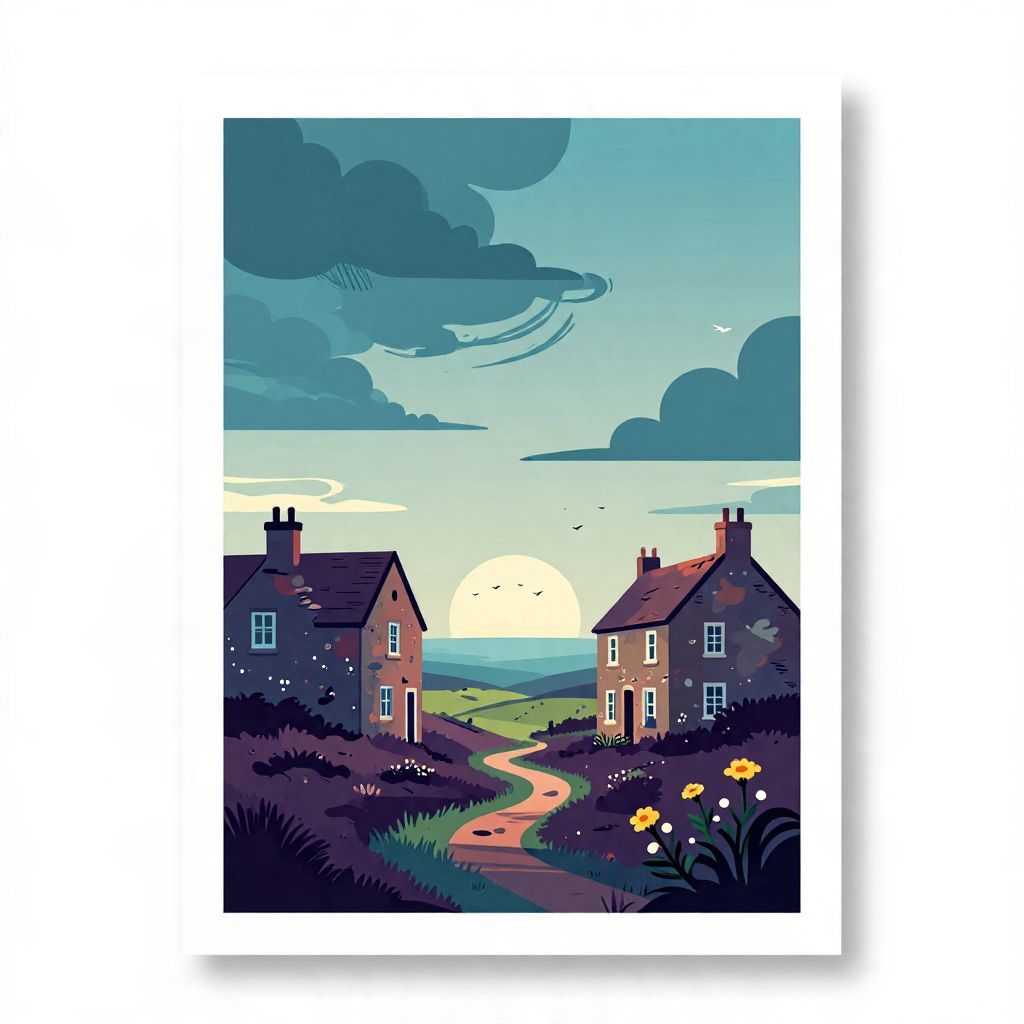
The moors and houses in Wuthering Heights are never just background. They reflect emotional states and preserve the novel’s atmosphere of isolation and intensity.
By the end, the landscape feels like a repository of memory, as if the setting itself has absorbed the suffering of the characters.
Characters to pay attention to in the final chapters
- Heathcliff — his revenge collapses into obsession and self-destruction.
- Catherine Earnshaw — though dead earlier in the novel, her presence dominates the ending through memory and haunting.
- Hareton Earnshaw — he represents the possibility of renewal after abuse and neglect.
- Catherine Linton — she helps bring the novel toward a more hopeful future.
- Nelly Dean — as narrator, she frames the ending and shapes how readers understand what they have witnessed.
Symbols and motifs that matter at the end
The window
The open window near Heathcliff’s death is one of the novel’s most memorable images. It suggests passage, longing, and the boundary between life and death.
Because windows in the novel often mark thresholds between inside and outside, the image reinforces the sense that Heathcliff is poised between worlds.
The house
Both Wuthering Heights and Thrushcross Grange carry symbolic weight. The former is associated with wildness, conflict, and emotional extremity, while the latter suggests order and social refinement.
By the end, the younger generation seems capable of bridging those worlds in a healthier way.
Ghostly presence
Whether or not readers interpret the supernatural elements literally, the novel’s ending is saturated with ghostly feeling. Catherine’s presence persists in memory, dream, and landscape.
That lingering presence is part of what makes the ending so memorable: the dead remain emotionally active even when the plot has technically concluded.
How to read the ending: common interpretations
A Gothic ending
From a Gothic perspective, the ending completes a story of haunting, isolation, and emotional extremity. Heathcliff’s death in Catherine’s room feels like the final collapse of a haunted house narrative.
A moral ending
Some readers see the ending as a moral reckoning in which cruelty destroys the cruel. But Brontë is not simple or didactic; Heathcliff is not merely punished, and the novel does not reduce itself to a tidy lesson.
A tragic-romantic ending
Another reading sees the ending as tragic-romantic: love survives death, but only at terrible cost. This interpretation captures the novel’s emotional force, though it should be balanced against the damage caused by that same love.
Why the ending still resonates
The final pages of Wuthering Heights remain powerful because they refuse easy closure. The novel ends with continuity and rupture at once: one generation is broken, another may begin anew, and the past still feels alive.
That tension is what makes the book endure. Brontë leaves readers with a haunting mixture of grief, relief, and uncertainty, which is exactly why the ending continues to provoke discussion.
If you want to keep exploring the novel’s final chapters, you may also find these guides useful: how Cathy dies in Wuthering Heights and how the Wuthering Heights movie ends.