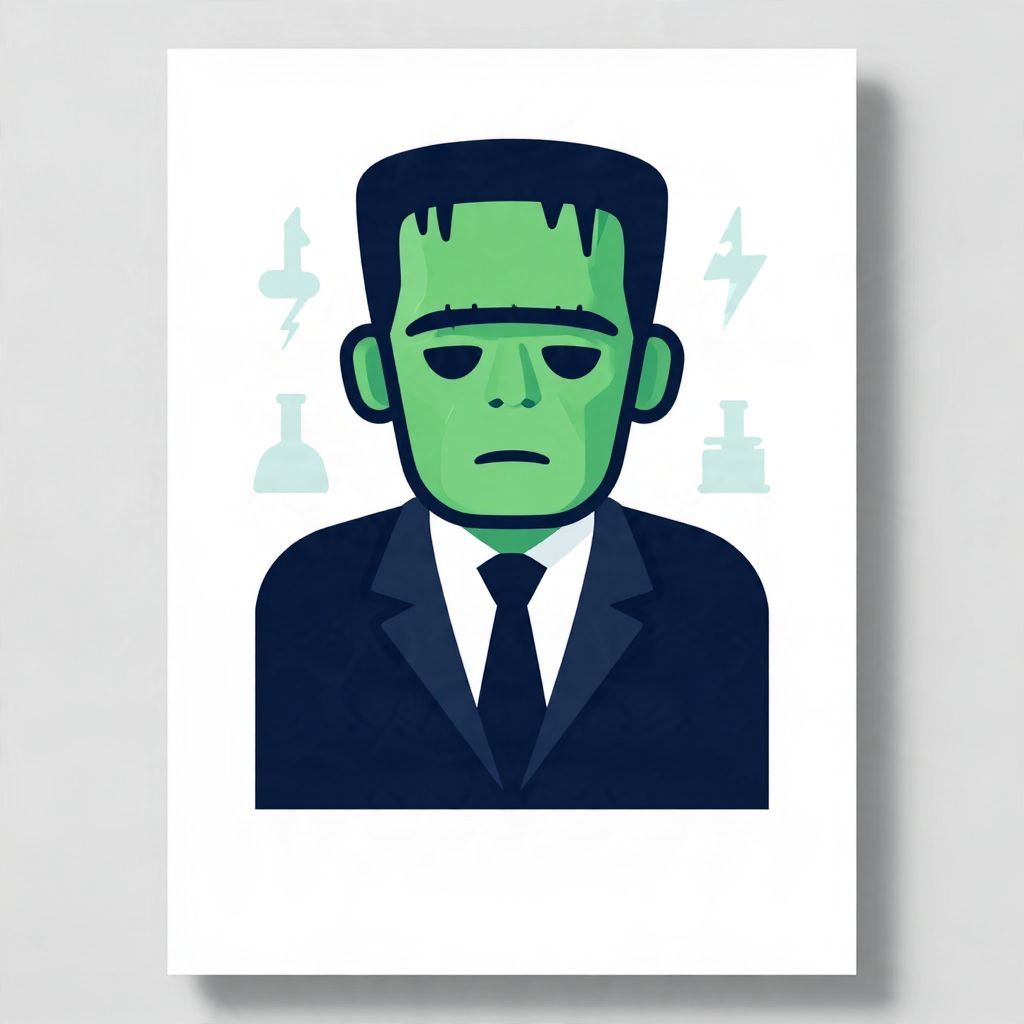
If you’ve wondered what Frankenstein looks like, you’re not alone. The answer depends on whether you mean Mary Shelley’s creature in the novel, the popular image of “Frankenstein” from films and stage adaptations, or the way the name has come to stand for the monster itself.
In Frankenstein, the being is not described as a square-headed green giant. Shelley presents him as unnervingly human, with a large frame, yellowish skin, watery eyes, and a face that becomes horrifying because it is assembled from dead parts and animated unnaturally.
What does Frankenstein look like in Mary Shelley’s novel?
In Mary Shelley’s Frankenstein, the creature is tall, broad, and physically powerful, but his appearance is meant to be disturbing rather than comic-book monstrous. Shelley describes him with yellow skin, dark hair, and eyes that are strikingly alive, while his features appear mismatched and unnatural because he is stitched together from human remains.
Why do people picture Frankenstein as a green monster?
The familiar “Frankenstein look” mostly comes from later adaptations, especially stage and film versions that gave the creature flat head shapes, bolts in the neck, heavy makeup, and a lumbering gait. Those details are not Shelley’s own description; they are part of the cultural image that gradually replaced the novel’s more unsettlingly human figure.
Frankenstein’s appearance in the novel
A body that is human, but wrong
Shelley does not give a full medical-style description, but she makes one thing clear: the creature resembles a man in size and structure. His body is large and well-proportioned, yet the effect is grotesque because the parts do not belong together naturally.
The result is a figure that is recognizably human and therefore more disturbing. Shelley’s horror depends less on obvious deformity than on the feeling that something familiar has been made unnatural.
The face that unsettles Victor
Victor Frankenstein is revolted by the being’s face the moment it comes to life. The features are not monstrous in the fantasy-creature sense; rather, they are assembled in a way that makes them seem lifeless, artificial, and out of harmony with each other.
That reaction matters because the novel is partly about perception. The creature’s appearance is horrifying, but the deeper tragedy is that he is denied the chance to be seen as anything other than a monster.
How Shelley uses color and contrast
Shelley repeatedly contrasts the creature’s pale or yellowish skin with his dark eyes and hair. This sharp contrast makes him memorable, but it also emphasizes his unnatural origin. He looks almost alive in some respects and deeply dead in others.
That tension between life and death is central to the novel’s meaning. Frankenstein’s creature is not simply a corpse; he is a living being created from death.
What the name “Frankenstein” actually refers to
One of the most common misunderstandings is that Frankenstein is the monster’s name. In the novel, Victor Frankenstein is the scientist who creates the being. The creature is unnamed, which adds to his isolation and to the way society refuses to recognize him as a person.
This confusion has become so widespread that “Frankenstein” now often means the monster in everyday speech. Still, if you are asking what Frankenstein looks like in the book, the precise answer is that the creature is the one being described, not Victor.
Why Shelley’s description matters
Appearance as a symbol of isolation
The creature’s appearance is not just a visual detail; it symbolizes his separation from human society. Because he is assembled from dead matter and made to live, his body marks him as different before he has even spoken.
That difference becomes social and emotional. People recoil from him, and their rejection helps turn him into the lonely, angry figure he becomes.
Beauty, ugliness, and moral judgment
Shelley invites readers to think critically about how quickly people judge by appearance. The creature’s body is frightening, but his feelings, intelligence, and capacity for affection complicate the idea that visible ugliness equals inner evil.
In that sense, Frankenstein is not only a horror story. It is also a novel about prejudice, responsibility, and the danger of assuming that a person’s exterior reveals their moral worth.
How adaptations changed Frankenstein’s look
The stage and film tradition
Many of the features people now associate with Frankenstein come from adaptations rather than the novel itself. Over time, costume designers and filmmakers created a more iconic monster image that was easier to recognize on stage and screen.
These versions often simplified the creature into a visual shorthand: heavy brow, stiff movement, patchwork body, and a silent or grunting presence. That image became so influential that it began to overshadow Shelley’s more subtle original description.
The “monster” as pop culture icon
Once the creature entered popular culture, he stopped being only a literary character and became a symbol. He now stands for scientific overreach, fear of the unnatural, and the idea of a creation escaping its maker’s control.
That cultural afterlife is why people often search for “what does Frankenstein look like” even when they are thinking of a movie monster rather than the novel’s actual creature.
What readers should notice about the creature’s design
- He is large and human-shaped, not a random fantasy beast.
- His features are mismatched, which creates unease.
- His skin tone and eyes are emphasized to show unnatural life.
- His appearance triggers rejection before he can form relationships.
- He is unnamed, reinforcing his exclusion from human society.
Meaning and themes tied to Frankenstein’s appearance
Creation without care
The creature’s appearance reflects Victor’s reckless method of creation. He pursues discovery without thinking through the moral or emotional consequences, and the body he produces becomes the physical evidence of that failure.
In this way, the creature looks like the consequences of bad judgment made visible.
The horror of the familiar made strange
Shelley’s genius lies in making the creature unsettling because he is almost human. If he were a completely alien monster, the story would be simpler. Instead, his resemblance to humanity forces readers to confront the fragility of the boundary between human and nonhuman.
That is one reason the novel remains powerful: the creature is frightening, but he is also pitiable, intelligent, and deeply alone.
Appearance versus identity
The novel suggests that identity cannot be reduced to appearance. The creature’s body determines how others treat him, yet his mind and emotions reveal a being capable of reflection and suffering.
That gap between outward form and inner life is one of the novel’s central literary tensions.
Quick answer: what does Frankenstein look like?
In Mary Shelley’s novel, Frankenstein’s creature is a large, human-shaped being with yellowish skin, dark hair, and striking eyes, but his assembled features make him look unnatural and disturbing. The famous green, bolt-necked version comes from later adaptations, not from the original text.
Why this question still matters
Asking what Frankenstein looks like is really a way of asking how literature and culture reshape one another. Shelley created a creature whose appearance is memorable because it is ambiguous: human enough to feel tragic, strange enough to inspire fear.
That ambiguity is part of why the novel endures. The creature’s look is not just a detail of horror; it is the starting point for a larger story about responsibility, rejection, and what it means to be seen as human.
If you want to place the novel in its setting, you may also enjoy when Frankenstein takes place and, for another famous literary creature, what Grendel looks like.