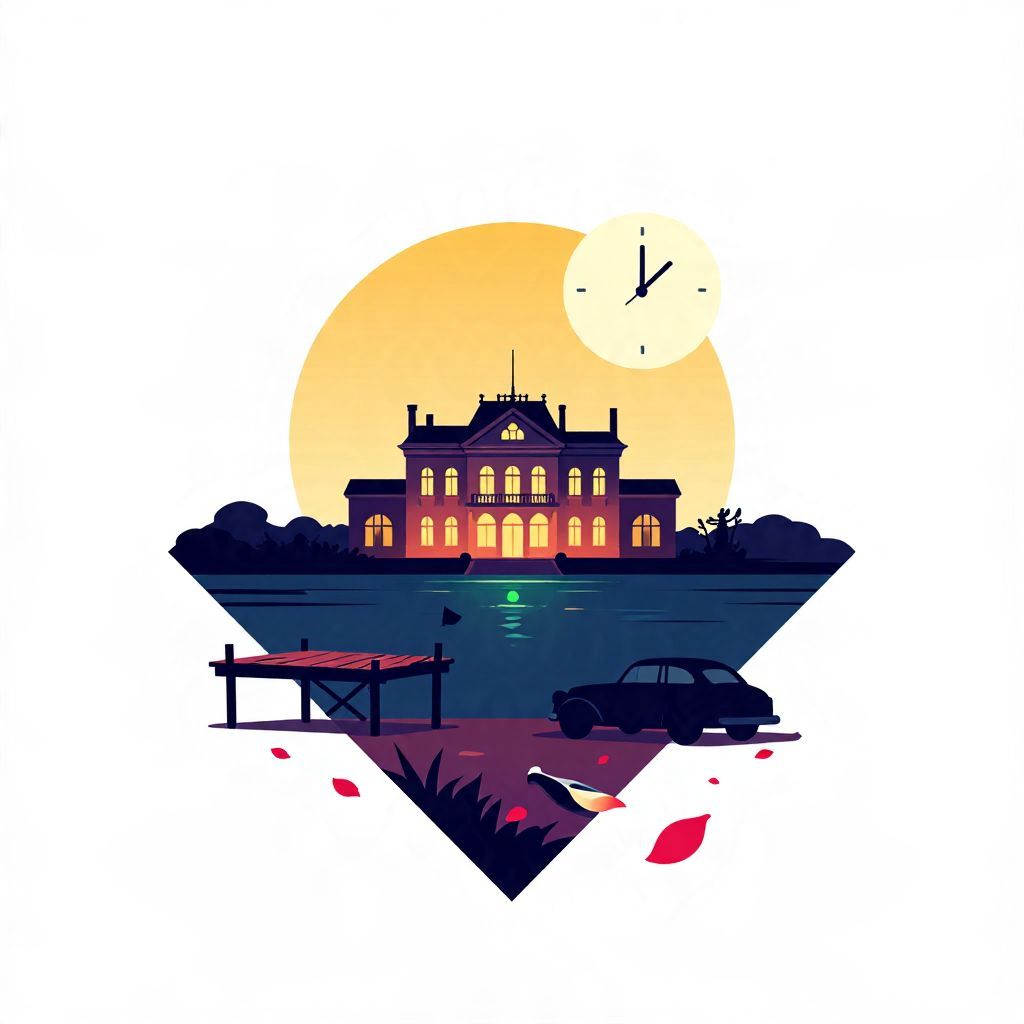
Wondering how The Great Gatsby ends? F. Scott Fitzgerald’s novel closes with a quiet but devastating collapse of dreams, love, and illusion. The final chapters reveal what becomes of Gatsby, Daisy, Nick, and the world they inhabit, while also tying the ending to the book’s larger themes of class, memory, and the American Dream.
If you want the ending explained clearly, with the key plot points and their meaning, this guide walks through the final events and why they matter.
How does The Great Gatsby end?
Spoiler alert: The Great Gatsby ends with Gatsby dead, Daisy gone back to Tom, and Nick disillusioned by the carelessness of the wealthy. After Gatsby is blamed for Myrtle Wilson’s death, he is killed by George Wilson, while the Buchanans retreat into their money and Nick leaves West Egg, reflecting on the emptiness behind Gatsby’s dream.
What happens in the final chapters?
The ending begins with the aftermath of the accident in which Myrtle Wilson is struck and killed by Gatsby’s car. Gatsby takes the blame to protect Daisy, even though Daisy was driving. This choice shows how completely he is devoted to her, and how little protection that devotion offers him.
Gatsby waits for Daisy
After the accident, Gatsby stays outside Daisy’s house, hoping she may need him or choose him. Instead, she remains with Tom, who quickly regains control of the situation. Gatsby’s long-held belief that Daisy will leave her old life behind is exposed as fragile and unrealistic.
George Wilson’s revenge
George Wilson, consumed by grief and confusion, is led to Gatsby’s house and shoots Gatsby before killing himself. The tragedy is not only violent but deeply ironic: Gatsby dies for a woman who does not return his sacrifice, and for a crime he did not fully commit.
No one really comes to Gatsby’s side
One of the most painful parts of the ending is how few people attend to Gatsby after his death. The social world that once seemed to admire him disappears almost instantly. The absence of true loyalty underscores Fitzgerald’s critique of a society built on spectacle rather than human connection.
Why does the ending feel so tragic?
The ending is tragic because Gatsby’s dream is larger than reality, and reality finally wins. He has spent years trying to recreate the past and win Daisy as if time could be reversed, but the novel shows that memory, money, and social class all work against that fantasy.
The collapse of the American Dream
Gatsby’s rise looks like a version of the American Dream: self-invention, ambition, and wealth. But Fitzgerald turns that dream into a critique. Gatsby acquires money, status, and a mansion, yet none of it can buy the one thing he wants most: a genuine future with Daisy.
Class and social barriers
Daisy’s choice is not simply personal. She belongs to a world of inherited privilege that Gatsby can imitate but never fully enter. Tom and Daisy remain insulated by wealth, while Gatsby, despite his fortune, is still treated as an outsider.
Carelessness as a moral theme
Nick’s final judgment of Tom and Daisy is one of the novel’s most famous ideas: they are careless people who break things and let others clean up the damage. The ending proves that point. Gatsby, Myrtle, and George all suffer the consequences, while the Buchanans escape responsibility.
How Nick Carraway frames the ending
Nick’s narration gives the ending its emotional weight. He is not just reporting events; he is reflecting on what they mean. By the end, he has lost his early fascination with East Coast glamour and sees the world of wealth as morally hollow.
Nick’s final judgment of Gatsby
Even though Gatsby is flawed, Nick comes to admire his hope and loyalty to an ideal. Gatsby is not presented as morally perfect, but as someone capable of believing intensely in a dream. That belief makes him both admirable and doomed.
The final image of the green light
The novel closes with one of its most memorable symbols: the sense that people are forever reaching toward something just out of reach. The green light, first associated with Daisy’s dock, becomes a broader symbol of desire, longing, and the human tendency to chase an imagined future.
Main themes in the ending of The Great Gatsby
The final pages bring together the novel’s central themes. Fitzgerald does not offer a neat resolution; instead, he leaves readers with a layered ending that is emotionally complete but morally unsettling.
- Illusion vs. reality: Gatsby’s dream cannot survive contact with the truth.
- The American Dream: wealth and ambition do not guarantee fulfillment.
- Time and memory: the past cannot be perfectly recovered.
- Class divisions: social status shapes who can act freely and who pays the price.
- Responsibility: the powerful often avoid consequences while others suffer.
Key characters at the end
Understanding the ending is easier when you look at where each major character ends up. Fitzgerald uses their final positions to sharpen the novel’s social and emotional critique.
Jay Gatsby
Gatsby dies still believing in the possibility of Daisy and the dream she represents. His death is tragic because it reveals both his devotion and his blindness. He cannot accept that the past he wants has already changed.
Daisy Buchanan
Daisy ends the novel protected by wealth and marriage. She does not face the consequences of Gatsby’s devotion or Myrtle’s death in any direct way. Her retreat into privilege makes her one of the clearest examples of the novel’s moral emptiness.
Tom Buchanan
Tom survives by manipulating others and shifting blame. He is aggressive, entitled, and emotionally reckless, yet the ending allows him to remain secure. Fitzgerald uses Tom to show how power can shield people from accountability.
Nick Carraway
Nick leaves the East disenchanted. His departure is both literal and symbolic: he is walking away from a world he can no longer admire. The ending becomes, in part, his moral awakening.
Literary techniques Fitzgerald uses in the ending
Fitzgerald’s ending works not only because of its events, but because of how they are written. The style is restrained, reflective, and symbolic, which makes the tragedy feel larger than the plot itself.
Symbolism
The green light, the valley of ashes, the eyes of Doctor T. J. Eckleburg, and Gatsby’s mansion all gain added weight by the end. These symbols help connect private tragedy to broader social decay.
Foreshadowing
Earlier hints about Gatsby’s vulnerability, Daisy’s indecision, and the instability of the wealthy world all prepare the reader for the ending. The novel’s final events feel shocking, but not random.
Ironic contrast
Fitzgerald repeatedly contrasts Gatsby’s romantic hope with the cold reality of the Buchanans’ behavior. That irony is central to the novel’s power: the more Gatsby believes in meaning, the more the world around him reveals its emptiness.
Is the ending satisfying?
For many readers, the ending is satisfying in an artistic sense but heartbreaking in an emotional one. It resolves the novel’s central conflict without offering comfort. Gatsby’s dream is exposed as impossible, yet the novel still leaves room for sympathy toward him.
That balance is part of what makes The Great Gatsby endure. It is not a story about success; it is a story about longing, self-invention, and the cost of believing that desire can defeat reality.
Book summary of the ending in one paragraph
After Myrtle Wilson is killed in Gatsby’s car, Gatsby protects Daisy by taking the blame. George Wilson, misled and desperate, kills Gatsby and then himself. Daisy and Tom disappear back into their privileged life, while Nick, disgusted by their carelessness, leaves the East. The novel ends with reflection on lost dreams and the impossibility of fully reclaiming the past.
Final takeaway
The Great Gatsby ends as a tragedy of hope undone by class, carelessness, and time. Gatsby dies still reaching for a dream that never truly existed, and Nick’s final reflections turn that personal loss into a broader warning about American ambition and illusion.
If you’re interested in more ending-focused reading guides, you may also like what happens at the end of Ugly Love and the ending of Where the Crawdads Sing.