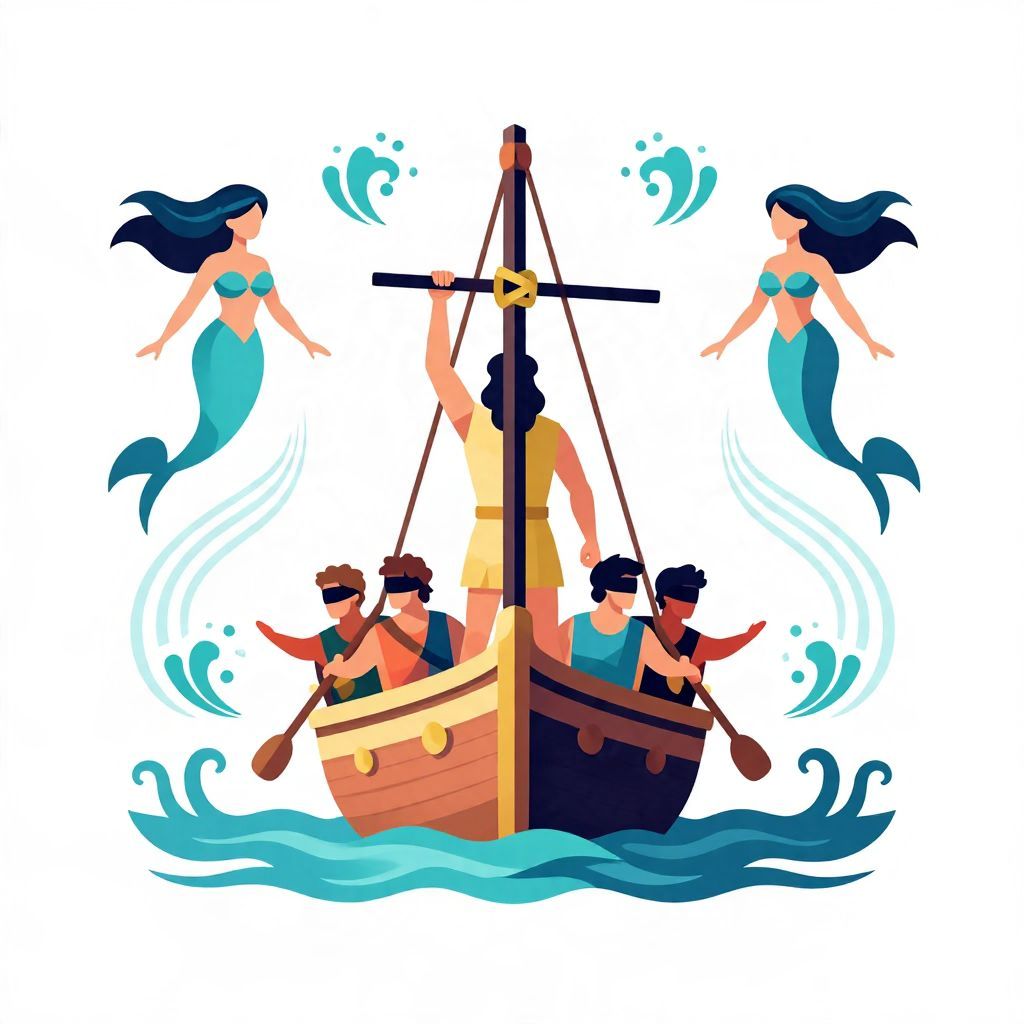
Odysseus listens to the Sirens because he wants to hear their song without being destroyed by it. In The Odyssey, this is not simple curiosity; it is a controlled act of self-knowledge, courage, and temptation. He chooses to experience dangerous knowledge while relying on a plan that keeps him alive.
The episode is one of the poem’s most famous tests of restraint. It reveals how Greek epic treats desire, intelligence, and survival as inseparable parts of heroism.
Why did Odysseus listen to the Sirens?
Odysseus listens to the Sirens because he is drawn to their promise of knowledge and glory, but he also understands the danger they pose. He asks to hear them while tied to the mast, turning temptation into a test of discipline. The scene shows his curiosity, his ambition, and his awareness that wisdom often comes with risk.
What the Sirens represent in The Odyssey
A lure of forbidden knowledge
The Sirens are not just singers; they symbolize irresistible attraction to things that can ruin a person. Their song offers what sounds like complete understanding, and that promise is part of the trap. Odysseus is tempted by the idea that he can know more than ordinary mortals are meant to know.
Danger wrapped in beauty
Homer presents the Sirens as a classic example of deceptive beauty. Their music is lovely, but it leads sailors to their deaths. This contrast matters because it reflects one of the poem’s central concerns: appearances can hide destruction.
A test of heroic self-control
For Odysseus, listening is not passive. He actively engineers the encounter so he can hear the song and still survive. That makes the scene a study in self-mastery, not just temptation.
How Odysseus prepares for the encounter
He follows Circe’s warning
Odysseus is warned about the Sirens before he reaches them. He does not ignore the warning; instead, he plans around it. This is important because the episode shows him as both adventurous and practical.
He protects his crew
Odysseus plugs his sailors’ ears with wax so they cannot hear the song. He then has them tie him securely to the mast. The crew obeys his instructions and keeps rowing no matter what he says later.
He gives up control on purpose
By binding himself, Odysseus creates a situation in which he can experience the Sirens’ call without acting on it. This is a striking paradox: he seeks freedom through restraint. In epic terms, that restraint is part of his intelligence, or mētis.
What does this scene say about Odysseus?
He is curious, not merely cautious
Odysseus is often praised for cleverness, and the Sirens episode confirms that trait. He does not avoid danger by refusing to know; he wants to hear what the Sirens offer. That curiosity makes him more complex than a hero who simply resists temptation from a distance.
He wants fame and understanding
The Sirens appeal to Odysseus because they seem to promise insight into the world. They also flatter the heroic desire to be exceptional. In that sense, the scene connects knowledge with kleos, the Greek idea of fame or lasting renown.
He is vulnerable to his own desires
Even though Odysseus is resourceful, the episode makes clear that he is not immune to temptation. He has to be physically restrained. That detail keeps the poem honest about human limits: intelligence helps, but it does not erase desire.
Why the crew matters in this episode
They represent obedience and trust
The sailors do not hear the Sirens, so they cannot be tempted by the song. Their role is practical, but it also highlights the trust between leader and crew. Odysseus depends on them to carry out his plan, and they depend on him to guide them safely.
They show the difference between hearing and acting
Odysseus hears the song, but the crew does not. That contrast helps the poem explore how knowledge can be dangerous when it is not managed. The episode suggests that exposure to temptation is not the same as surrendering to it.
Literary meaning of the Sirens episode
Temptation and restraint
The scene is often read as a meditation on the tension between desire and discipline. Odysseus does not eliminate temptation; he contains it. That makes the episode especially memorable because it shows a hero who survives not by purity, but by strategy.
Knowledge as both reward and threat
The Sirens’ song promises insight, but the poem implies that some knowledge is dangerous when pursued without limits. Odysseus’s response suggests that wisdom includes knowing what one can safely hear and what one must resist.
Epic heroism with a psychological edge
Unlike battles with monsters or warriors, this encounter is inward. The conflict happens inside Odysseus as much as around him. That psychological dimension is one reason the scene continues to resonate with modern readers.
Symbols and techniques Homer uses
The mast as a symbol of restraint
The mast is more than a piece of ship equipment. It becomes a symbol of chosen limitation, the physical structure that keeps Odysseus from acting on impulse. In that sense, it represents the boundary between desire and survival.
The song as an auditory trap
Because the Sirens’ power lies in sound, the episode depends on listening rather than seeing. Homer uses this to make the danger feel intimate and immediate. The threat enters through the ear, not the eye, which makes it harder to resist.
Dramatic irony
Readers know the plan before the Sirens appear, so the suspense comes from watching Odysseus endure what he asked for. When he begs to be released, the crew ignores him as instructed. That reversal creates dramatic irony and reinforces the seriousness of the test.
How this episode fits into the larger poem
Part of the journey home
The Sirens are one of several obstacles Odysseus faces on the way back to Ithaca. Each challenge reveals a different form of danger, and this one is especially about inner weakness rather than physical force. It belongs to the poem’s larger pattern of testing endurance, judgment, and identity.
A turning point in his self-understanding
By the time Odysseus reaches the Sirens, he has already learned that survival requires more than strength. He must manage his own impulses. The episode deepens that lesson by showing him willingly approaching danger in order to master it.
Common questions readers ask
Did Odysseus want to die?
No. He clearly wants to survive, which is why he arranges to be tied up and why he protects the crew. His willingness to hear the Sirens is not a death wish; it is a calculated risk.
Was he the only one who heard them?
Yes, in the usual reading of the episode, Odysseus is the only one who hears the Sirens because the others have wax in their ears. That isolation is part of the scene’s power: he alone faces the full force of the temptation.
Is the episode about curiosity or arrogance?
It can be read as both. Odysseus’s curiosity makes him want to hear the song, but the scene also hints at pride in believing he can encounter danger and survive it. Homer leaves room for both interpretations.
Why this scene still matters
The Sirens episode remains memorable because it captures a very human problem: wanting something that may harm us. Odysseus does not solve that problem by pretending he is above temptation. He solves it by building a structure of restraint around himself.
That is why Odysseus listens to the Sirens: to experience their knowledge, to test his own will, and to survive the encounter through planning rather than impulse. If you want to place this scene in the wider journey, you may also enjoy reading about how long Odysseus was away from home and how Greek values of family and perseverance shape Odysseus’s return.