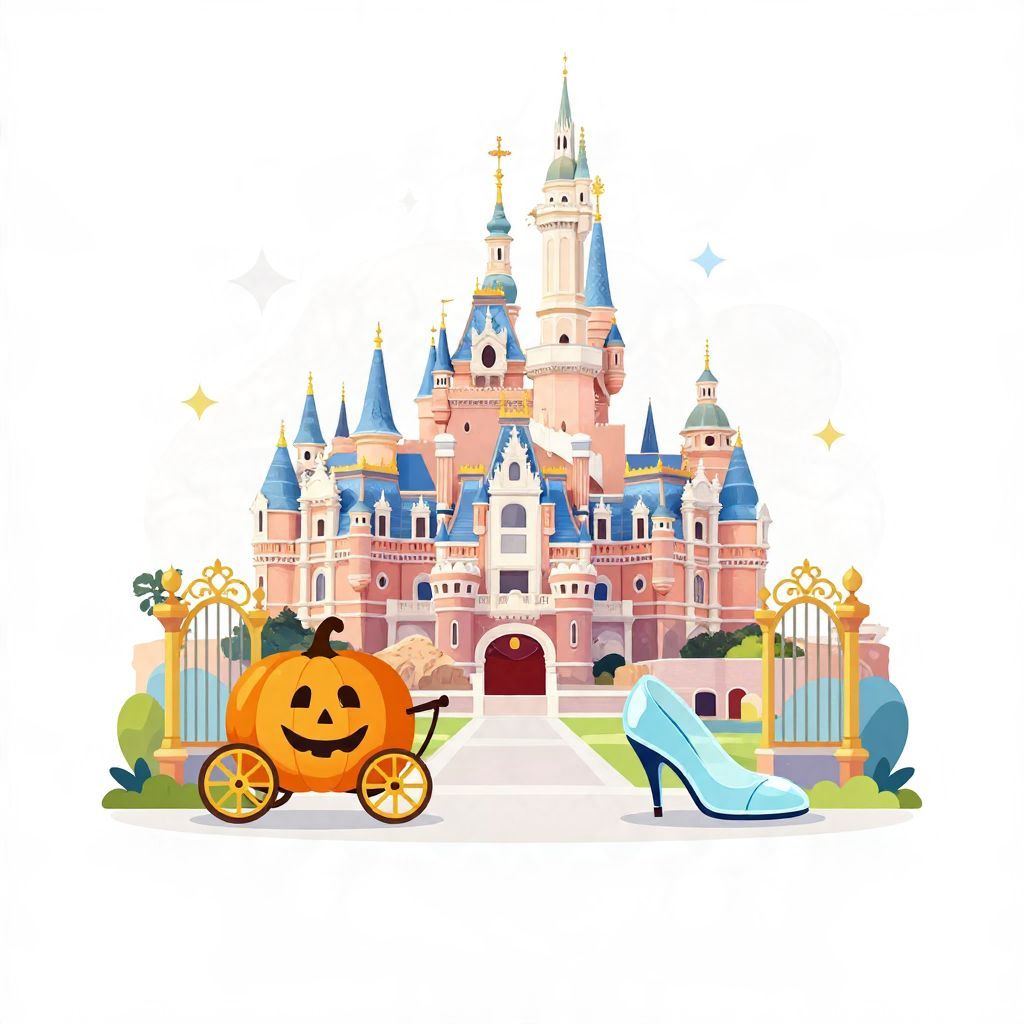
If you’re asking where Cinderella takes place, the short answer is that the story is set in an unnamed, fairy-tale kingdom rather than a clearly mapped real-world country. Most versions place the action in a royal household, a nearby town or castle, and the wider social world of court life, but the exact location is intentionally vague.
That vagueness is part of the tale’s power. Cinderella is less interested in geography than in transformation, social hierarchy, and the movement from hardship to recognition.
Where does Cinderella take place?
Cinderella takes place in an unspecified fairy-tale kingdom, usually centered on her home, a stepfamily household, and the royal palace or castle where the ball occurs. Because the story has been told in many versions across cultures, it does not have one fixed setting. Instead, it uses a generalized courtly world that feels timeless and symbolic rather than historically exact.
The main setting of Cinderella
Cinderella’s home
The story usually begins in the house where Cinderella lives with her father, stepmother, and stepsisters. This domestic space is important because it contrasts sharply with the grandeur of the palace. It is also the place where Cinderella’s mistreatment is most visible, making the home a site of emotional conflict rather than comfort.
The palace or royal ball
The most famous setting in Cinderella is the palace, especially the ballroom where the prince hosts the ball. This is where Cinderella’s social position changes dramatically, at least for a night. The palace represents visibility, status, and possibility, while the ball functions as the story’s turning point.
Threshold spaces: carriage, road, stairs, and garden
Many versions of the tale emphasize in-between places such as roads, staircases, gardens, and the route from home to palace. These spaces matter because Cinderella is a character in transition. She moves between servitude and recognition, private life and public life, invisibility and being seen.
Why the setting is deliberately vague
The setting of Cinderella is not meant to be realistic in the modern sense. Folktales often use broad, familiar locations so the story can travel easily across cultures and time periods. An unnamed kingdom allows the tale to feel universal, which is one reason so many audiences recognize it immediately.
This also explains why different adaptations place the story in different historical-looking worlds. Some versions feel medieval, some feel early modern, and others are openly fantasy-based. The core story remains the same even when the visual setting changes.
How different versions shape the place of the story
Charles Perrault’s version
In the best-known literary version by Charles Perrault, the setting is a refined courtly world with elegant clothing, carriages, and a formal ball. The atmosphere suggests aristocratic France, though the tale does not name a specific city or region. The details support a world of manners, beauty, and social rank.
The Brothers Grimm version
The Grimm version feels darker and more rustic. It places more emphasis on the family home, the natural world, and the moral seriousness of the tale. The palace still matters, but the story’s emotional center is less glamorous and more severe than in Perrault’s telling.
Other cultural variants
Many cultures have their own Cinderella-like stories, and these often change the setting to fit local traditions. Some versions feature villages, temples, or imperial courts rather than a European-style castle. This flexibility shows that the tale’s setting is adaptable, while its emotional structure stays recognizable.
What the setting means in the story
Home as confinement
Cinderella’s home is usually not a place of safety. Instead, it symbolizes confinement, labor, and emotional neglect. The setting helps readers understand her isolation before the magical transformation begins.
The palace as social possibility
The palace represents access to a different life. It is not only a romantic location but also a social one, where class boundaries can be crossed, even if temporarily. The prince’s ball becomes a stage on which Cinderella’s hidden identity can emerge.
Magic as a bridge between places
Fairy godmothers, enchanted dresses, pumpkins, glass slippers, and other magical elements help Cinderella move between settings. In literary terms, magic functions as a plot device that connects the private world of suffering to the public world of recognition.
Symbolic geography in Cinderella
Even though the tale does not provide a map, its spaces are highly symbolic. The house, the palace, and the road between them each carry meaning. Together, they create a moral geography: oppression at home, opportunity at court, and transformation in transit.
- The house often symbolizes hardship and exclusion.
- The palace symbolizes prestige, visibility, and social mobility.
- The road or carriage route symbolizes passage and change.
- The ballroom symbolizes performance, recognition, and choice.
How setting supports the themes of Cinderella
Social class
The contrast between Cinderella’s home and the palace highlights class difference. The story asks what happens when someone from a low-status position enters a space reserved for the elite. That tension is central to the tale’s appeal.
Identity and recognition
Cinderella is often unrecognized in her ordinary life, but the palace allows her to be seen differently. The setting makes this theme visible: the same person can be treated as invisible in one place and extraordinary in another.
Transformation
Because the tale moves between ordinary domestic space and dazzling court space, it dramatizes transformation in a concrete way. The shift in setting mirrors the shift in Cinderella’s social and emotional life.
Is Cinderella based on a real place?
There is no single confirmed real-world location for Cinderella. Some later retellings borrow visual details from specific countries or periods, but the original folktale tradition does not anchor the story to one historical city or nation. Any resemblance to real places is usually an adaptation choice rather than a fixed fact of the tale.
Why readers still ask where Cinderella takes place
People often ask this question because the story feels vivid enough to be placeable. The castle, the ball, the servants, and the family home all suggest a recognizable social world. But the tale’s power comes from its openness: it can feel local and specific while remaining universal.
That balance is one reason Cinderella has endured for centuries. The setting is never fully pinned down, yet it is always emotionally clear.
Quick answer for students and readers
If you need a simple response for class or discussion, you can say: Cinderella takes place in an unnamed fairy-tale kingdom, mainly between her stepfamily’s home and the royal palace where the ball is held. The story’s exact location is not specified because it is a folktale with many versions.
Final takeaway
So, where does Cinderella take place? In a symbolic fairy-tale world that centers on a harsh home, a magical journey, and a royal court. The setting is deliberately broad, and that flexibility helps the story remain meaningful across different cultures, retellings, and generations.
If you enjoy exploring how setting shapes a story, you may also like where The Outsiders takes place and Where in Rome.