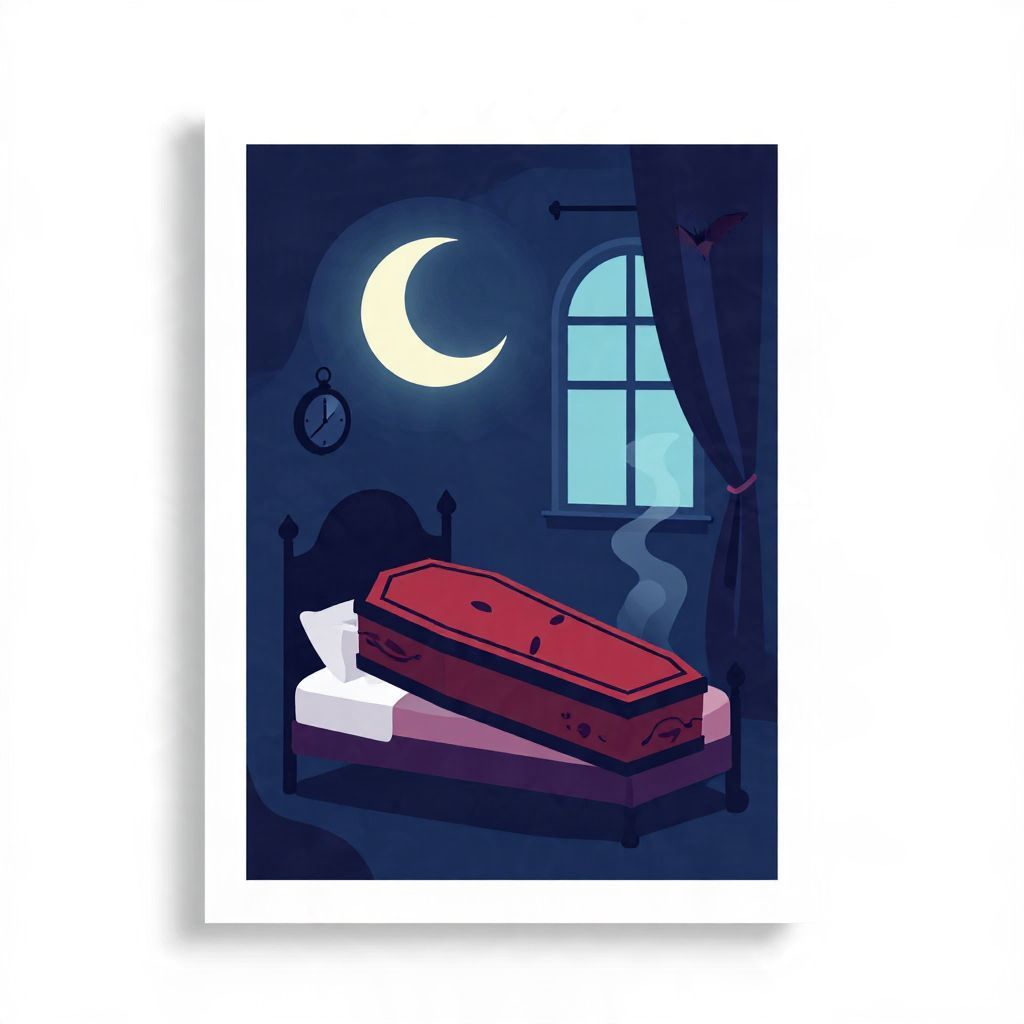
If you’re wondering “Do vampires sleep?”, the answer depends on the story, the tradition behind it, and the rules of the fictional world. In vampire literature, sleep is often less like ordinary rest and more like a symbolic state tied to death, daylight, hunger, and supernatural vulnerability.
That makes the question useful for readers of gothic fiction, horror, and vampire novels: it opens the door to how vampires are portrayed, what they represent, and why their habits vary so much from one book to another.
Do vampires sleep in literature?
In most vampire stories, vampires do not sleep in the human sense, but they often enter a deathlike daytime rest. Classic vampire fiction treats this state as a sign of their unnatural existence: they are neither fully alive nor fully dead, so “sleep” becomes a way to show their separation from ordinary human rhythms.
Why vampire sleep varies from one book to another
There is no single rule that applies to every vampire novel. Authors adapt vampire behavior to fit tone, mythology, and plot needs, so some vampires are active at all hours while others must rest in coffins, tombs, or hidden chambers during the day.
Folklore roots
Vampire traditions in folklore often describe the undead as tied to burial, earth, and the grave. That background helps explain why many literary vampires are associated with daylight weakness and a grave-like form of rest rather than normal sleep.
Gothic symbolism
In gothic fiction, sleep is rarely just practical. It can symbolize secrecy, buried desire, repression, or the border between life and death, which is why vampire “sleep” often feels eerie even when it is not described in scientific terms.
How classic vampire fiction handles rest and vulnerability
Early and influential vampire stories helped establish many of the conventions readers still expect today. In these works, vampires are often strongest at night and weakest in daylight, and their resting state can be disrupted by intrusion, sunlight, or the arrival of a threat.
Daytime rest as a narrative device
Writers use vampire rest to create suspense. If a vampire must remain hidden or inactive during the day, that limitation gives human characters a possible advantage and creates a rhythm of pursuit, concealment, and danger.
Rest as a sign of inhumanity
Unlike human sleep, which restores the body, vampire rest is usually presented as unnatural or incomplete. That difference reinforces one of the genre’s central ideas: vampires imitate life, but they do not fully belong to it.
What does vampire sleep mean thematically?
Vampire sleep is often more than a biology question. It can deepen the themes of the story by connecting the vampire to decay, desire, isolation, and the fear of bodily transformation.
Life, death, and liminality
Vampires occupy a threshold state. Their rest often resembles a suspended death, which makes them literary figures of liminality—beings who exist between categories that usually stay separate.
Control and dependency
Because vampire activity is frequently governed by night, blood, or invitation, their rest can also reflect dependence. They may appear powerful, but they are still bound by rules, which makes them compelling antagonists or tragic figures.
Isolation from human time
Human life is organized around work, daylight, and sleep. Vampire stories often emphasize that the undead live outside that schedule, which makes them lonely, alien, and difficult to integrate into ordinary society.
Do vampires dream?
Most vampire fiction does not treat dreaming as a standard feature, but some stories imagine vampires as capable of visions, memories, or trance-like states. When dreams do appear, they are usually used to reveal guilt, longing, or the lingering traces of humanity.
Dreams as a literary choice
If a writer gives a vampire dreams, that choice usually has symbolic value. It can suggest that the character is not entirely detached from human feeling, or it can heighten the horror by showing a mind trapped between states.
Common vampire “sleep” images in books
Readers often recognize certain recurring images in vampire fiction. These details are not universal, but they are strongly associated with the genre.
- Coffins or burial spaces that suggest grave-like rest
- Dark rooms, crypts, or hidden chambers
- Daylight avoidance as a sign of vulnerability
- Stillness that resembles death more than sleep
- Awakening at night to restore the vampire’s active power
How modern vampire fiction changes the rule
Later vampire novels and series often revise older conventions. Some vampires can stay awake in daylight, some rest only briefly, and some do not “sleep” at all unless the story gives them a specific reason to do so.
More humanized vampires
Modern fiction sometimes makes vampires psychologically closer to humans. In those stories, rest may function like fatigue, recovery, or emotional withdrawal rather than a supernatural necessity.
More flexible worldbuilding
Contemporary authors often build detailed vampire systems with custom rules. That means the answer to “Do vampires sleep?” may be different in each series, and readers should treat the text itself as the final authority.
How to read vampire sleep as a literary clue
If you are reading a vampire novel, pay attention to how the author describes the creature’s resting state. The details can reveal the story’s larger concerns, including power, mortality, and the relationship between body and soul.
Questions worth asking while reading
- Does the vampire rest like a corpse, or simply become inactive?
- Is sleep a weakness, a ritual, or a necessity?
- Does the vampire’s rest make them more frightening or more sympathetic?
- Does the story connect rest to the grave, the moon, or the loss of humanity?
Why the question still matters to readers
“Do vampires sleep?” is a small question that opens into a larger literary one: how do stories define the boundary between human and monster? The answer changes across traditions, but the recurring pattern is clear—vampire rest is usually less about sleep than about death, secrecy, and supernatural difference.
If you want to explore the genre further, you may also find it useful to read about what Nosferatu is and when Dracula was written, since both topics help explain how vampire imagery developed in literature and film.