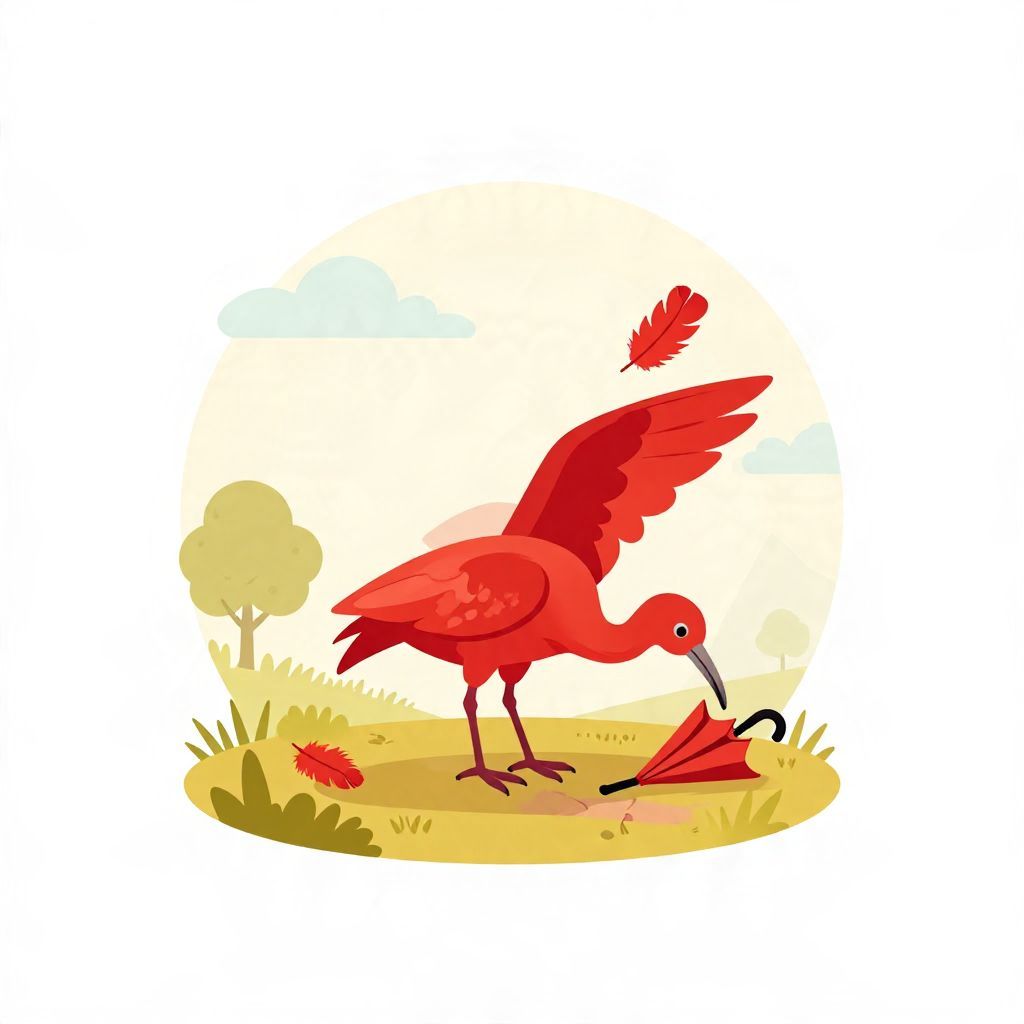
If you’re asking how Doodle dies in The Scarlet Ibis, the short answer is that he dies after exhausting himself in a storm while trying to keep up with his older brother, Brother. The story by James Hurst is a tragic coming-of-age tale in which pride, love, and guilt shape the ending.
Below, you’ll find a clear summary of the plot, the meaning of Doodle’s death, and the story’s major themes and symbols.
How does Doodle die in The Scarlet Ibis?
Doodle dies from physical exhaustion and likely internal strain after being pushed too hard by Brother to run in a violent storm. The tragedy is not a sudden accident alone; it is the result of Brother’s pride, Doodle’s fragile health, and the dangerous pressure placed on him to become “normal.”
What happens in The Scarlet Ibis?
James Hurst’s short story follows two brothers growing up in the American South. The younger brother, nicknamed Doodle, is born with serious physical limitations, and the family initially expects he may not survive. Against the odds, he lives, but he remains weak and cannot walk for a long time.
Brother is embarrassed by Doodle’s differences and begins teaching him to walk, then to run, row, and do other physical tasks. At first, this seems like an act of love, but the story gradually reveals that pride is driving much of Brother’s effort. He wants a younger brother who can match him, not one who remains vulnerable and dependent.
The story builds toward a stormy climax. Brother pushes Doodle too far, and after a punishing run through the rain, Doodle collapses and dies. The ending is devastating because Brother realizes too late that his ambition helped cause the loss.
Spoiler-focused explanation of Doodle’s death
Spoilers ahead: Doodle dies after Brother makes him run home in a storm, even though Doodle is already exhausted and frightened. When Brother leaves him behind, he later finds Doodle dead under a tree, his body posed in a way that recalls the red bird of the title, the scarlet ibis.
The story does not present a medical diagnosis in precise terms, but the implication is clear: Doodle’s frail body cannot endure the strain. His death is tied to overexertion and the emotional cruelty of being pushed beyond his limits.
Why Brother is responsible
Brother is not a villain in a simple sense. He loves Doodle, but his love is mixed with vanity, impatience, and shame. He teaches Doodle to walk because he wants to erase embarrassment and prove something about himself.
That makes Doodle’s death especially painful. The tragedy comes from a brother who genuinely cares, yet cannot separate care from control.
Characters in The Scarlet Ibis
Brother
Brother is the narrator and the story’s most important perspective. His voice is reflective and regretful, which allows readers to see how memory and guilt shape the narrative.
He is proud, competitive, and often immature, but he also grows into self-knowledge. The story is partly his confession.
Doodle
Doodle is small, physically fragile, and deeply sensitive. He is given the nickname “Doodle” because he crawls backward like a doodlebug, and the name reflects how others see him as delicate and childlike.
Despite his weakness, Doodle is imaginative and emotionally perceptive. He loves his brother and wants to please him, which makes him vulnerable to manipulation.
The parents
The parents are less central, but they help establish the family’s expectations and anxieties. Their reactions to Doodle’s condition create the emotional background for the brothers’ relationship.
Major themes in The Scarlet Ibis
Pride
Pride is the story’s central theme. Brother admits that he is ashamed of Doodle and wants to transform him into someone impressive. His pride fuels the training and contributes to the tragedy.
The story warns that pride can disguise itself as love or ambition. In Brother’s case, the desire to help becomes a desire to prove himself.
Love and cruelty
The relationship between the brothers is complicated. Brother loves Doodle, but he also hurts him emotionally and physically. The story shows how affection can become harmful when it is mixed with selfish expectations.
Guilt and memory
The narrative is shaped by Brother’s guilt. He looks back on the events with remorse, and that retrospective voice gives the story its emotional weight.
Because he is remembering rather than simply reporting, the story feels like an act of confession and self-reckoning.
Nature and fragility
The natural world in the story is beautiful but harsh. The storm, the bleeding tree, and the red ibis all emphasize vulnerability. Nature does not protect Doodle; instead, it mirrors the danger and sadness surrounding him.
Symbols and literary devices
The scarlet ibis
The scarlet ibis is the story’s most important symbol. The bird appears in the family’s yard after being blown far from its natural habitat, exhausted and dying. Like Doodle, it is fragile, out of place, and unable to survive the conditions around it.
Its red color also foreshadows the story’s tragic ending and links beauty with suffering.
The storm
The storm represents emotional and physical chaos. It is the moment when Brother’s pride becomes most destructive, and it intensifies the sense that nature and fate are closing in on the brothers.
Foreshadowing
Hurst uses foreshadowing carefully throughout the story. The ibis’s death, Doodle’s frailty, and Brother’s repeated warnings all prepare readers for the ending without removing its shock.
First-person narration
The first-person point of view is crucial. Because Brother tells the story himself, readers experience both his younger selfishness and his older regret. This creates a layered effect: the ending is not just tragic, but morally reflective.
Why Doodle’s death matters
Doodle’s death is the emotional and moral center of the story. It forces Brother to confront the consequences of pushing someone he loves for the sake of pride.
It also gives the story its lasting power as a study of vulnerability. Doodle is not simply a symbol; he is a child whose life is shaped by dependence, hope, and the need for care.
Book summary and review in brief
The Scarlet Ibis is a short but powerful story about two brothers whose bond is tested by shame and ambition. Its language is lyrical, its symbolism is memorable, and its ending is one of the most famous in American short fiction.
As a reading experience, it is moving because it resists easy moral answers. Brother is both loving and harmful, and Doodle is both fragile and brave. That tension is what makes the story endure.
Who should read The Scarlet Ibis?
- Readers interested in tragic coming-of-age stories
- Students studying symbolism, foreshadowing, or first-person narration
- Anyone exploring themes of guilt, pride, and sibling relationships
- Readers who appreciate concise stories with emotional depth
Final takeaway
Doodle dies because his weak body cannot survive the strain Brother forces on him during the storm, but the deeper tragedy is emotional: pride and love become inseparable, and that mixture leads to loss. The Scarlet Ibis remains memorable because it turns a simple question into a lasting meditation on responsibility, regret, and the cost of wanting too much.
If you’d like to explore more literary analysis, you may also enjoy how Tan builds a central idea in her story excerpt and how Lady Macbeth dies.