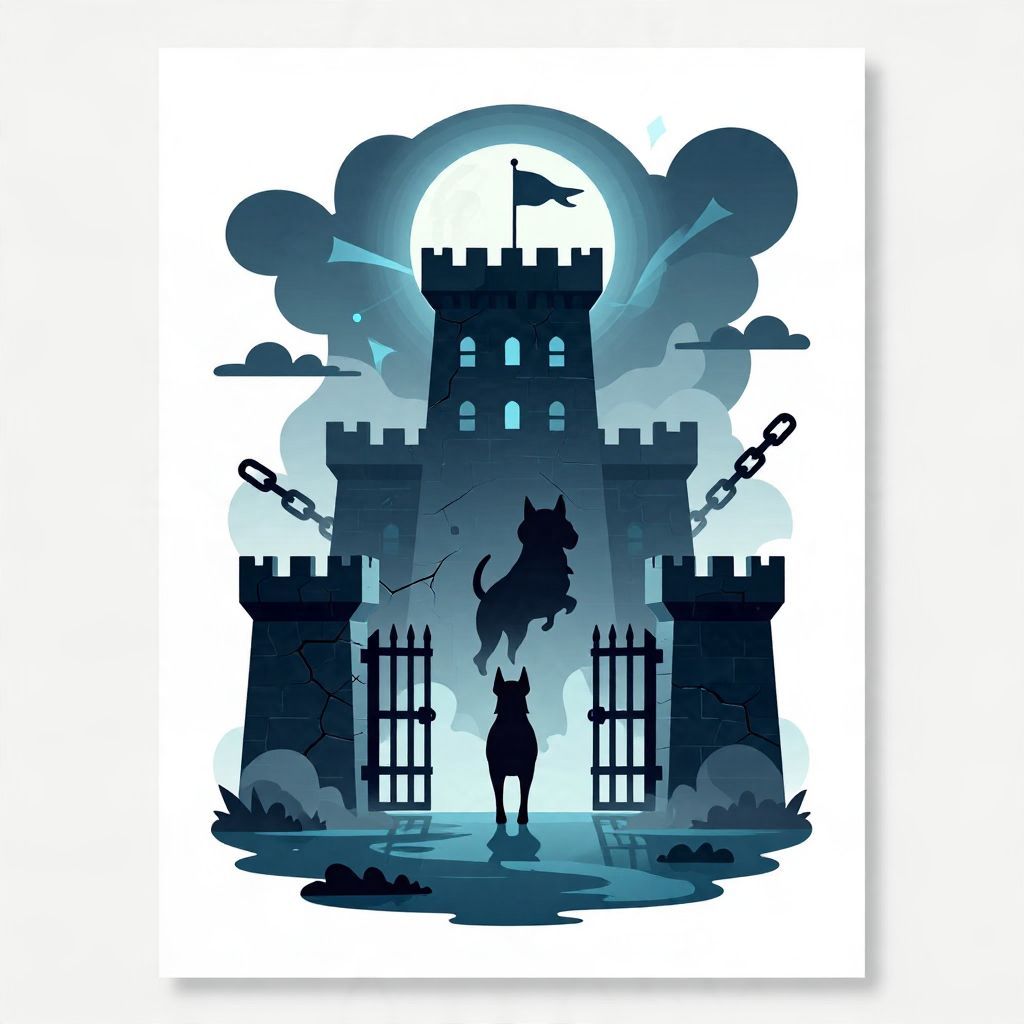
If you’re wondering how Sirius Black escaped Azkaban, the short answer is that he did not break out through force or magic in the usual sense. In Harry Potter and the Prisoner of Azkaban, Sirius escapes by using an unusual ability tied to his Animagus form, which helps him survive prison conditions and eventually slip away unnoticed.
That escape is one of the most important turning points in the series. It drives the mystery of the novel, reshapes Harry’s understanding of his parents’ past, and introduces one of J.K. Rowling’s most morally layered characters.
How did Sirius Black escape Azkaban?
Sirius Black escaped Azkaban by transforming into his Animagus form—a large black dog—something the Dementors could not fully recognize as human. Because he could shift at will and had enough control to hide his identity, he was able to slip out of his cell and leave the prison by boat, later making his way to the mainland.
Spoiler-friendly plot overview of Harry Potter and the Prisoner of Azkaban
The third Harry Potter novel begins with the wizarding world in panic after Sirius Black, a prisoner from Azkaban, is believed to have escaped and is thought to be hunting Harry. The story unfolds as a school-year mystery, with clues about Black’s past, Harry’s parents, and the betrayal that led to their deaths.
Why Sirius is feared
At first, Sirius is presented as a dangerous fugitive who betrayed James and Lily Potter to Voldemort. The Ministry and much of the public assume he is guilty, and the Dementors’ presence at Hogwarts reinforces the sense that he is both violent and unstable.
The truth behind the escape
As the novel develops, readers learn that Sirius was not the traitor at all. He had actually been framed by Peter Pettigrew, who faked his own death and lived for years in secret as Ron Weasley’s pet rat, Scabbers.
The revelation in the Shrieking Shack
The major twist is that Sirius escaped Azkaban not because he was helped from outside, but because he discovered a practical route to freedom through his Animagus transformation. Once outside, he pursued Pettigrew to clear his name and protect Harry, though the Ministry never fully accepts his innocence at that point.
Why the escape matters in the story
Sirius’s escape is not just a plot device. It creates the novel’s central tension, but it also reveals how easily institutions can mistake appearance for truth. The Ministry assumes that prison equals guilt, while the novel gradually shows that official narratives can be deeply flawed.
A mystery built on misdirection
Rowling uses Sirius’s escape to sustain suspense. Readers are encouraged to fear him before they understand him, and the story slowly reverses that expectation. This makes the reveal especially effective because the “escaped criminal” turns out to be one of Harry’s few adult protectors.
A turning point for Harry
For Harry, learning the truth about Sirius is emotionally important. It gives him a possible connection to his parents and introduces the idea that adult authority is not always reliable. Sirius becomes a symbol of family, loyalty, and the possibility of chosen kinship.
Character analysis: who is Sirius Black?
Sirius is one of the series’ most complex characters. He is brave, impulsive, deeply loyal, and emotionally scarred by years of wrongful imprisonment. His escape from Azkaban reflects both his resourcefulness and the damage caused by isolation.
His relationship to Harry
Harry is drawn to Sirius because he represents a link to James Potter and a life Harry never knew. Their bond is immediate and powerful, though it is also complicated by Sirius’s recklessness and the pain he carries from his own past.
His relationship to the past
Sirius is trapped between two identities: the reckless youth who once trusted the wrong people, and the adult who wants to make amends. His escape from prison is therefore more than physical freedom; it is an attempt to reclaim his story from falsehood.
Themes connected to Sirius Black’s escape
The escape touches several of the novel’s most important themes. It is not simply about prison, but about memory, justice, identity, and the difference between truth and public belief.
- Wrongful accusation: Sirius is punished for a crime he did not commit.
- Isolation: Azkaban magnifies the psychological cost of confinement.
- Identity and disguise: The Animagus transformation shows how appearance can conceal reality.
- Loyalty and betrayal: The novel contrasts Sirius’s devotion with Pettigrew’s treachery.
- Truth versus rumor: Much of the plot depends on correcting a false public story.
Justice in the wizarding world
Sirius’s case suggests that the wizarding justice system can be hasty and incomplete. The novel does not present a perfect legal remedy, which makes his fate feel both tragic and unsettling even after the truth is revealed.
Freedom and its limits
Although Sirius escapes prison, he never gains full freedom in a meaningful sense. He remains hunted, misunderstood, and unable to live openly. Rowling uses that tension to show that physical escape does not automatically equal safety or peace.
Symbols and literary techniques
Rowling uses several recurring images and techniques to make Sirius’s escape resonate beyond the immediate plot. These elements deepen the novel’s atmosphere and support its gothic tone.
The black dog
Sirius’s Animagus form as a black dog is one of the novel’s strongest symbols. At first, the dog seems threatening, but later it becomes a sign of protection, loyalty, and hidden truth. The same image can therefore mean fear or comfort depending on what the reader knows.
The Dementors
The Dementors are not just prison guards; they embody despair, trauma, and emotional numbness. Their inability to “read” Sirius properly in dog form adds to the idea that the prison system sees only what it expects to see.
Foreshadowing and delayed revelation
Rowling plants clues early, but withholds their meaning until later. This technique makes the novel work as a detective story, where details such as the mysterious dog sightings and the behavior of Scabbers gain significance in hindsight.
How the escape fits into the Harry Potter series
Sirius’s escape matters not only in this book but across the larger series. It expands the emotional world of Harry Potter by introducing a godfather figure, a deeper history of James and Lily, and a more complicated view of the war against Voldemort.
Series significance
Before Sirius, Harry’s past is mostly defined by loss. After Sirius, it becomes tied to memory, inheritance, and the possibility of belonging. The escape is the event that makes that shift possible.
Reading order context
- Harry Potter and the Philosopher’s Stone
- Harry Potter and the Chamber of Secrets
- Harry Potter and the Prisoner of Azkaban
This third book is often where the series becomes noticeably darker and more emotionally layered, and Sirius’s escape is a major reason why.
Book review: what makes this storyline effective?
As a story element, Sirius Black’s escape works because it serves multiple purposes at once. It creates suspense, supports character development, and raises moral questions about guilt, memory, and institutional trust.
What readers often appreciate
Many readers find this subplot memorable because it combines mystery with emotional depth. Sirius is introduced as a threat, but the novel gradually transforms him into a tragic and sympathetic figure.
What makes it lasting
The escape remains one of the series’ most discussed moments because it is both clever and emotionally charged. It rewards careful reading while also giving the story a strong sense of urgency and consequence.
Final takeaway
Sirius Black escaped Azkaban by using his Animagus ability to transform into a dog, allowing him to evade recognition and leave prison. But the deeper significance of the escape is thematic: it exposes wrongful judgment, expands Harry’s world, and turns Sirius into one of the series’ most important and tragic characters.
If you want to explore the wider wizarding world behind Sirius’s story, you may also enjoy reading about the houses in Harry Potter and the seven Horcruxes.