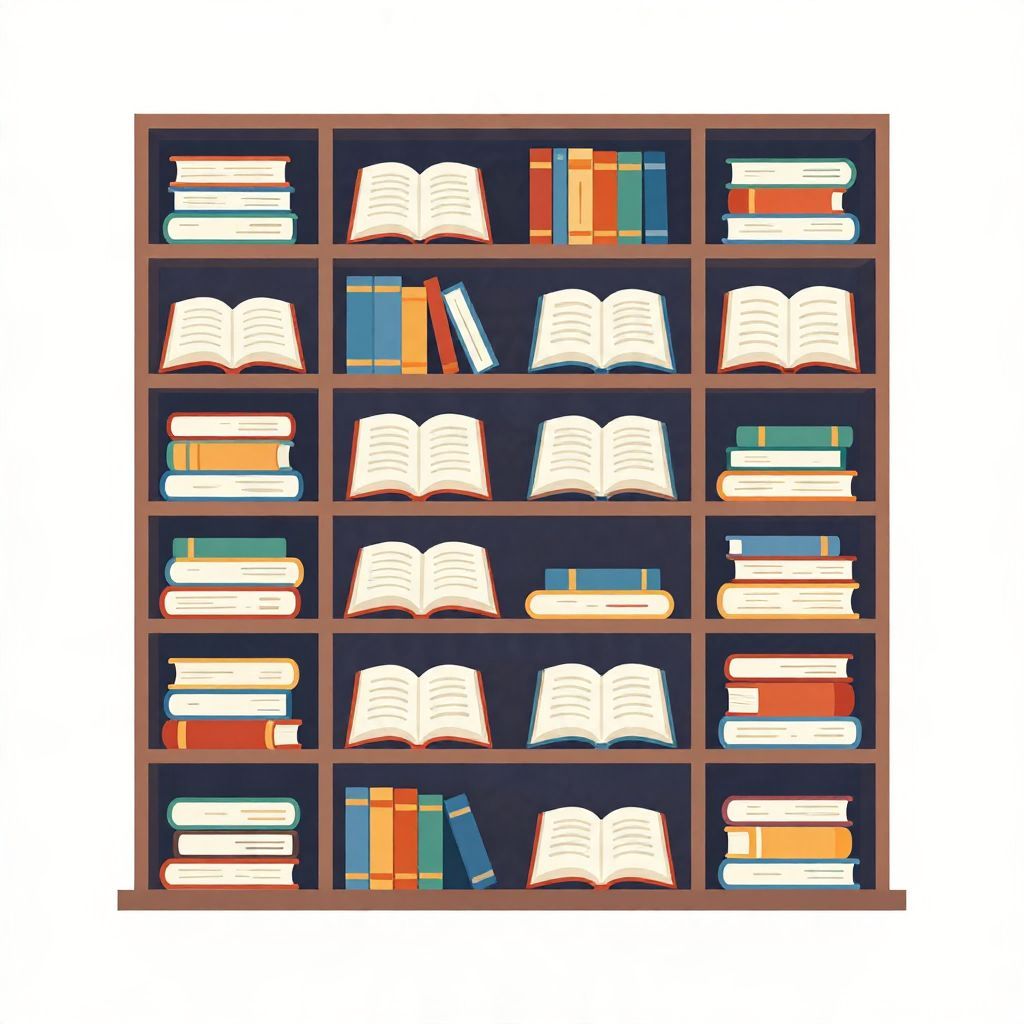
If you’ve ever wondered whether a small shelf, a home office, or a roomful of paperbacks counts as a library, you’re not alone. The answer depends on context: there is no single universal number that officially turns a collection of books into a library.
In everyday use, a library is less about a fixed count and more about purpose, organization, and access. A few dozen books can be a personal library, while a much larger collection may still be just a storage pile if it is not arranged for use.
How many books is considered a library?
There is no official minimum number of books that makes a collection a library. In common speech, even 20 to 50 carefully kept books may be called a personal library, while larger collections are usually described as libraries when they are organized, maintained, and meant for repeated reading or reference.
Why there is no fixed number
The word library describes a function, not just a quantity. A library is usually a deliberate collection of books gathered for reading, study, lending, preservation, or reference.
That is why the same number of books can be described differently in different settings. Ten books on a bedside table are not usually called a library, but ten books arranged as a themed reference set in a classroom, office, or archive might be.
Context matters more than count
- Personal use: A home collection may be called a library if it is curated and regularly used.
- Academic use: A department’s specialized shelf of books may count as a library resource even if it is small.
- Public use: A public library is defined by access and service, not by a minimum shelf count.
- Collecting: A large book collection is not necessarily a library if it is not organized for use.
What usually makes a book collection feel like a library?
Most people recognize a library by a few practical features: arrangement, purpose, and consistency. If books are cataloged, grouped by subject or author, and kept for ongoing use, the collection starts to function like a library.
Signs of a library-like collection
- Organization: Books are sorted by genre, topic, alphabet, or another clear system.
- Accessibility: The books are easy to find and use again.
- Selection: The collection reflects choices, not random accumulation.
- Maintenance: Books are cared for, stored properly, and often recorded in some way.
- Purpose: The collection exists to support reading, study, or reference.
How many books do people usually imagine in a library?
In casual conversation, people often imagine a library as something larger than a standard bookshelf. That usually means dozens, hundreds, or thousands of books, depending on the setting.
Still, the mental image is flexible. A cozy home library might have 100 books or 1,000, while a specialist collection in a study could be much smaller and still be called a library because it serves a clear intellectual purpose.
Common ways the word is used
- Home library: A personal collection in a room, study, or dedicated shelf space.
- Mini library: A small curated set of books, sometimes shared in a household or community space.
- School library: A managed collection for students and teachers.
- Public library: A community institution that provides access to books and other materials.
Personal library vs. book collection
Not every book collection is a library, and not every library is large. The difference often comes down to intention. A collection may simply be accumulated over time, while a library is usually assembled with a plan.
A personal library often has a recognizable structure: favorite authors together, nonfiction by subject, reference books within reach, and perhaps a reading list or lending system. That structure is what gives it the feel of a library rather than a stack of books.
A simple rule of thumb
If the books are organized, cared for, and used as a resource, the collection can reasonably be called a library, even if it is modest in size. If they are only stored, the word may feel too strong.
How libraries are defined in formal settings
In formal or institutional settings, a library is usually defined by service and access rather than by count. Public, school, academic, and special libraries are all collections designed to support readers or researchers.
That means a library may include books, journals, digital resources, archives, and media. In modern use, the term is broader than “a room full of books.”
What formal libraries often include
- Printed books
- Magazines and journals
- Reference materials
- Digital databases
- Archives or special collections
How many books make a “good” home library?
There is no magic number, but many readers think of a home library as starting when a collection becomes substantial enough to reflect personal taste and literary habits. For some households, that may be 50 books; for others, it may be several hundred.
The better question is not “How many books do I need?” but “Does this collection support how I read?” A good home library often balances pleasure reading, reference books, and titles you return to over time.
Questions to ask yourself
- Do I read from this collection regularly?
- Can I find books quickly?
- Does the collection reflect my interests or goals?
- Have I arranged it in a meaningful way?
Practical ways to build a library at home
If you want your books to feel like a real library, start with structure rather than size. A small, well-organized shelf can feel more like a library than a much larger but chaotic stack.
Helpful steps
- Choose a system: by genre, author, subject, or color if you prefer visual order.
- Group related books: keep poetry, fiction, history, and reference books together.
- Leave room to grow: a library should be able to expand over time.
- Maintain the collection: dust, repair, and re-shelve books regularly.
- Add a reading purpose: include books you revisit, not only books you own.
Library, bookshelf, archive, and collection: what’s the difference?
These terms overlap, but they are not identical. A bookshelf is furniture, a collection is a group of items, an archive preserves materials for historical value, and a library is a curated resource for reading and access.
In everyday language, people often use these words loosely. But if you want precision, the idea of a library implies both organization and purpose.
Quick comparison
- Bookshelf: where books are stored
- Collection: the books themselves
- Archive: materials preserved for record or history
- Library: an organized collection used for reading, study, or lending
So, how many books is considered a library?
The most honest answer is: there is no exact number. A library can be small or large, private or public, formal or informal. What matters most is whether the books are intentionally gathered, organized, and used as a resource.
For a practical everyday answer, many readers would call a collection of several dozen books or more a personal library if it is thoughtfully arranged. But the real threshold is not arithmetic; it is purpose.
If you’re interested in the distinction between a book collection and a true library, you may also want to read how many books constitute a library and what qualifies as a library.