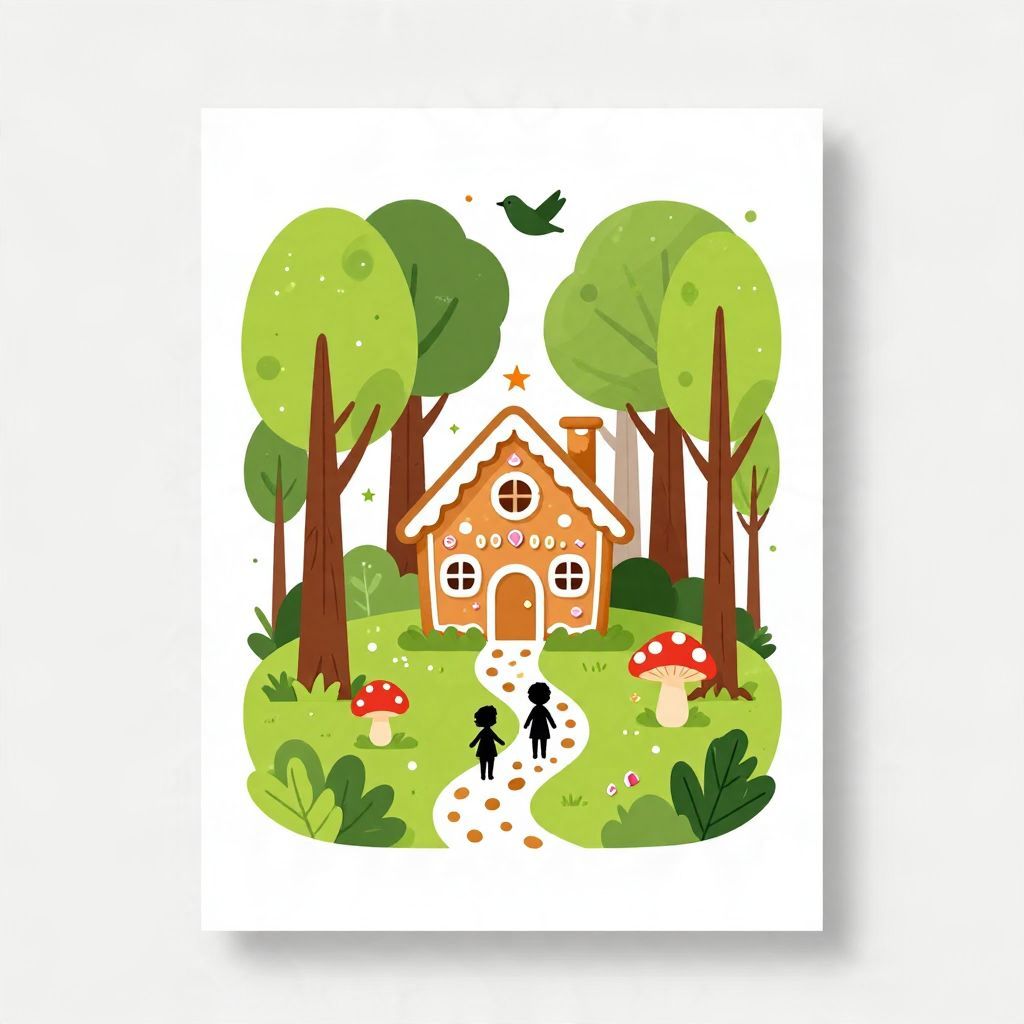
Curious about Super Why Hansel And Gretel and how this familiar fairy tale is adapted for young readers? This version connects the classic Brothers Grimm story to the educational world of Super Why!, making it useful for parents, teachers, and children who want a simple introduction to reading, problem-solving, and story structure.
Below is a clear summary of the story, along with its main themes, characters, and why the tale works so well in a literacy-focused format. Because “Super Why Hansel And Gretel” can refer to the Super Why! retelling rather than a single standalone literary classic, this article focuses on the story as it appears in that child-friendly, educational context.
What is Super Why Hansel And Gretel about?
Super Why Hansel And Gretel is a children’s retelling of the classic fairy tale in which two siblings become lost in the woods, encounter danger, and rely on clever thinking to find their way home. In the Super Why! style, the story is shaped to support early reading skills, with simple language, repeated patterns, and a problem-solving lesson at its center.
Book summary
The basic plot
Hansel and Gretel are brother and sister living in a poor household. When their family cannot manage enough food, the children are sent into the forest, where they become separated from home and must navigate fear, hunger, and uncertainty.
As in the traditional fairy tale, the forest is not just a setting but a test. It represents confusion and vulnerability, while the children’s resourcefulness becomes the key to survival.
How the story unfolds
In the classic version, Hansel uses clever planning to leave a trail so the children can find their way back. When that plan fails, the siblings encounter a threatening house made of sweets, which leads them into a second, more dangerous challenge.
The Super Why! adaptation typically keeps the outline of the tale but presents it in a gentler, more educational way. The emphasis is less on horror and more on reading comprehension, character choices, and solving the story’s central problem.
What children learn from the story
The tale encourages children to notice patterns, predict outcomes, and understand cause and effect. It also reinforces the idea that teamwork and careful thinking can help characters overcome obstacles.
Main characters
Hansel
Hansel is often portrayed as alert, inventive, and determined. He represents the child who observes carefully and tries to solve problems through planning.
Gretel
Gretel is usually shown as brave and practical. In many versions of the tale, she becomes especially important in the story’s turning point, showing that courage can come from action as well as words.
The parents or guardians
The adults in the story create the emotional tension. Their inability to protect the children fully is part of what makes the fairy tale unsettling, even in softened retellings.
The witch or threatening figure
The witch is the story’s most obvious symbol of danger. She embodies deception, temptation, and the fear of being tricked by appearances.
Themes in Super Why Hansel And Gretel
Survival and resilience
At its core, the story is about surviving hardship. The children face abandonment, hunger, and fear, yet they continue to think, move, and adapt.
Brother-sister teamwork
Hansel and Gretel work best when they rely on each other. Their relationship gives the story emotional warmth and shows young readers that cooperation matters.
Deception versus appearance
The candy house is a classic example of misleading appearance. Something that looks inviting turns out to be dangerous, which teaches children to look beyond surface charm.
Problem-solving
This is one of the strongest educational themes in a Super Why! retelling. The story invites children to think about what the characters know, what they do not know, and how they might respond differently.
Home and safety
The forest and the house in the woods stand in contrast to home. The story’s emotional goal is not just escape, but a return to safety, order, and family stability.
Symbols and story elements
The forest
The forest symbolizes uncertainty, danger, and the unknown. In fairy tales, woods often function as a place where children must grow up quickly.
Bread crumbs or trail markers
Any trail the children leave behind represents memory, strategy, and hope. It is a small but meaningful symbol of trying to control a confusing situation.
The candy house
The sweet house symbolizes temptation. It looks like comfort and reward, but it hides danger, making it one of the tale’s most memorable images.
Food
Food in the story is never just food. It stands for need, scarcity, desire, and the difference between genuine nourishment and false promise.
Why the story works well in Super Why!
It supports early literacy
Super Why! is built around reading and story skills, and Hansel and Gretel fits that mission well. The tale has a clear beginning, middle, and end, which helps children follow narrative structure.
It encourages participation
The story naturally invites questions such as: What should the characters do next? Which clue matters? What would you do if you were lost? Those questions make it ideal for shared reading and discussion.
It balances tension with accessibility
The original fairy tale can be dark, but a child-focused adaptation can preserve suspense without overwhelming younger audiences. That balance is one reason the story remains popular in educational settings.
How this version compares with the traditional fairy tale
What stays the same
- Two children are separated from home.
- The forest creates danger and uncertainty.
- A deceptive house or figure becomes the central threat.
- The children must use intelligence and courage to escape.
What is usually softened
- The darkest details of abandonment and violence may be reduced.
- The language is simpler and more repetitive.
- The educational message is made more explicit.
- The tone is more reassuring for younger readers.
This means the Super Why! version is best understood as an adaptation rather than a replacement for the original fairy tale. It keeps the story’s skeleton while making it more suitable for early childhood audiences.
Literary value and educational appeal
For children
Young readers benefit from the story’s repetition, recognizable conflict, and clear moral structure. It is easy to remember, easy to retell, and rich in opportunities for discussion.
For parents and teachers
The tale offers a natural way to talk about safety, making good choices, and asking for help. It also supports vocabulary building and comprehension through a story children may already know in some form.
For fairy tale study
Hansel and Gretel is a useful example of how folklore changes across retellings. A Super Why! adaptation shows how a traditional narrative can be reshaped for a new audience without losing its core structure.
Review: is Super Why Hansel And Gretel worth reading?
Yes, especially if you are looking for a child-friendly fairy tale that also supports reading development. Its strengths are clarity, familiarity, and educational purpose, rather than literary complexity.
If you want a gentle introduction to a classic story, this version is a good choice. If you are studying the darker folklore tradition of the Brothers Grimm, you may also want to compare it with a more traditional edition to see how adaptation changes tone and meaning.
Who will enjoy it most?
- Early readers who enjoy familiar fairy tales
- Parents looking for discussion-friendly bedtime stories
- Teachers using story retellings for literacy lessons
- Children who like adventure with a reassuring ending
Final thoughts
Super Why Hansel And Gretel works because it turns a classic cautionary tale into an accessible reading experience. It preserves the story’s most important ideas—danger, cleverness, teamwork, and the longing for home—while making them understandable for young audiences.
If you’re interested in how stories teach meaning through structure and repetition, you may also enjoy reading about what storytelling is and exploring how theme works in “The Lottery”.