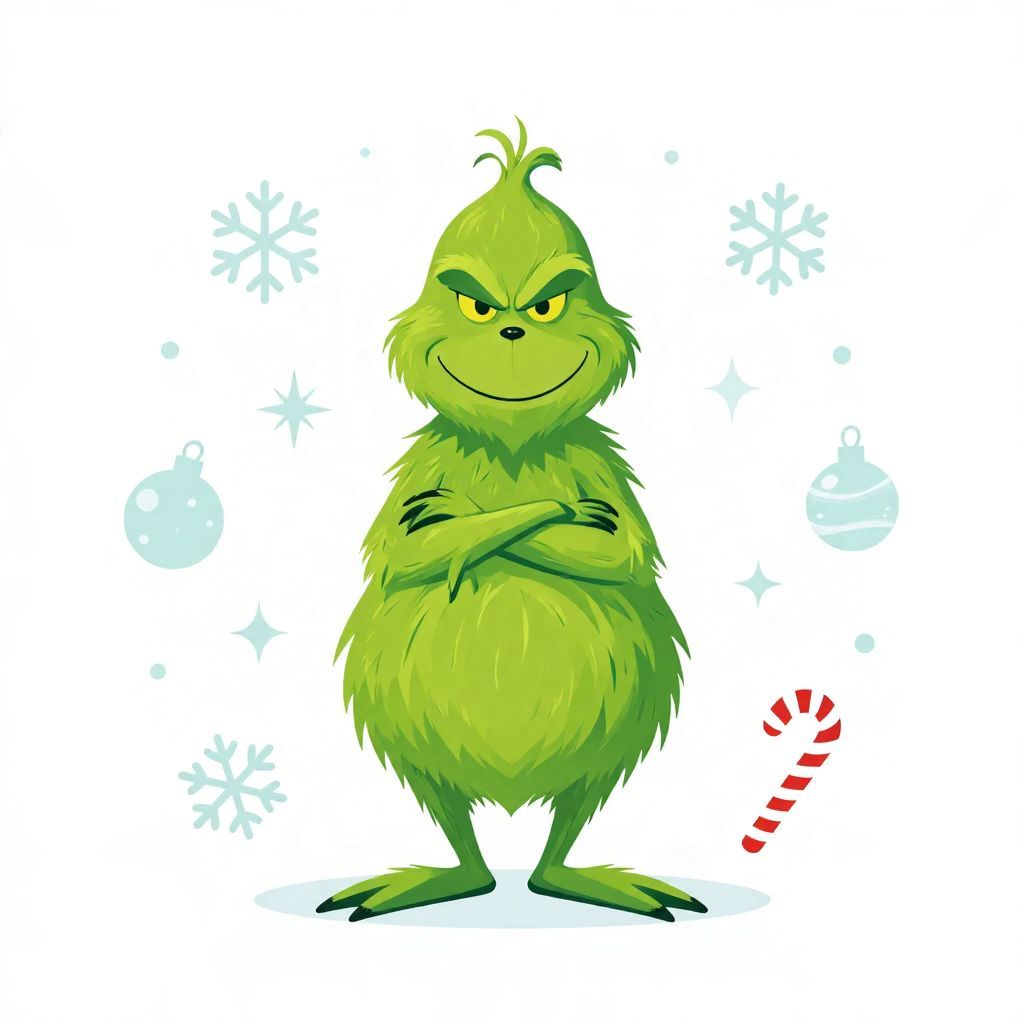
People often ask what kind of creature the Grinch actually is, because Dr. Seuss never gives him a precise real-world species. The character is best understood as a made-up, anthropomorphic being: part monster, part humanlike outsider, designed to embody grumpiness, isolation, and transformation rather than zoological accuracy.
That ambiguity is part of the book’s charm. Instead of pinning the Grinch to one animal, Seuss uses his odd appearance and behavior to make a larger point about loneliness, community, and the possibility of change.
What animal is the Grinch?
The Grinch is not identified as any specific animal in How the Grinch Stole Christmas! He is a fictional, invented creature with human traits, and his exact species is intentionally left undefined. That vagueness helps him function as a symbol of alienation, resentment, and eventual redemption rather than as a realistic animal character.
Book summary: How the Grinch Stole Christmas!
Dr. Seuss’s classic picture book follows the Grinch, a bitter creature who lives alone above Whoville and despises the town’s Christmas celebrations. Annoyed by the noise, gifts, and joy of the holiday, he decides to stop Christmas by stealing the Whos’ decorations, food, and presents in the middle of the night.
But the story turns on a surprise: when Christmas morning arrives, the Whos still gather and sing together despite the loss of their belongings. The Grinch realizes that Christmas is not only about objects or spectacle, and his heart grows. He returns the stolen items and joins the Whos in celebration.
Why the Grinch’s species is left unclear
A character built from exaggeration
Seuss gives the Grinch a green body, a furry face, a sharp expression, and a shaggy, almost goblin-like look. These features suggest a creature assembled from fantasy rather than one drawn from nature.
More symbol than zoology
Because the Grinch is not meant to represent a real animal, readers can focus on what he means. He stands for the person who feels excluded, irritated, or suspicious of joy, and who slowly learns that belonging is possible.
Why readers keep asking the question
The question “What animal is the Grinch?” persists because his design is so memorable. He looks animal-like enough to invite comparison, but human enough to mirror recognizable emotions and social behavior.
Major themes in the story
Isolation and resentment
The Grinch lives apart from the Whos, and his distance seems to feed his bitterness. The story suggests that separation can distort how a person sees others, turning happiness into something irritating rather than inviting.
The difference between things and meaning
One of the book’s central ideas is that Christmas cannot be reduced to gifts, food, or decorations. Seuss contrasts material abundance with emotional and communal value, showing that the holiday’s meaning survives even when the objects are gone.
Transformation and redemption
The Grinch changes, and that change is the heart of the narrative. His heart “growing” is a vivid metaphor for moral awakening, empathy, and the ability to rejoin a community after choosing distance.
Community and shared joy
The Whos matter because they celebrate together. Their song is not just festive background; it is the story’s answer to the Grinch’s cynicism, proving that communal spirit can outlast loss.
The Grinch as a literary character
Outsider figure
The Grinch is a classic outsider, a character type often used in literature to expose the values of a community. He is both comic and threatening, which makes his eventual change feel dramatic but still gentle enough for children.
Comic villain turned sympathetic figure
At first, he seems like a holiday villain. Yet Seuss gives him enough loneliness and frustration to make him more than a simple antagonist, which is why readers often find him oddly relatable.
Contrast with the Whos
The Whos are cheerful, unified, and resilient, while the Grinch is solitary and reactive. This contrast gives the book its structure: one side values shared ritual, while the other mistakes that ritual for empty noise.
Symbols and imagery
The Grinch’s heart
The heart imagery is the story’s most famous symbol. It represents emotional capacity and moral expansion, and the “three sizes” change marks the Grinch’s movement from hardness to compassion.
Christmas noise and song
The sounds of celebration initially bother the Grinch, but they later become proof of the Whos’ inner strength. Song functions as a symbol of unity, something that cannot be stolen.
Mount Crumpit and Whoville
The physical distance between the Grinch’s home and Whoville reflects his emotional separation. The mountain and the town form a visual map of alienation and belonging.
Style and literary techniques
Rhyme and rhythm
Seuss uses playful rhyme and a bouncy rhythm that make the story easy to read aloud. The musicality softens the Grinch’s harshness and keeps the tone lively even when the character is at his worst.
Invented language
Like many Dr. Seuss books, this one features whimsical wordplay and rhythmic nonsense. That style makes the world feel imaginative and slightly off-kilter, which suits a story about a creature who does not quite belong.
Visual storytelling
The illustrations are essential to the book’s meaning. The Grinch’s posture, facial expressions, and movement communicate mood as strongly as the text, especially in scenes of scheming, stealing, and eventual softening.
Publication context and lasting appeal
How the Grinch Stole Christmas! was first published in 1957 and has remained one of Dr. Seuss’s most enduring holiday books. Its longevity comes from its simple structure, memorable character design, and the way it speaks to both children and adults.
For children, it is a funny and suspenseful story about a holiday trickster. For adults, it often reads as a sharper meditation on consumerism, loneliness, and the pressure to perform happiness.
How to read the Grinch today
As a holiday story
Read it as a seasonal classic about generosity and community. The ending rewards emotional openness rather than material success.
As a character study
Read the Grinch as someone whose anger masks vulnerability. His transformation is quick, but the story gives enough clues to suggest a deeper loneliness beneath the mischief.
As a satire of holiday excess
The book also gently mocks the idea that Christmas is only about buying and displaying things. That critique is one reason it still feels fresh.
Who will enjoy this book?
- Young readers who enjoy rhyme, repetition, and vivid illustrations.
- Families looking for a holiday read-aloud with humor and a clear moral arc.
- Students studying symbolism, character transformation, or children’s literature.
- Adults who appreciate a story that balances satire with warmth.
Short review
How the Grinch Stole Christmas! remains effective because it is both mischievous and humane. The Grinch is memorable precisely because he is not fully definable as an animal; he is a fictional outsider whose strange appearance mirrors his emotional distance. That makes his change feel meaningful, not just cute.
If you came here wondering what animal the Grinch is, the simplest answer is: he is not any real animal at all. He is a Seussian invention, and that invention is what gives the book its lasting power.
For more on the story’s supporting characters and holiday world, you may also enjoy how the Grinch got Max and Max in How the Grinch Stole Christmas!.