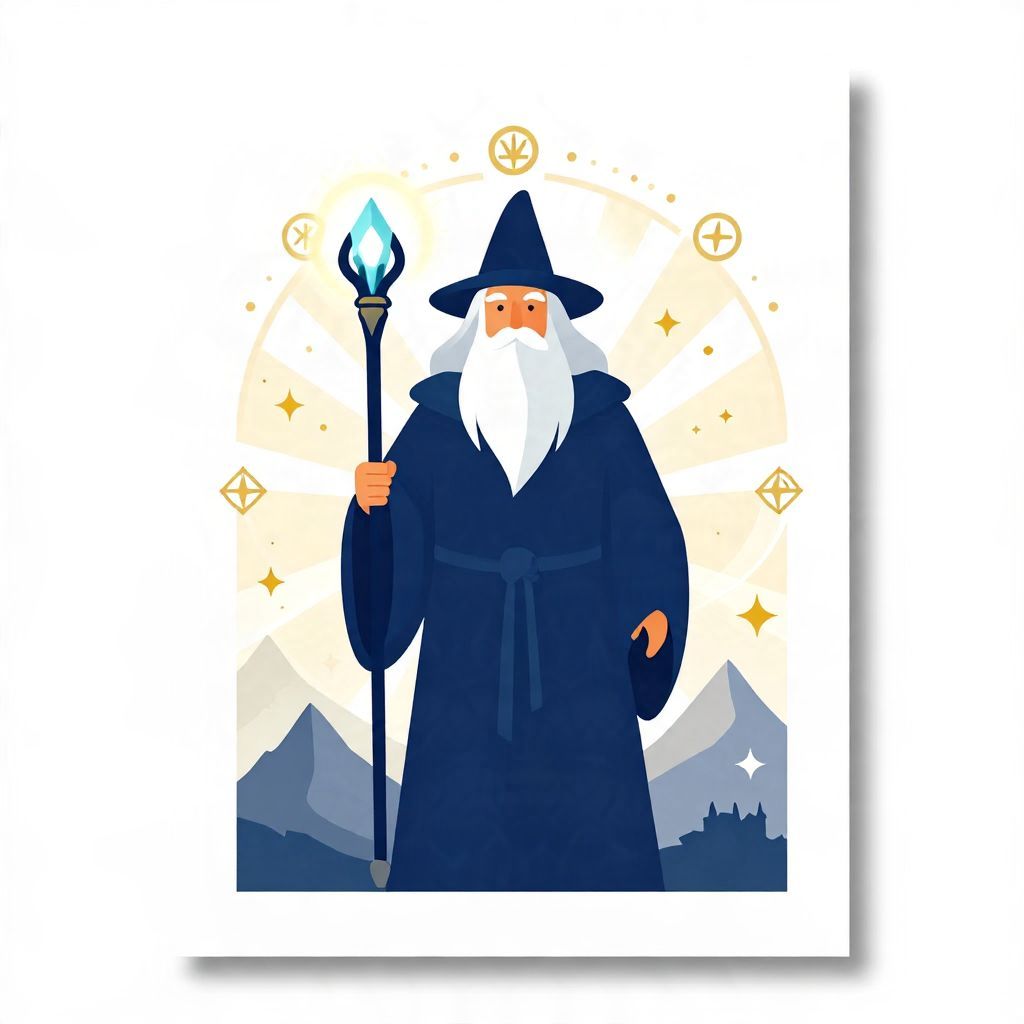
If you’ve ever wondered what Gandalf is in The Lord of the Rings, the answer is bigger than “wizard.” Gandalf is one of J. R. R. Tolkien’s central mythic figures: a guide, counselor, warrior, and bearer of hidden authority who helps shape the fate of Middle-earth.
He is also a literary symbol of wisdom under pressure. Tolkien uses Gandalf to show how power can be humble, how leadership can be persuasive rather than domineering, and how ordinary people often need a mentor who sees farther than they do.
What is Gandalf in Tolkien’s legendarium?
Gandalf is a wizard in Tolkien’s Middle-earth, but not a human magician in the usual fantasy sense. He is one of the Istari, spiritual beings sent to advise and oppose evil, and he appears in The Hobbit and The Lord of the Rings as a wise, morally serious guide.
Who is Gandalf?
In the simplest literary definition, Gandalf is a major supporting character who functions as a mentor archetype. He enters the story with apparent eccentricity, yet he repeatedly proves to be the person most capable of understanding danger, history, and the larger stakes of the quest.
Gandalf as a wizard
Tolkien’s wizards are not spell-slinging fantasy technicians. They are emissaries with limited power, meant to inspire and advise rather than rule by force, which is why Gandalf’s influence often comes through counsel, timing, and courage instead of spectacle alone.
Gandalf as a literary mentor
He fits the classic mentor role, but Tolkien complicates that role by making him fallible, burdened, and sometimes absent. That absence matters: the heroes must grow beyond dependence on him, which gives the narrative room for courage, choice, and maturity.
What does Gandalf represent in the story?
Gandalf represents wisdom, hope, and restrained power. He is also a reminder that true leadership in Tolkien’s work is service-oriented: he guides others without claiming the spotlight, and he often chooses the harder path because it is morally necessary rather than personally rewarding.
Wisdom and foresight
Gandalf is one of the few characters who consistently sees the long view. He understands ancient histories, recognizes hidden threats, and treats small decisions as part of a much larger struggle between preservation and domination.
Hope in dark times
He often appears when the world seems most threatened, which makes him a narrative agent of hope. Even when he cannot solve everything, his presence signals that despair is not the final truth of Middle-earth.
Power without tyranny
One of Tolkien’s most important ideas is that power becomes dangerous when it seeks control for its own sake. Gandalf is strong, but he resists the temptation to dominate others, making him a contrast to characters who desire order through coercion.
Gandalf in The Hobbit and The Lord of the Rings
Gandalf appears in both works, but his role changes. In The Hobbit, he helps launch the adventure and then steps in and out of the action. In The Lord of the Rings, he becomes a more weighty, strategic figure tied to the fate of the entire world.
In The Hobbit
Gandalf is partly a catalyst: he nudges Bilbo into the journey and helps create the conditions for unexpected heroism. His presence gives the tale its sense of scale, suggesting that Bilbo’s private adventure is connected to older, larger forces.
In The Lord of the Rings
Here Gandalf is less a whimsical instigator and more a statesman of resistance. He advises councils, confronts temptation, and helps organize the defense against Sauron, while still remaining a character who values mercy, patience, and moral clarity.
Why is Gandalf such an important literary figure?
Gandalf matters because he helps define Tolkien’s version of heroic fantasy. He is not a lone conqueror or a glamorous sorcerer; he is a wise intermediary whose authority comes from service, memory, and ethical judgment rather than from domination or spectacle.
A bridge between myth and modern fiction
Tolkien draws on mythic and religious patterns, but Gandalf also feels psychologically modern. He is tired, compassionate, and aware of limits, which makes him more complex than a simple fairy-tale helper.
A model of moral leadership
Gandalf’s leadership depends on persuasion, trust, and discernment. He does not merely command; he helps others become capable of action, which is one reason readers often remember him as a guide rather than just a powerful figure.
Key themes connected to Gandalf
Several major Tolkien themes are especially visible through Gandalf. He is not the only carrier of these ideas, but he often makes them easier to see because he speaks and acts as a moral interpreter of events.
- Humility: real strength does not need to boast.
- Sacrifice: good leadership often requires personal cost.
- Free will: characters must choose, not merely obey.
- Hope: even small acts can matter in a vast struggle.
- Resistance to corruption: power must be checked by conscience.
Literary techniques Tolkien uses with Gandalf
Tolkien uses Gandalf to create tone, structure, and symbolic depth. The character is introduced with a blend of mystery and familiarity, allowing readers to feel both comforted and slightly unsettled by his knowledge and authority.
Mystery and delayed explanation
Gandalf is not fully explained at once, which gives him mythic weight. Tolkien gradually reveals his nature, encouraging readers to experience him first as a presence and only later as part of a larger cosmology.
Contrast and characterization
Gandalf is often defined through contrast: against the greed of villains, the hesitation of the timid, or the narrow-mindedness of those who underestimate him. These contrasts sharpen his role as a moral and intellectual guide.
Symbolic transformation
His development across the narrative, including moments of loss and return, reinforces Tolkien’s interest in renewal. Gandalf’s story suggests that wisdom is not static; it can be tested, deepened, and transformed.
Common questions readers ask about Gandalf
Is Gandalf human?
No. In Tolkien’s mythology, Gandalf is one of the Istari, a being sent to aid the peoples of Middle-earth. He appears in human form, but his identity is larger than that appearance suggests.
Is Gandalf the main character?
Not exactly. He is one of the most important characters, but the central focus of The Lord of the Rings is broader than any one figure. Tolkien distributes heroism across a fellowship of characters rather than centering the entire story on Gandalf alone.
Why does Gandalf matter to readers?
Readers often respond to Gandalf because he combines authority with empathy. He is powerful, but he is not cold; wise, but not detached; and serious, but still capable of wit and warmth.
What to notice when reading scenes with Gandalf
If you are reading Tolkien closely, pay attention to how often Gandalf changes the emotional temperature of a scene. He can turn fear into resolve, confusion into direction, and private worry into collective purpose.
- Watch how he speaks to different characters in different ways.
- Notice when he withholds information and when he reveals it.
- Track how often others rely on his judgment.
- Look for moments when his absence becomes as important as his presence.
Gandalf in the history of fantasy literature
Gandalf helped shape the modern fantasy wizard. Later fantasy often borrows the image of the old, knowledgeable, staff-bearing guide, but Tolkien’s version remains distinctive because Gandalf is not merely magical; he is ethically and spiritually grounded.
That combination of mystery, restraint, and moral seriousness is part of why he endures. He is not just a character who solves problems; he is a figure who teaches readers what kinds of power deserve trust.
Final takeaway
So, what is Gandalf? He is Tolkien’s wise wizard-guide, a symbol of principled power, and one of fantasy literature’s most enduring mentors. If you want to understand him fully, read him as both a character in the plot and a literary embodiment of hope, judgment, and humility.
For related reading, you may also want to explore does Gandalf die? and how old is Frodo in The Lord of the Rings?