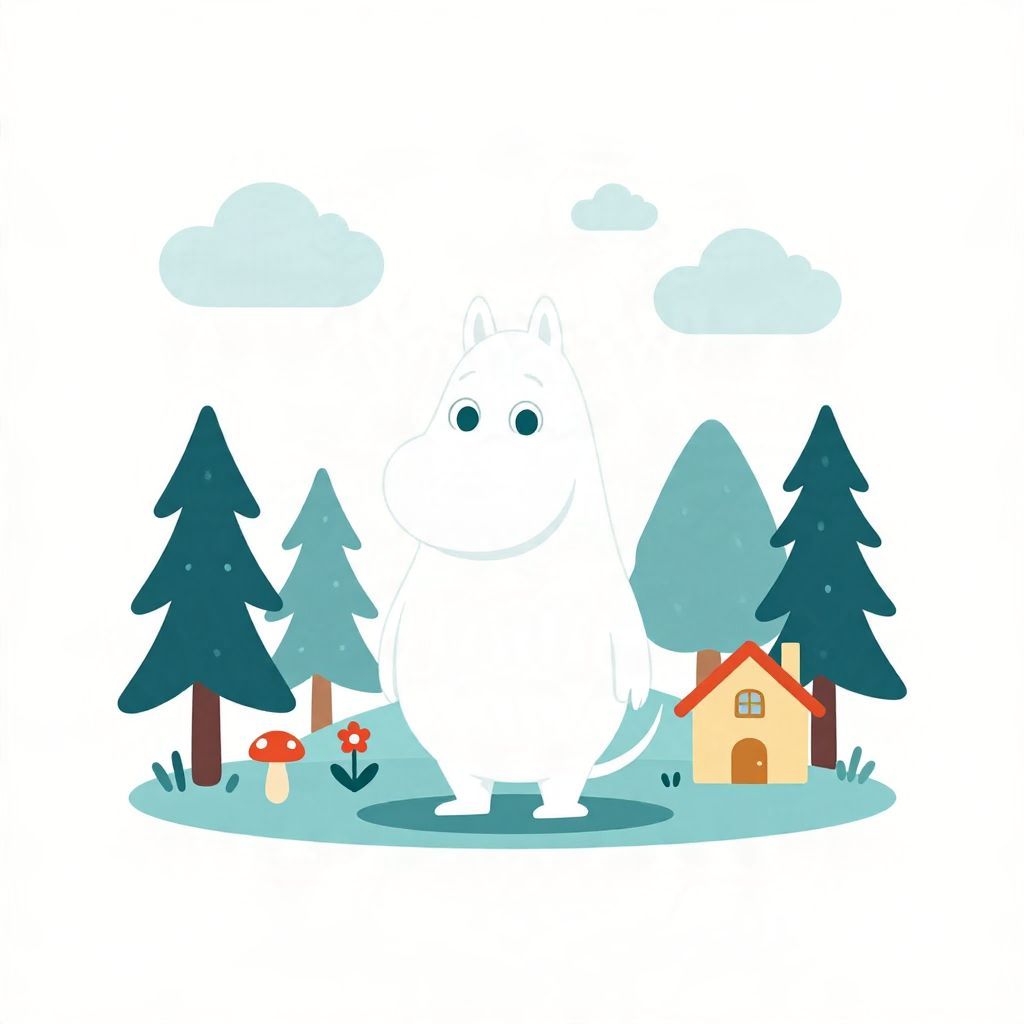
When readers ask “What is Moomin?” they are usually asking about the beloved world created by Finnish-Swedish author Tove Jansson. The Moomins are a family of gentle, round, troll-like characters who live in a whimsical valley and appear in novels, picture books, comics, and adaptations.
Beyond their cute appearance, the Moomin stories are known for their mix of adventure, melancholy, humor, and quiet philosophical insight. They have become a major part of twentieth-century children’s literature, while also rewarding adult readers with themes of belonging, freedom, and change.
What Is Moomin in literature?
Moomin refers to the fictional universe centered on the Moomin family, created by Tove Jansson. The stories blend fantasy, domestic life, and emotional depth, and they are best known through the Moomin novels, which begin with The Moomins and the Great Flood and continue through a series of interconnected books.
Who created the Moomins?
Tove Jansson was a Finnish-Swedish writer, illustrator, painter, and comic artist. She created the Moomins during the 1940s, first as a literary and visual project shaped by wartime uncertainty, then as a long-running body of fiction that expanded into international fame.
Jansson’s literary significance
Jansson’s work is often praised for refusing to talk down to children. Her Moomin books can be read as imaginative adventure stories, but they also contain subtle reflections on solitude, family tension, artistic identity, and the unpredictability of life.
Are the Moomins a book series or a character?
The answer is both. “Moomin” can mean the central family, the wider cast of characters, or the whole literary franchise built around them. In book discussions, the term usually points to the Moomin series rather than a single title.
Main Moomin characters
- Moomintroll — the curious, sensitive central figure in many stories.
- Moominmamma — a nurturing, steady presence associated with care and hospitality.
- Moominpappa — reflective, imaginative, and often interested in stories of his own past.
- Snufkin — a wandering companion who values freedom and simplicity.
- Little My — small, sharp-witted, and unpredictable.
What kind of stories are the Moomin books?
The Moomin books are fantasy narratives, but they are not simple fairy tales. They often combine episodic adventure with domestic scenes, using a calm, observational style to explore emotional states, seasonal change, and the oddness of everyday life.
Genre and tone
Readers often describe the series as children’s literature, but that label is only partly sufficient. The books also belong to literary fantasy and philosophical fiction, with a tone that can move quickly from playful to wistful.
Narrative style
Jansson’s prose is clear and economical, yet full of atmosphere. She often uses vivid natural imagery, understated humor, and carefully chosen details to make the Moomin Valley feel both magical and believable.
What are the main themes in Moomin?
The Moomin books endure because they speak to readers at different ages. Their themes are accessible on the surface, but they also carry emotional and philosophical weight.
- Belonging and home — the Moominhouse is a symbol of welcome, safety, and chosen family.
- Freedom and wandering — characters like Snufkin represent the pull of independence and movement.
- Change and seasonality — the valley is shaped by weather, migration, and the passing of time.
- Solitude — many characters need space, silence, or retreat to understand themselves.
- Difference and acceptance — the series repeatedly makes room for unusual personalities and habits.
Why these themes matter
These concerns give the books their emotional range. A story may begin with a comic misunderstanding or a strange visitor, but it often ends by affirming that people can live together without being identical.
What are some literary examples of Moomin stories?
Several Moomin books are especially useful for understanding the series as literature. They show how Jansson developed her themes, characters, and style over time.
The Moomins and the Great Flood
This early book introduces the Moomin world in a formative, searching way. It establishes the family’s movement through uncertainty and the central idea of finding one another and a place to belong.
Comet in Moominland
Often read as an adventure story with an undercurrent of anxiety, this novel brings together curiosity, danger, and companionship. It also shows how Jansson can turn a large-scale threat into a story about emotional resilience.
Finn Family Moomintroll
This is one of the best-known Moomin books and a strong example of the series’ blend of playfulness and reflection. The plot includes magical objects, shifting identities, and a sense of the world as both comic and unstable.
Moominland Midwinter
This later novel is especially important for its mood. It explores solitude, unfamiliarity, and the challenge of seeing the world differently when the usual comforts of home are absent.
What symbols and motifs appear in Moomin?
Jansson’s books use recurring images that deepen the stories without becoming heavy-handed. These motifs help the series feel unified across different plots and moods.
The Moominhouse
The house is more than a setting. It stands for hospitality, stability, and a kind of open-ended domestic life in which people can arrive, leave, and return.
The valley and the natural world
Moominvalley is a landscape of change. Rivers, forests, storms, snow, and seasonal shifts all shape the characters’ emotional lives and remind readers that nature is active, not merely decorative.
Journeys and departures
Repeated travel in the series often symbolizes growth, restlessness, or the search for identity. Characters leave home to discover something important, then return with altered perspectives.
Why are the Moomins still popular?
The Moomins remain popular because they are both comforting and honest. They offer a welcoming fictional world without pretending that fear, loneliness, or uncertainty do not exist.
Appeal for children and adults
Children may enjoy the creatures, adventures, and comic situations, while adults often respond to the books’ emotional nuance and quiet wisdom. That dual appeal is one reason the series has lasted so long.
Adaptations and cultural reach
The Moomins have appeared in comics, animation, stage productions, and merchandise, which has expanded their audience far beyond the original books. Even so, the literary works remain the foundation of the Moomin legacy.
How should a new reader approach the Moomin books?
A simple reading order can help new readers follow the development of the series, though each book also stands on its own reasonably well. Starting with the early novels is often the best way to see the world take shape.
- The Moomins and the Great Flood
- Comet in Moominland
- Finn Family Moomintroll
- Moominsummer Madness
- Moominland Midwinter
- Comet in Moominland and the later novels, depending on interest in tone and theme
If you prefer a moodier or more reflective entry point, Moominland Midwinter is often a strong choice. If you want a more classic adventure feel, Comet in Moominland is especially approachable.
What makes Moomin important in literary history?
The Moomin books occupy a distinctive place in twentieth-century literature because they combine children’s fantasy with modern literary sensitivity. Jansson’s work helped broaden expectations for what children’s books could do: entertain, comfort, unsettle, and illuminate inner life at the same time.
In that sense, Moomin is not just a charming fantasy series. It is a carefully built literary world that uses gentle creatures and imaginative settings to ask serious questions about home, identity, and how people live together.
If you enjoy literary worlds that mix imagination with deeper themes, you may also like reading about what a burn book is or what a troubadour is.