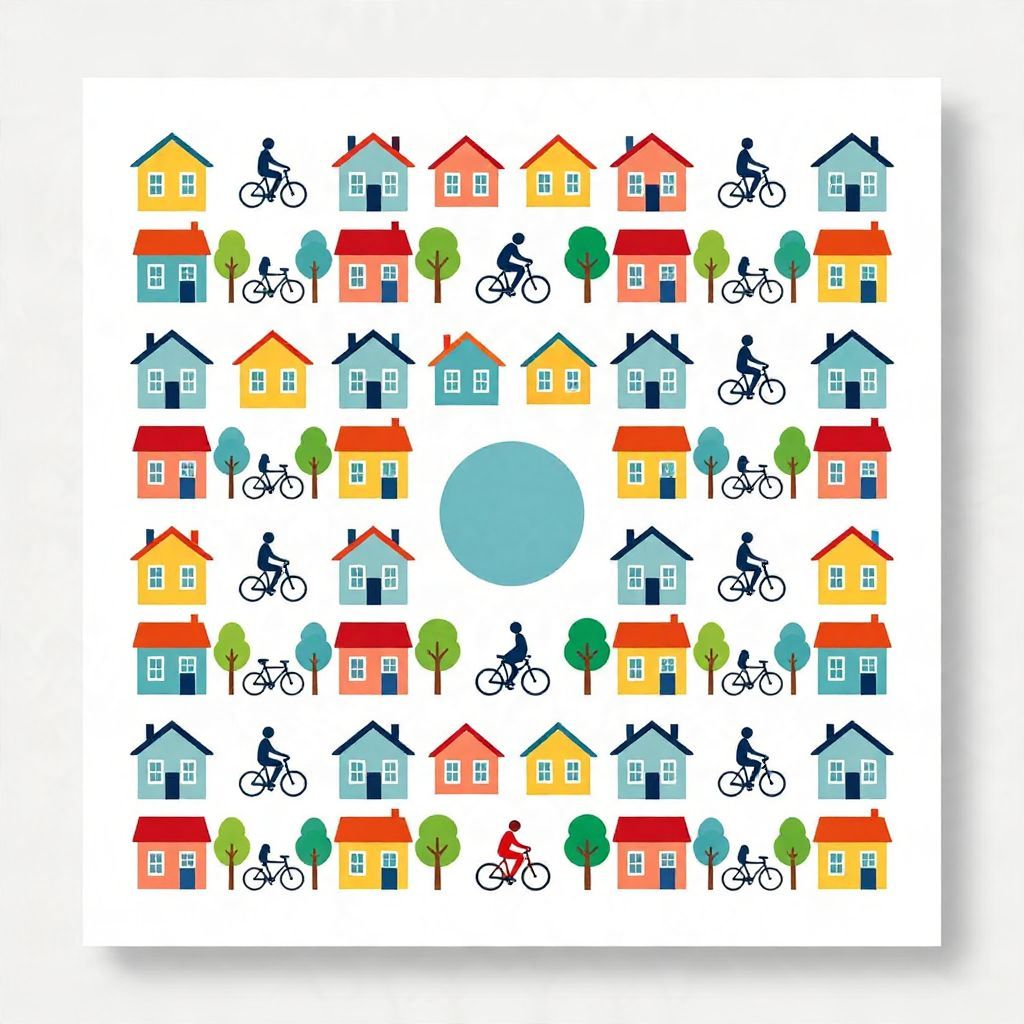
If you’re asking what sameness means in The Giver, you’re really asking how Lois Lowry imagines a society that has traded freedom, memory, and individuality for safety and control. In the novel, “Sameness” is not just a rule or a policy; it is the system that removes difference from daily life.
That idea shapes the book’s world, its conflicts, and its deepest questions. Understanding Sameness helps explain why the community feels calm on the surface, yet emotionally thin, morally limited, and deeply dependent on one person to hold the past.
What is Sameness in The Giver?
Sameness is the community’s deliberate effort to eliminate difference, unpredictability, and conflict by controlling the environment, emotions, family life, language, and even memory. In Lois Lowry’s novel, it creates a highly ordered society where pain is reduced, but so are choice, color, love, and true individuality.
How Sameness works in the novel
Sameness is the backbone of the community’s social design. Rather than allowing people to develop naturally, the society standardizes nearly everything: climate, housing, family structure, occupations, and emotional expression.
Environmental control
One of the clearest signs of Sameness is the community’s altered environment. The people have removed weather extremes, hills, and many natural variations so that life is predictable and manageable.
This matters because nature in the novel is tied to feeling and memory. Without variation in the world, the citizens lose access to experiences that might awaken imagination, wonder, or risk.
Social control
Sameness also governs how people live together. Families are assigned, children are born through controlled processes, and adults are matched according to social usefulness rather than personal desire.
Even language is regulated. Citizens are encouraged to speak precisely and avoid words or ideas that might complicate social harmony. In that sense, Sameness is not only physical uniformity but also intellectual and emotional discipline.
Emotional control
The community’s greatest sacrifice is emotional depth. Strong feelings are seen as dangerous, so the society suppresses passion, grief, and desire along with joy and love.
Lowry suggests that a world without suffering may also become a world without genuine happiness. If no one can choose, remember, or mourn, then no one can fully feel either.
Why Sameness exists in The Giver
The novel presents Sameness as a response to human history. The community’s leaders believe that difference leads to war, inequality, and suffering, so they remove the conditions that allow those problems to grow.
This makes Sameness a classic dystopian idea: a solution that solves one problem by creating another. The society gains order and stability, but it does so by flattening human life into something safer and far less meaningful.
The logic behind the system
The elders’ logic is understandable, at least at first glance. If people cannot see color, feel intense desire, or remember violence, they may be less likely to repeat the mistakes of the past.
But the novel questions whether peace achieved through suppression is truly peace. Lowry invites readers to consider whether a life without hardship is worth the cost of freedom and selfhood.
The hidden cost of safety
Sameness removes the very experiences that make moral choice possible. Without memory, people cannot compare past and present; without choice, they cannot grow through responsibility; without difference, they cannot recognize beauty as beauty.
That is why the system feels efficient but spiritually empty. It prevents suffering, yet it also prevents depth.
What Sameness reveals about the novel’s themes
Sameness is one of the novel’s central symbols because it gathers many of the book’s major themes into a single idea. It is about control, conformity, memory, freedom, and the cost of a painless life.
Freedom versus security
Perhaps the most important tension in the book is between freedom and security. The community chooses security, but the novel shows that security can become a cage when it eliminates choice.
Jonas’s growing awareness of the world beyond Sameness makes this conflict personal. As he learns what has been removed, he begins to understand that freedom includes the possibility of pain, uncertainty, and loss.
Memory and identity
Sameness depends on forgetting. The community cannot function if people remember the past clearly, because memory would expose what has been sacrificed.
That is why the Receiver of Memory is so important. He alone holds the community’s history, and through him the novel shows that memory is not just information; it is part of identity, conscience, and wisdom.
Individuality and difference
Sameness also stands against individuality. The community values predictability over personal uniqueness, which means that people are treated as functions rather than fully developed selves.
Jonas’s ability to perceive color, feel more deeply, and question the rules marks him as different. His difference is not a flaw; it is the beginning of moral awareness.
Literary examples of Sameness in the novel
Lowry does not explain Sameness in a lecture-like way. Instead, she reveals it through details of setting, character, and plot. These examples help readers see how thoroughly the system shapes life.
Color disappears
One of the most memorable effects of Sameness is the loss of color. At first, the world appears orderly and neutral, but Jonas gradually learns that this neutrality is artificial.
The absence of color symbolizes the loss of difference and perception. When Jonas begins to see color, he begins to see the world as layered, vivid, and morally complex.
Family is standardized
In the community, a family unit is carefully arranged rather than formed through love or biology. Parents are not really parents in the emotional sense; they are caretakers assigned to raise children according to rules.
This arrangement shows how Sameness replaces intimacy with procedure. The structure of family remains, but much of its emotional meaning is removed.
Choice is removed
Citizens do not choose their jobs, partners, or major life paths. Assignments are made for them, and the system treats this as kindness.
Yet the novel suggests that choice is essential to human dignity. Without it, people may be comfortable, but they are also diminished.
Language is restricted
The community’s language reflects its values. People are expected to use careful, polite, and precise speech, which helps maintain order but also limits expression.
This matters because language shapes thought. If people cannot name certain feelings or ideas, they may struggle to recognize them at all.
How Sameness affects Jonas
Jonas is the character who most clearly reveals the danger of Sameness. As he receives memories from the Giver, he becomes increasingly aware of what his community has lost.
His development is not just about learning facts. It is about learning to feel, compare, question, and choose.
From obedience to awareness
At the start of the novel, Jonas is a compliant child who trusts the system. He believes the community’s rules exist for good reasons, and he has little basis for doubt.
Once he experiences memory, however, he can no longer accept Sameness as harmless. Knowledge changes his moral perspective.
Why Jonas cannot accept the system
Jonas begins to understand that the community’s peace depends on ignorance. He sees that pain has been removed, but so have love, color, music, and authentic human connection.
His resistance is therefore ethical as well as emotional. He does not reject order itself; he rejects a world that sacrifices humanity to maintain order.
Sameness as a dystopian symbol
In literary terms, Sameness is a powerful dystopian symbol because it represents the danger of extreme conformity. Dystopian fiction often imagines societies that promise perfection but achieve it through surveillance, control, or erasure.
Lowry’s version is especially unsettling because it is calm rather than violent. The community does not look like a nightmare from the outside, which makes its losses easier to miss.
Not all sameness is bad
The novel does not argue that all similarity is harmful. Shared rules, fairness, and social stability can be valuable.
What Lowry questions is the idea that sameness should erase everything difficult, unpredictable, or emotionally intense. In her vision, a humane society must allow difference, memory, and choice to exist alongside order.
Common questions about Sameness in The Giver
Is Sameness the same as equality?
No. Equality aims to give people fair treatment and opportunity, while Sameness in the novel removes meaningful differences altogether. The community confuses fairness with uniformity.
Does Sameness eliminate all suffering?
It reduces visible suffering, but it does not eliminate moral harm. The system creates emotional deprivation, loss of identity, and hidden forms of violence, including the acceptance of euthanasia and social control.
Why does the community value Sameness so highly?
The leaders believe that difference causes conflict. Their goal is to prevent pain, but the novel shows that their solution also prevents love, freedom, and authentic human growth.
Why Sameness matters to readers
Sameness remains one of the most memorable ideas in modern young adult literature because it asks a question that is still relevant: how much freedom are we willing to trade for comfort? The novel does not give an easy answer, but it makes the cost visible.
For readers, Sameness is the key to understanding the book’s emotional power. It explains the community’s calm surface, Jonas’s awakening, and the novel’s warning that a perfect world may be less human than a flawed one.
If you want to explore the novel’s bigger ideas next, you may also like what the theme of The Giver is and whether Jonas dies in The Giver.