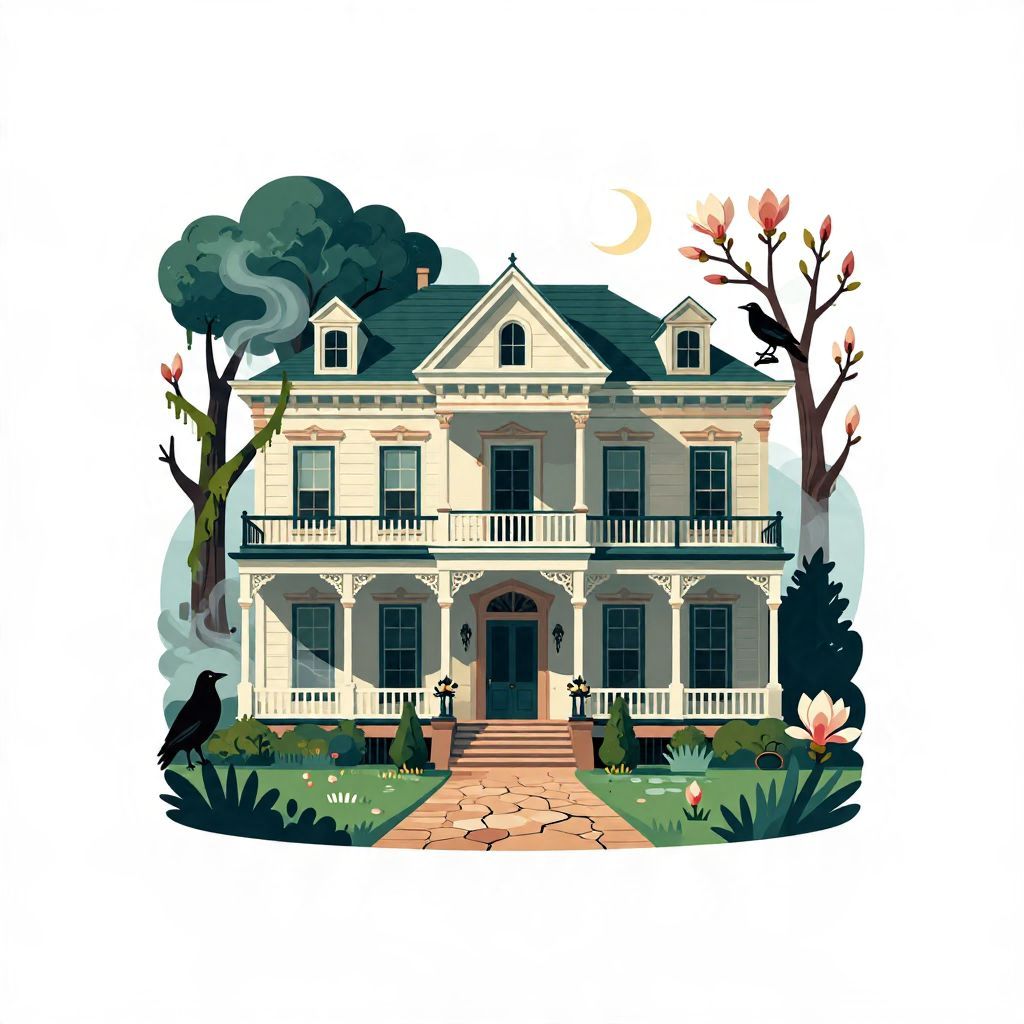
Southern Gothic is one of literature’s most atmospheric modes: a way of telling stories about the American South through decay, unease, eccentricity, and moral tension. It is not just “spooky Southern fiction.” Instead, it uses haunting settings and flawed characters to explore history, violence, class, race, religion, and social hypocrisy.
If you have ever wondered why so many Southern Gothic stories feel both grotesque and deeply human, the answer lies in how the genre turns place into meaning. The South is often portrayed as a landscape where the past lingers, and where beauty and corruption seem to coexist.
What is Southern Gothic in literature?
Southern Gothic is a literary mode and genre associated with the American South that uses dark humor, decay, grotesque characters, and eerie or unsettling situations to examine social and psychological conflict. It often reveals hidden violence, poverty, racial injustice, religious obsession, or family dysfunction beneath a seemingly ordinary setting.
Where did Southern Gothic come from?
Southern Gothic developed in the early 20th century and became especially prominent in American fiction, drama, and film. It grew out of older Gothic traditions, but instead of castles and European ruins, it often uses plantations, small towns, farms, boarding houses, churches, and back roads as sites of dread and revelation.
The genre is closely tied to the post-Civil War South and the long aftermath of slavery, Reconstruction, economic hardship, and social change. Writers used Southern Gothic to show how the region’s history continued to shape everyday life, often in disturbing or contradictory ways.
Why the South matters so much
In Southern Gothic, setting is never just background. The landscape, architecture, weather, and local customs often mirror the emotional and historical weight of the story.
- Decaying houses can symbolize a collapsing family line or social order.
- Isolated towns can suggest confinement, gossip, and stagnation.
- Heat, humidity, and storms often intensify the sense of pressure and unease.
- Old family names and inherited property can point to the burden of history.
What are the defining features of Southern Gothic?
Southern Gothic stories usually combine realism with exaggeration, irony, and the uncanny. The result is a style that feels both grounded and strangely heightened, as if ordinary life has become revealingly distorted.
1. Decay and ruin
Physical and moral decay are central. Buildings may be crumbling, families may be broken, and social ideals may be exposed as hollow or unstable.
2. Grotesque or eccentric characters
Southern Gothic often includes characters who are physically unusual, psychologically troubled, socially isolated, or behaviorally extreme. These figures are not simply there for shock value; they can expose the cruelty or absurdity of the world around them.
3. Violence beneath civility
One of the genre’s most important tensions is between polite manners and hidden brutality. A graceful exterior may conceal exploitation, racism, abuse, or repression.
4. Moral and spiritual conflict
Many Southern Gothic works engage with religion, guilt, sin, redemption, and hypocrisy. Faith may be sincere, distorted, manipulative, or all three at once.
5. The past that will not stay buried
History in Southern Gothic is active, not remote. The legacy of slavery, war, family shame, and social hierarchy often shapes the present in ways characters cannot escape.
What themes does Southern Gothic explore?
Southern Gothic is flexible, but certain themes recur because they fit the genre’s concern with hidden damage and inherited trauma. These themes help explain why the mode remains so powerful in American literature.
- Race and racial injustice
- Class and social hierarchy
- Family decay and generational conflict
- Religious obsession, guilt, and hypocrisy
- Alienation and loneliness
- Violence, repression, and taboo
- The instability of memory and identity
These themes are often presented indirectly. Rather than making a direct argument, Southern Gothic fiction tends to dramatize conflict through atmosphere, dialogue, symbolism, and disturbing incidents.
Which writers are most associated with Southern Gothic?
Several major American writers are strongly linked to Southern Gothic, though not every work by these authors fits the label equally well. The genre is broad, and many writers borrow from it without being confined to it.
William Faulkner
Faulkner is one of the most important figures in Southern literature. His fiction often explores family decline, racial violence, memory, and the burden of history through complex narrative structures and deeply troubled communities.
Flannery O’Connor
O’Connor is perhaps the clearest example of a Southern Gothic writer. Her stories frequently feature violent reversals, grotesque characters, religious themes, and moments of unsettling revelation.
Tennessee Williams
In drama, Williams brought Southern Gothic sensibility to the stage through damaged families, desire, illusion, and emotional collapse. His work often blends lyricism with psychological pressure.
Carson McCullers
McCullers wrote about loneliness, outsiderhood, and emotional estrangement in Southern settings. Her work is less sensational than some Gothic fiction, but it shares the genre’s fascination with isolation and unease.
Other important names
Writers such as Eudora Welty, Truman Capote, and Cormac McCarthy are often discussed in relation to Southern Gothic, though their work may also belong to other literary categories. The label is useful, but it should not flatten each author’s range.
What are some classic Southern Gothic literary examples?
If you want to understand Southern Gothic, the best approach is to read a few representative works and notice how they use setting, character, and symbolism to build tension. The following examples are widely discussed and strongly associated with the mode.
- “A Good Man Is Hard to Find” by Flannery O’Connor — a short story that blends family conflict, irony, violence, and spiritual unease.
- “Good Country People” by Flannery O’Connor — a story about deception, vulnerability, and the collapse of self-image.
- The Sound and the Fury by William Faulkner — a novel about family breakdown, memory, and the disintegration of a Southern household.
- As I Lay Dying by William Faulkner — a darkly comic and tragic journey through grief, poverty, and fractured narration.
- A Streetcar Named Desire by Tennessee Williams — a play shaped by desire, illusion, class tension, and emotional violence.
- The Heart Is a Lonely Hunter by Carson McCullers — a novel of isolation and longing in a Southern town.
These works differ in style and tone, but each uses the South as more than scenery. The region becomes a pressure chamber where private pain and public history collide.
What literary techniques does Southern Gothic use?
Southern Gothic relies on technique as much as on subject matter. Its effects come from how the story is told, not only from what happens in it.
Symbolism
Objects and places often carry layered meaning. A ruined house, a family heirloom, a road, a church, or a graveyard may stand for memory, guilt, social decay, or false respectability.
Irony
Irony is essential to the genre. Characters may believe they are moral, refined, or secure while the narrative reveals the opposite.
Dark humor
Even in grim stories, Southern Gothic often includes humor that is sharp, unsettling, or absurd. This humor can make the violence and absurdity feel even more disturbing.
Unreliable or fragmented narration
Some Southern Gothic works use shifting perspectives, nonlinear time, or unstable narrators to reflect confusion, trauma, or the unreliability of memory.
Heightened dialogue and voice
Regional speech, biblical cadence, and sharply drawn voices often give the genre its distinctive texture. The language may feel plain on the surface but carry deep emotional or symbolic force.
How is Southern Gothic different from Gothic fiction?
Southern Gothic belongs to the larger Gothic tradition, but it is not identical to it. Traditional Gothic fiction often centers on castles, aristocratic secrets, and European settings, while Southern Gothic relocates those anxieties to the American South and ties them to its specific history.
In other words, Southern Gothic is less about imported medieval gloom and more about the haunted legacy of a real place. Its terrors are often social, historical, and psychological rather than supernatural.
Quick comparison
- Traditional Gothic: ruins, secrets, ancestral curses, remote estates, supernatural dread.
- Southern Gothic: decay, family history, racial and class conflict, grotesque realism, moral unease.
Why does Southern Gothic still matter?
Southern Gothic remains relevant because it offers a powerful way to write about denial, inheritance, and the cost of living with unresolved history. Its best works do not simply sensationalize suffering; they reveal how communities and individuals are shaped by what they refuse to face.
That is why the genre continues to influence contemporary fiction, television, and film. Its atmosphere is memorable, but its deeper strength lies in its honesty about contradiction: grace and cruelty, beauty and rot, tenderness and violence can all exist in the same place.
How should a beginner read Southern Gothic?
If you are new to the genre, start with a short story or a play before moving to denser novels. Southern Gothic can be intense, but it is often easier to appreciate once you understand how setting, symbolism, and irony work together.
- Begin with Flannery O’Connor for concise, vivid examples.
- Read Faulkner if you want complex narrative structure and historical depth.
- Try Tennessee Williams for drama and emotional intensity.
- Then compare how each writer treats the South differently.
The most useful question to ask while reading is not “What shocking thing happens?” but “What does this setting reveal about the people living in it?” That shift in attention opens up the genre’s full meaning.
For a broader look at recurring literary patterns, you may also enjoy what a motif is in literature, or explore another eerie tradition in What Is The King in Yellow?