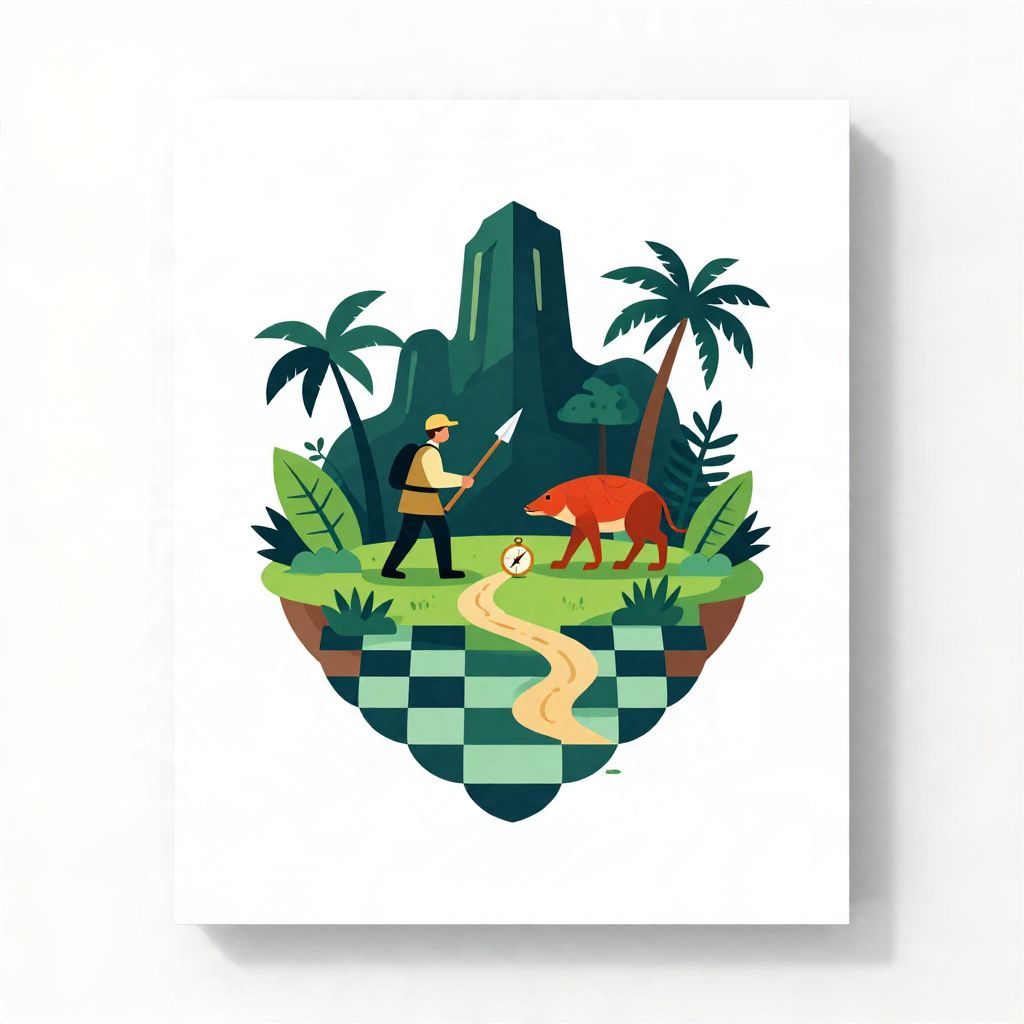
If you’re asking what is the theme of The Most Dangerous Game, the short answer is that Richard Connell’s story explores the thin line between civilization and savagery, and how power can turn human beings into predators. It also raises questions about class, violence, survival, and what happens when a person is treated as prey.
The story is famous because it turns a hunting adventure into a moral test. Beneath the suspense, Connell uses the chase to ask whether people are truly civilized at all—or only restrained by the rules and comforts of society.
What is the theme of The Most Dangerous Game?
The central theme of The Most Dangerous Game is that civilization is fragile, and under pressure people may reveal brutal, animalistic instincts. Connell contrasts hunter and hunted to show how power, fear, and survival can strip away moral restraint, making the story a study of human violence as much as a suspense tale.
How the story develops its main theme
Richard Connell builds the theme through a simple but unsettling premise: a skilled hunter becomes the prey. That reversal forces readers to reconsider what hunting means, who holds power, and how quickly a person’s status can change when the rules disappear.
Hunter and hunted
At the heart of the story is the reversal of roles. Rainsford begins as someone who speaks casually about hunting animals, but once he is trapped on the island, he experiences the terror he once dismissed.
This reversal is more than a plot device. It shows how easily a person’s confidence in control can collapse when the same violence is directed back at them.
Civilization versus savagery
The story repeatedly suggests that civilization is a surface layer rather than a permanent moral achievement. General Zaroff is cultured, educated, and polished, yet he uses those traits to justify murder.
Connell’s point is not that civilization is fake, but that it can be compromised. A refined exterior does not guarantee ethical behavior, and intelligence can be used to rationalize cruelty.
Survival and moral choice
Rainsford’s struggle is physical, but it is also ethical. He must survive without becoming completely like Zaroff, which makes the ending especially disturbing and open to interpretation.
The story asks whether survival excuses violence, or whether violence changes the survivor. That tension is one reason the story remains memorable in classrooms and literary discussions.
Key themes in The Most Dangerous Game
Although civilization versus savagery is the best-known theme, Connell’s story contains several connected ideas that deepen its meaning.
- Power and domination: Zaroff treats human life as entertainment, showing how power can become cruelty when unchecked.
- Dehumanization: By calling his victims “game,” Zaroff turns people into objects and makes murder seem acceptable to himself.
- The limits of rationality: Zaroff is logical and articulate, but his reasoning is morally corrupt.
- Fear and instinct: Rainsford’s survival depends on instinct, not just skill or intellect.
- Justice and revenge: The story invites readers to consider whether the ending restores balance or simply repeats violence.
Characters as symbols of the theme
Connell’s characters are not just individuals; they also function as symbols in the story’s larger argument about human nature.
Rainsford
Rainsford represents the experienced sportsman who initially accepts hunting as a normal, even admirable, activity. His transformation is central to the theme because it forces him to confront the suffering of the hunted.
He is not a purely innocent character, which makes his ordeal more complicated. Connell uses him to show how easily someone can move from detached observer to terrified victim.
Zaroff
General Zaroff symbolizes the dark side of civilization: intelligence without conscience. His manners, wealth, and education make him more frightening, not less, because they hide his brutality behind sophistication.
He embodies the idea that a person can be socially refined and morally monstrous at the same time.
Whitney
Whitney, though a smaller character, helps establish the story’s moral atmosphere. His early conversation with Rainsford about the feelings of animals introduces the ethical issue that the rest of the story dramatizes.
He serves as a quiet counterpoint to Rainsford’s more dismissive attitude at the beginning.
Important symbols and literary devices
Connell relies on symbolism and suspense to make the theme feel immediate rather than abstract. The story’s famous setting and structure all reinforce the same core idea.
The island
The island functions like a closed moral laboratory. Cut off from society, it becomes a place where ordinary rules no longer protect anyone.
Because the island is isolated, it suggests that beneath social order there may be a more primitive struggle for dominance.
The hunt
The hunt is the story’s central symbol. On one level, it is a literal chase; on another, it represents the way humans justify violence when they label it sport, necessity, or tradition.
By making the hunt between humans, Connell removes the comfortable distance that often separates readers from the ethics of hunting animals.
Irony
Irony drives much of the story’s meaning. Rainsford once sees hunting from the position of the hunter, but he must later experience it from the position of the hunted.
This structural irony sharpens the theme by making the lesson experiential rather than merely stated.
Suspense and pacing
Connell’s fast pacing keeps the reader focused on immediate danger, but it also supports the theme. The urgency of the chase strips away abstraction and leaves only raw survival.
That urgency mirrors the story’s moral pressure: when fear is immediate, ethical reflection becomes harder, which is exactly the condition Zaroff exploits.
Why the theme still matters
The Most Dangerous Game continues to resonate because its theme is larger than its genre. It is often read as an adventure story, but it is also a warning about what happens when empathy disappears and violence becomes entertainment.
The story remains relevant in discussions of cruelty, privilege, and the way people can excuse harm when they feel superior to others. Its power comes from making those ideas vivid through action rather than lecture.
Common classroom interpretations
Teachers and students often focus on a few recurring interpretations of the theme:
- human beings are capable of savagery when social restraints are removed;
- power can corrupt even cultured, intelligent people;
- treating others as objects makes cruelty easier to justify;
- survival can force people into morally difficult choices.
These readings are not mutually exclusive. In fact, they work together to explain why the story feels so tense and unsettling.
Spoiler note: what the ending adds to the theme
The ending intensifies the story’s theme by suggesting that Rainsford may no longer be the same person after the hunt. Connell does not spell everything out, and that ambiguity is part of the story’s lasting power.
Because the final moments are open to interpretation, readers are left to ask whether Rainsford has reclaimed his humanity, crossed a moral line, or both. That uncertainty keeps the theme alive after the story ends.
How to write about the theme in an essay
If you need to explain the theme in a class response or literary analysis, it helps to move from broad idea to specific evidence. A strong thesis should connect the story’s plot reversal with its moral meaning.
- State the main theme clearly: civilization is fragile, and violence can reveal human savagery.
- Use the hunter-versus-hunted reversal as your main example.
- Discuss Zaroff as a symbol of civilized cruelty.
- Explain how the island setting removes social protections.
- Conclude by showing how the ending leaves the moral question unresolved.
That structure keeps the analysis focused and avoids reducing the story to a simple “good versus evil” reading.
Final takeaway
The theme of The Most Dangerous Game is that civilization can be dangerously thin, and when power is unchecked, human beings may reveal a capacity for cruelty that looks disturbingly primitive. Connell turns a suspense story into a sharp meditation on dominance, empathy, and survival.
If you enjoy exploring literary themes in short fiction, you may also like our guides to the theme of “The Lottery” and the theme of November 9.