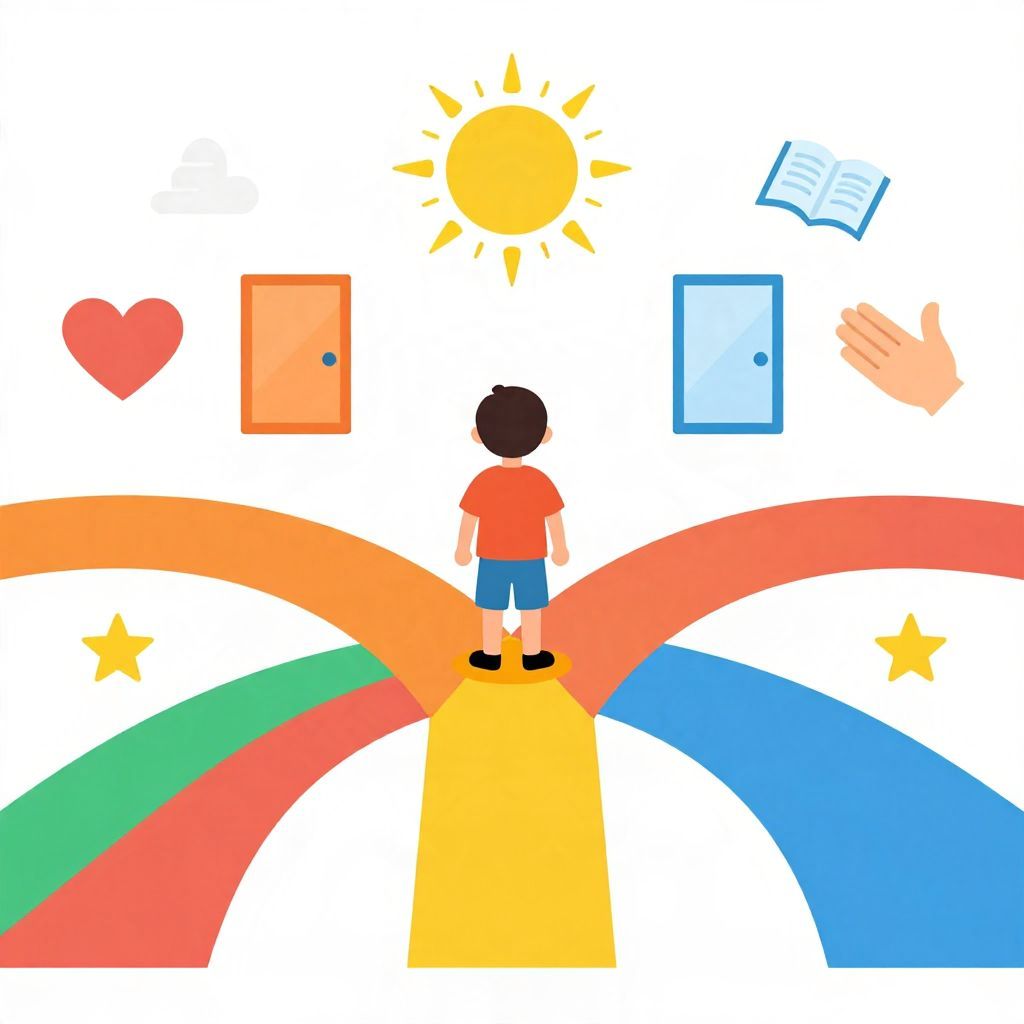
If you’re wondering what What Should Danny Do is really about, the short answer is that it’s an interactive children’s book built around choices. Instead of following one fixed storyline, readers help Danny decide what to do in everyday situations, and each decision sends the story in a different direction.
That simple structure makes the book both playful and reflective. It invites children to think about consequences, empathy, and self-control while also giving adults a useful way to talk about decision-making in a concrete, low-pressure way.
What is What Should Danny Do?
What Should Danny Do is an interactive picture book that follows a boy named Danny through a day shaped by the choices he makes. At key moments, readers choose between different actions, and the story branches accordingly, showing how small decisions can lead to very different outcomes.
Who is Danny, and how does the book work?
Danny is the central character, but he is also a stand-in for the reader. The book’s appeal comes from its “choose-your-own-adventure” style, which lets children participate in the story rather than passively receive it.
Interactive structure
- Readers are prompted to choose Danny’s response in everyday situations.
- Each choice leads to a new page path and a different result.
- The format encourages rereading, since one book can produce multiple storylines.
This structure is especially effective for young readers because it turns abstract ideas like responsibility and impulse control into visible outcomes. A kind choice, a selfish choice, or a careless choice does not stay theoretical; it changes Danny’s day.
Book summary
The book begins with ordinary childhood moments and then asks the reader to decide how Danny should behave. The choices are not about grand adventures but about familiar, relatable situations that children can recognize from school, home, or playtime.
Because the book branches, there is no single plot summary that covers every path. Instead, the core premise is that Danny’s day can improve or unravel depending on the reader’s decisions for him.
What readers can expect
- Simple, accessible language for young children
- Everyday dilemmas rather than fantasy or suspense
- Multiple possible endings or outcomes
- A strong emphasis on cause and effect
Without reducing the book to a moral lesson, the story clearly shows that choices matter. The same character can seem successful, frustrated, or regretful depending on how the reader guides him.
Themes in What Should Danny Do
The book’s themes are straightforward, but they are handled in a way that is easy for children to grasp. Its strongest ideas are practical ones: how to make decisions, how to treat other people, and how to think before acting.
1. Choice and consequence
This is the book’s central theme. Every branch reinforces the idea that actions have results, even when the consequences are not immediate.
2. Self-control
Danny’s choices often test patience, honesty, kindness, or restraint. The book gives children a chance to see how impulsive behavior can create problems, while thoughtful behavior can improve a situation.
3. Empathy
Because the choices often involve other people, the story encourages readers to consider how Danny’s actions affect friends, family, or classmates. That makes empathy part of the reading experience, not just a discussion afterward.
4. Responsibility
The interactive design places responsibility in the reader’s hands. Children do not merely watch Danny make mistakes; they actively guide him, which makes accountability feel personal and memorable.
Literary style and technique
Although What Should Danny Do is a children’s book, it uses a clever narrative technique: branching structure. This format is often associated with interactive fiction, and here it is adapted for a younger audience in a clear, visual way.
Branching narrative
The branching form is the book’s main literary device. It breaks the traditional linear plot and replaces it with multiple pathways, making the reader a participant in the storytelling process.
Repetition and pattern
Interactive books like this often rely on repeated structures so children can understand the rules quickly. That repetition helps reinforce the lesson without making the book feel overly instructional.
Visual storytelling
As with many picture books, the illustrations do important narrative work. They help communicate emotion, setting, and consequence, especially when the text is brief and the reader must quickly evaluate a choice.
Why the book appeals to children and adults
The book works on two levels. Children enjoy the fun of making choices and seeing what happens next, while adults often appreciate the book’s usefulness as a conversation starter about behavior and decision-making.
For children
- It feels interactive and game-like
- The choices are easy to understand
- It rewards rereading and experimentation
For parents, teachers, and caregivers
- It offers a natural way to discuss consequences
- It can support social-emotional learning
- It gives children practice thinking through options
That dual appeal is one reason the book has remained a popular recommendation in homes and classrooms. It is entertaining, but it is also quietly instructional.
Characters and their function in the story
Danny is the only character readers need to follow closely, but the people around him matter because they shape the choices available to him. Rather than building a large cast, the book keeps the focus on situations that children can easily understand.
Danny as a reader-avatar
Danny functions less like a deeply developed literary character and more like a mirror for the reader’s decisions. That design is intentional: the story is about what happens when someone chooses, not about psychological complexity.
Supporting figures
Other characters appear mainly to create situations that test Danny’s judgment. Their role is to make the consequences of his actions visible and relatable.
What kind of book is it?
What Should Danny Do is best described as an interactive children’s picture book with educational value. It is not a traditional novel, and it is not meant to be read only once from beginning to end.
Instead, it belongs to a broader tradition of books that encourage participation. Readers who enjoy choose-your-own-path stories, social-emotional learning books, or activity-based picture books are likely to respond well to it.
Is there a reading order?
If you are approaching the book for the first time, there is no special reading order to learn beyond starting at the beginning and making choices as prompted. The real “order” comes from repeated readings, since different decisions reveal different versions of the story.
That makes the book especially rewarding for children who like to compare outcomes. A second or third reading often becomes part of the experience, not an afterthought.
Review: strengths and limitations
The book’s greatest strength is its clarity. It presents a simple idea—choices matter—and turns that idea into a hands-on reading experience that children can understand immediately.
Strengths
- Engaging interactive format
- Clear moral and emotional lessons
- Strong reread value
- Useful for discussion at home or in the classroom
Possible limitations
- Readers looking for a complex plot may find it simple
- The lesson-driven structure may feel direct rather than subtle
- Its appeal is strongest for younger children and early readers
Those limitations are not flaws so much as signs of the book’s purpose. It is designed to be accessible, interactive, and discussion-friendly rather than literary in a conventional adult sense.
Who should read What Should Danny Do?
This book is a good fit for families, teachers, and young readers who enjoy participatory stories. It is especially useful for children who are learning about behavior, consequences, and decision-making in everyday life.
If you want a book that sparks conversation rather than simply delivering a single plot, this is a strong choice. If you want a traditional narrative with a fixed ending, you may prefer a different kind of children’s story.
Final takeaway
What Should Danny Do succeeds because it turns a simple question into an engaging reading experience: what happens when a child’s day depends on the choices he makes? Its interactive form, practical themes, and rereadable structure make it a memorable book for young readers and the adults guiding them.
If you’re interested in how stories work or how personal narratives are shaped, you may also enjoy reading about what storytelling is and how to write a book about your life.