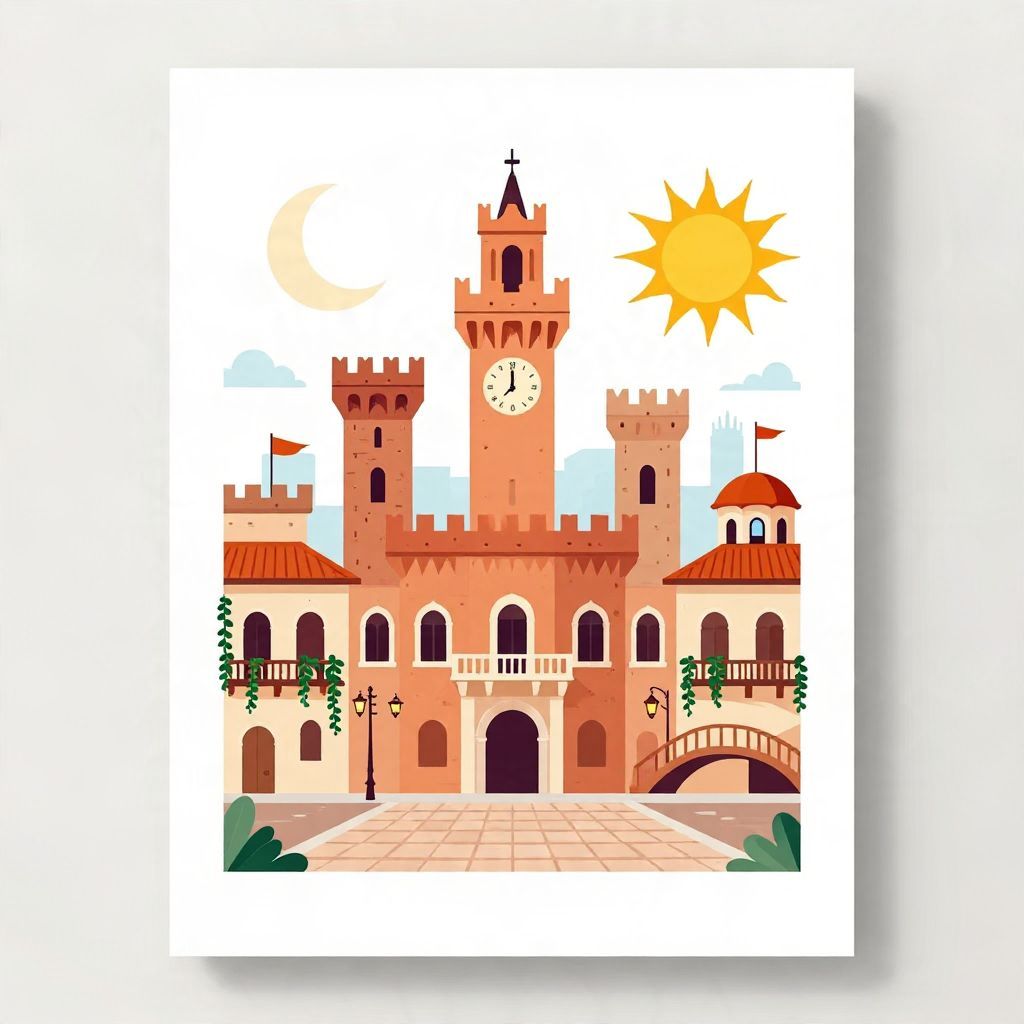
If you’re asking when does Romeo and Juliet take place, the short answer is that Shakespeare sets the play in a Renaissance-era version of Verona, Italy, during a time that feels broadly late medieval to early modern rather than tied to one exact year. The story is not anchored to a precise historical date, which gives it a timeless, legendary quality.
That flexibility matters: the play uses a specific place and a recognizable social world, but it is less interested in documenting history than in exploring love, violence, family loyalty, and fate. Understanding the setting helps explain why the characters behave as they do and why the tragedy feels both immediate and universal.
When does Romeo and Juliet take place?
Romeo and Juliet takes place in Verona, Italy, in an unspecified historical period that resembles the Renaissance or late medieval era. Shakespeare does not give a calendar year, but the world of duels, arranged marriages, household servants, and aristocratic family rivalries suggests a premodern society shaped by honor culture and strict social hierarchies.
Why Shakespeare does not give an exact date
Unlike a modern historical novel, the play is not built around a documented event. Shakespeare seems more interested in creating a dramatic setting that feels believable than in fixing the action to a specific year.
This lack of precision also helps the play work as a tragedy of all times. The feud between the Montagues and Capulets becomes less about one moment in history and more about the recurring human costs of hatred, pride, and impulsive action.
A timeless setting with historical flavor
The play includes details that feel historically grounded: noble households, street violence, servants carrying messages, and social expectations around marriage and family honor. At the same time, Shakespeare shapes Verona into a theatrical space where emotions and conflicts can unfold with intensity.
So while readers often ask “what year is Romeo and Juliet set in,” the better answer is that it is set in a fictionalized early modern Verona, not in a precisely dated historical year.
What clues show the play’s time period?
Several details point to the play’s general era. They are not proof of an exact date, but they help readers picture the social world Shakespeare imagined.
- Duels and sword fighting reflect a culture of personal honor and public retaliation.
- Parental control over marriage shows how little freedom young people, especially women, often had in choosing a spouse.
- Messengers and letters are central to the plot, which fits a pre-digital world where communication could easily fail.
- Public and private spaces are sharply divided, with street brawls contrasting against intimate scenes in bedrooms, gardens, and family homes.
- Religious imagery and references to social customs reflect a Christian European setting shaped by tradition.
The role of Verona
Verona is not just a backdrop. It functions as a city where family reputation matters deeply and where conflict can spill into public life. The setting supports the play’s central tension: private love colliding with public violence.
Shakespeare’s Italy also carried exotic appeal for English audiences. A foreign setting allowed him to tell a story that felt vivid and dramatic while keeping some distance from contemporary English life.
How the setting shapes the story
The time period is important because it explains many of the play’s pressures. Romeo and Juliet are not simply unlucky teenagers; they are young people trapped inside a rigid social order.
Family honor and social obedience
In the world of the play, family loyalty often outweighs individual desire. The feud between the two houses is inherited, and the younger generation is expected to carry it forward rather than question it.
This helps explain why the lovers must meet in secret. Their relationship is not only romantic but also socially forbidden, because it crosses a boundary that the older generation treats as absolute.
Marriage as a family decision
Juliet’s situation especially reflects the era’s expectations. Marriage is treated as a family arrangement with social and economic consequences, not simply a matter of personal choice.
That is one reason the play feels so tragic: the lovers have intense feelings, but the world around them gives them very little room to act freely.
Is Romeo and Juliet based on a real historical event?
Not in the sense of a documented true story from one exact year. Shakespeare drew on earlier versions of the tale, especially a tradition of tragic love stories that circulated before his play.
Those earlier sources helped shape the plot, but Shakespeare transformed the material into a tightly structured drama. The result is a story that feels historical in atmosphere without being tied to a verifiable single event.
Literary source and adaptation
It is useful to think of the play as an adaptation rather than a historical reconstruction. Shakespeare inherited the basic narrative framework and then refined it through language, pacing, character contrast, and dramatic irony.
That is why the question “when does Romeo and Juliet take place” has a slightly different answer than a question about a historical novel. The play is set in a believable past, but that past is artistically shaped rather than documented in detail.
How the time period affects the themes
The setting is not just decorative. It deepens the play’s major themes and makes them feel inevitable.
Love versus social structure
The lovers’ relationship is intense and spontaneous, but the society around them is rigid. Their private feelings clash with public expectations, which makes the romance feel both beautiful and doomed.
Violence and haste
The honor-driven culture of the play encourages quick reactions. Arguments escalate into duels, and decisions are made under pressure. This atmosphere of speed and aggression mirrors the emotional urgency of the lovers themselves.
Fate and coincidence
Because the play is set in a world where communication is fragile and events can turn quickly, chance plays a powerful role. Missed messages, sudden encounters, and impulsive choices all contribute to the tragedy.
In that sense, the setting supports the theme of fate without making the characters powerless. Their world is unstable, but their own choices also matter.
Common questions about the play’s timeline
Is the play set in the 1500s?
It is reasonable to place the atmosphere of the play in the Renaissance or late medieval period, but Shakespeare does not specify a year, so any exact date would be an inference rather than a fact.
Does the play happen over a long period?
No. The action unfolds very quickly, over a short span of days rather than months or years. That compressed timeline increases the sense of urgency and helps the tragedy feel breathless.
Why does the setting feel so vivid if it is not exact?
Because Shakespeare uses selective historical details to create a strong dramatic world. He does not need a precise chronology to make Verona feel real; he only needs enough social texture for the conflict to seem plausible.
Key takeaways for readers and students
- Setting: Verona, Italy.
- Time period: Unspecified, but generally Renaissance or late medieval in feel.
- Historical precision: No exact year is given.
- Why it matters: The setting reinforces themes of family conflict, honor, secrecy, and fate.
- Big picture: Shakespeare creates a timeless tragedy rather than a dated historical record.
So, when does Romeo and Juliet take place? In a vividly imagined early modern Verona, at no single fixed date, but in a social world that makes the lovers’ tragedy feel urgent and universal. If you want to explore the characters further, you may also find these guides useful: How old is Juliet in Romeo and Juliet? and How old was Romeo?