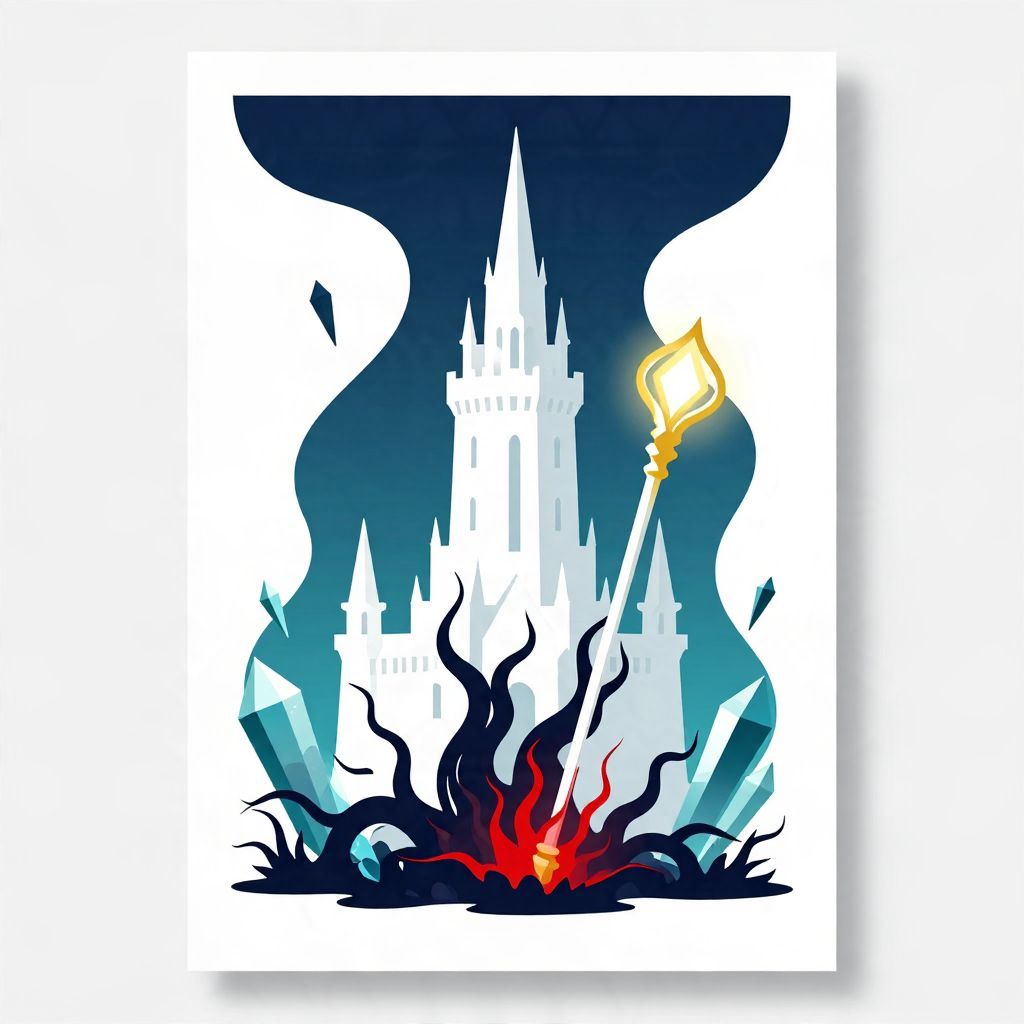
If you’re wondering why Saruman turns evil in The Lord of the Rings, the short answer is that he is corrupted by a mix of pride, ambition, and the desire for power. Tolkien presents him not as a simple villain, but as a once-wise figure who gradually chooses domination over wisdom, and that choice leads him away from his original purpose.
His fall is important because it shows one of Tolkien’s central ideas: evil often begins with the wish to control good ends by bad means. Saruman does not become wicked all at once; he is slowly seduced by the belief that he knows better than everyone else.
Why did Saruman turn evil?
Saruman turns evil because he becomes proud, covetous of power, and willing to use force and deceit to achieve his goals. In Tolkien’s story, he first admires and then imitates the enemy he should oppose, until his desire to rule outweighs his duty to protect Middle-earth.
Saruman’s fall in context
Saruman begins as one of the Istari, the wizards sent to guide and resist Sauron, not to dominate through open power. He is respected as a leader among the wise, especially because of his knowledge and authority.
That status matters, because Tolkien makes Saruman’s corruption a tragedy of misused intellect. He is not tempted by ignorance, but by the idea that intelligence and strategy should place him above moral restraint.
From counselor to rival
At first, Saruman studies the enemy in order to defeat him. But gradually his study becomes identification: he begins to admire the methods of power, secrecy, and industrial control that Sauron represents.
This shift is one of the clearest signs of his moral collapse. Instead of remaining a servant of the good, he starts to imagine himself as a rival power in his own right.
The main reasons Saruman becomes corrupt
Saruman’s evil is rooted in several connected traits and choices. Tolkien does not give one single cause; he shows a chain of inward failures that lead to outward betrayal.
1. Pride
Saruman believes his wisdom entitles him to rule. Pride makes him think that ordinary moral limits do not apply to him, because he sees himself as more capable than those around him.
This is crucial to understanding his downfall. He does not simply want knowledge; he wants the authority to decide what should happen to everyone else.
2. Desire for power
Once Saruman starts to value power for its own sake, he becomes vulnerable to corruption. He no longer asks what is right, only what is effective.
That change is central to Tolkien’s moral vision. Power in The Lord of the Rings is dangerous when it becomes an end rather than a responsibility.
3. Fascination with the enemy
Saruman studies Sauron so closely that he begins to think like him. He comes to admire the logic of domination, machinery, and control, even though those things are exactly what he should resist.
In literary terms, this is a form of moral imitation: he copies the enemy’s methods and slowly adopts the enemy’s values.
4. Impatience with humility
Tolkien often contrasts wisdom with the urge to dominate. Saruman rejects the patient, humble work of resistance because it seems too slow and uncertain.
He wants quick results, and that impatience makes him easier to corrupt. Evil offers him a shortcut: power now, consequences later.
How Tolkien shows Saruman’s transformation
Tolkien does not explain Saruman’s fall through a single speech or scene. Instead, he reveals it through his actions, his language, and the changes in the places he controls.
His voice and persuasion
Saruman’s voice is one of his most important tools. He is able to persuade, confuse, and manipulate others, which reflects his skill at using language as a weapon.
That matters because Tolkien treats speech as morally significant. Saruman’s words no longer clarify truth; they obscure it.
Orthanc and Isengard
His stronghold becomes a symbol of his corruption. Isengard changes from a place of learning and guardianship into a site of industry, destruction, and exploitation.
The ruined landscape around him mirrors his inner state. What was once ordered and purposeful becomes harsh, mechanized, and spiritually empty.
The creation of an industrial evil
Saruman’s rule over Isengard reflects Tolkien’s dislike of destructive industrialization when it is divorced from care for living things. Trees are cut down, land is scarred, and production becomes a form of violence.
In that sense, Saruman is not just a personal villain. He also represents a broader kind of evil: the reduction of nature, people, and beauty into tools for power.
Saruman and Sauron: what is the difference?
Saruman is not simply a smaller version of Sauron, though the two are closely linked. Sauron is the greater dark power, while Saruman is a corrupted servant who tries to imitate that power for himself.
The difference is important. Sauron is the source of the larger evil, but Saruman’s tragedy is that he chooses to join that logic willingly, believing he can master it without being consumed by it.
A servant who wants to become a master
Saruman does not remain loyal to any higher purpose. He wants to use evil methods to defeat evil, but in doing so he becomes morally indistinguishable from the forces he opposes.
This is one of Tolkien’s recurring warnings: the desire to control evil can become a path into evil.
What Saruman’s fall means thematically
Saruman’s corruption deepens several of Tolkien’s major themes, especially the dangers of pride, the limits of power, and the importance of stewardship over domination.
The corruption of wisdom
Saruman is especially tragic because he begins as wise. Tolkien suggests that knowledge is not enough to keep someone good; wisdom must be joined to humility and moral discipline.
Without those qualities, intelligence can become a tool of self-justification.
The danger of “good” intentions
One of the most unsettling aspects of Saruman is that he likely begins by telling himself he is acting for a good cause. Tolkien often shows that evil can grow from the wish to do good through force.
That makes Saruman a more realistic kind of villain than a purely monstrous figure. He is corrupted through rationalization.
Power as temptation
Saruman’s story also explores how power changes people. The more authority he seeks, the more he loses the moral clarity that once defined him.
In Tolkien’s world, power is rarely neutral. It tends to deform the one who craves it most.
Why Saruman’s ending matters
Saruman’s final state underscores the emptiness of his choices. By the end, he has lost not only influence but also dignity, companionship, and the purpose that once gave his life meaning.
Tolkien does not present this as a triumphant punishment scene. Instead, it feels tragic and bleak, because Saruman has wasted his gifts and narrowed himself into bitterness.
Tragedy rather than pure villainy
That tragic quality is part of what makes Saruman memorable. He is not evil because he lacks intelligence or talent; he is evil because he misuses both.
His story warns that greatness without humility can collapse into ruin.
Common reader questions about Saruman
Was Saruman always evil?
No. Tolkien presents him as someone who becomes corrupted over time. His fall is gradual, which makes it more believable and more disturbing.
Did Saruman betray the Fellowship?
Yes, in the broader sense that he works against the free peoples of Middle-earth and aligns himself with domination. His actions place him in direct opposition to the Fellowship’s purpose.
Why doesn’t Saruman repent sooner?
Because pride traps him. The more he commits to his own superiority, the harder it becomes for him to admit error or return to humility.
Key details to remember
- Saruman’s evil begins with pride, not with ignorance.
- He is tempted by power and by the idea that he can control events better than others.
- He imitates Sauron instead of resisting him.
- His corruption is shown through Isengard, industrial destruction, and manipulative speech.
- Tolkien treats his fall as tragic, because Saruman once had wisdom and purpose.
Final takeaway
Saruman turns evil because he lets pride, ambition, and the hunger for control replace humility and service. Tolkien uses him to show that evil often begins not with obvious wickedness, but with the belief that one’s own will should come before moral truth.
If you want to explore more about Tolkien’s characters, themes, and moral symbolism, related articles on The Lord of the Rings can help place Saruman’s fall in the wider story of Middle-earth.