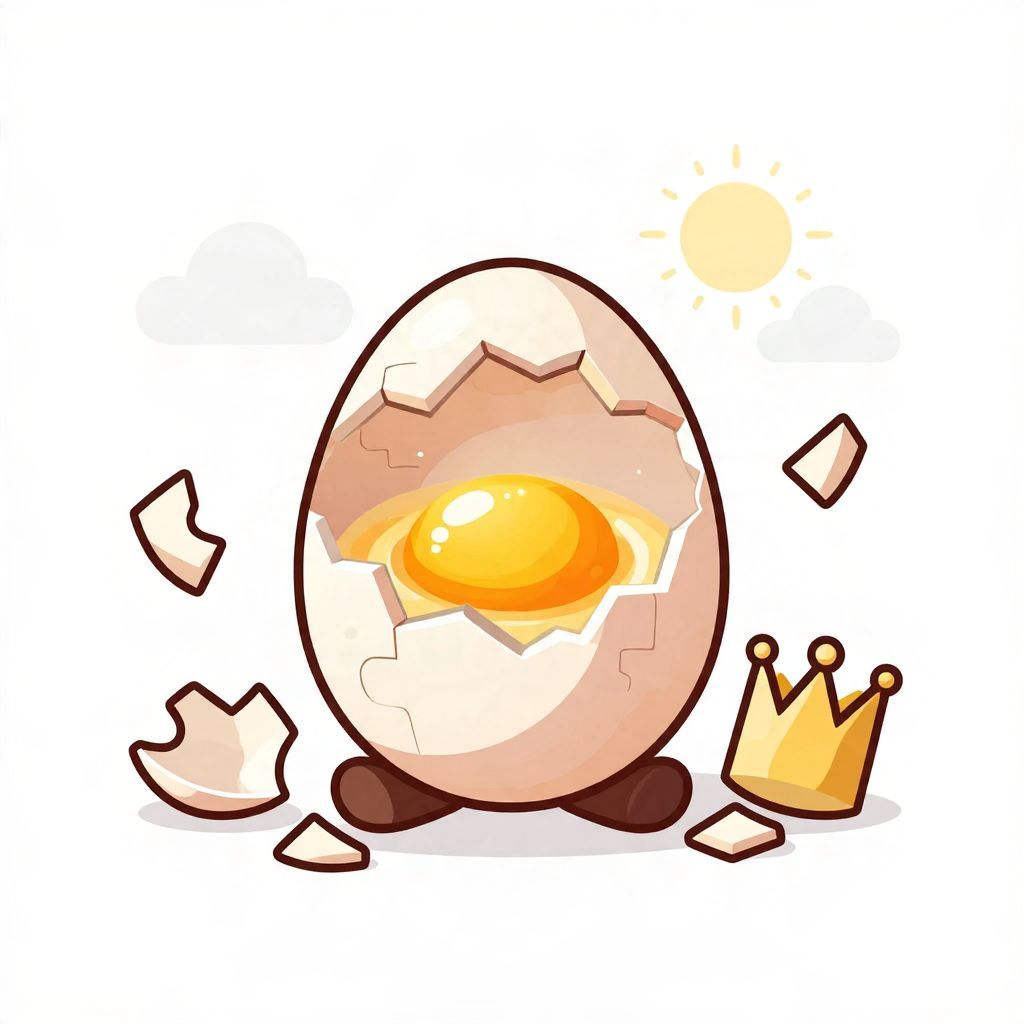
If you’ve ever wondered why Humpty Dumpty is an egg, you’re not alone. The short answer is that he is not originally an egg in the earliest versions of the rhyme; that famous image grew later through illustration, performance, and popular culture.
What began as a puzzling nursery-rhyme figure became an egg-shaped character because the visual metaphor is so memorable. Over time, artists and storytellers fixed that image in the public imagination, even though the rhyme itself never explicitly says he is an egg.
Why is Humpty Dumpty an egg?
Humpty Dumpty is commonly shown as an egg because later illustrations made that interpretation famous, but the original nursery rhyme does not identify him as one. In fact, the rhyme’s wording leaves Humpty’s identity open, and the “egg” idea became the dominant cultural reading much later.
What the nursery rhyme actually says
The familiar rhyme is brief and deliberately vague. It describes Humpty Dumpty sitting on a wall, falling, and being impossible to repair, but it never explains what kind of creature or object he is.
The key lines
The rhyme’s power comes from its simplicity. It presents a small scene with a large consequence: a fall that cannot be undone. That open-endedness is part of why the character has inspired so many interpretations.
Why the text leaves room for interpretation
Because the rhyme gives no clear physical description, readers have long filled in the blanks. Humpty Dumpty could be read as a person, a nickname, a symbolic figure, or, in later tradition, an egg.
How did the egg image become so popular?
The egg interpretation became widespread through children’s books, illustrations, and retellings that made the character visually distinctive. Once artists began drawing Humpty as an egg, the image was easy to remember and easy to repeat, so it gradually eclipsed other possibilities.
Illustration shaped the character
Nursery rhymes often live as much in pictures as in words. For Humpty Dumpty, the illustration tradition mattered enormously: an egg on a wall is instantly recognizable, and a broken egg neatly matches the rhyme’s “all the king’s horses and all the king’s men” ending.
The egg reading is symbolic
An egg is fragile, and that fragility fits the rhyme’s central idea. The fall becomes more dramatic when the figure is imagined as something easily shattered, which helps explain why the egg version stuck so firmly in children’s culture.
Was Humpty Dumpty always an egg?
No. The egg idea is a later popular association rather than the original meaning of the rhyme. Earlier explanations and historical guesses treated Humpty Dumpty as something else entirely, and scholars have long noted that the rhyme predates the modern egg image.
Older interpretations
Some historical readings have suggested Humpty Dumpty may have referred to a person, a cannon, or another object. These theories are not always certain, but they show that the egg version is only one stage in the rhyme’s long history.
Why certainty is hard
Nursery rhymes often evolved orally before being printed, which makes their origins difficult to pin down. Without a single authoritative origin story, later cultural memory can become stronger than the original context.
The literary meaning of Humpty Dumpty as an egg
As a literary symbol, Humpty Dumpty works because he turns a simple rhyme into a meditation on fragility, loss, and irreversibility. The egg image makes the rhyme emotionally immediate: once broken, the object cannot be restored to what it was.
Fragility and brokenness
The egg is a near-perfect symbol for vulnerability. In that sense, the egg reading deepens the rhyme’s emotional effect, even if it is not the original historical meaning.
Irreversibility
The line about not being able to put Humpty together again is memorable because it suggests a limit to repair. Whether read literally or figuratively, it captures the idea that some losses cannot be undone.
Childhood logic and dark undertones
Nursery rhymes often sound playful while carrying unsettling implications. Humpty Dumpty’s cheerful rhythm contrasts with the bleakness of the ending, which is part of why the rhyme remains so enduring.
Humpty Dumpty in literature and culture
Humpty Dumpty has become more than a nursery-rhyme figure. He appears in books, adaptations, cartoons, and cultural references, often as a symbol of collapse, foolishness, or helplessness.
Lewis Carroll’s influence
One major reason Humpty Dumpty remains famous is his appearance in Lewis Carroll’s Through the Looking-Glass. Carroll’s version is not the nursery rhyme itself, but it helped cement Humpty Dumpty as a memorable literary character with a distinct personality and voice.
From rhyme to cultural shorthand
Today, “Humpty Dumpty” can function as shorthand for something that has fallen apart and cannot easily be fixed. That broader meaning comes from the rhyme’s imagery, not from a single official explanation.
Why the egg interpretation works so well
The egg version survives because it is visually elegant, easy to remember, and thematically satisfying. It gives the rhyme a concrete image that matches the story’s emotional logic, even if the original text never says “egg.”
- Simple visual identity: an egg is instantly recognizable.
- Strong symbolism: eggs suggest fragility and breakage.
- Memorability: the image helps the rhyme stick in memory.
- Compatibility with the ending: a broken egg cannot be repaired.
Common questions readers ask about Humpty Dumpty
Is there proof Humpty Dumpty was an egg?
There is no proof that the original rhyme meant an egg. The egg image is a later interpretation that became standard through illustration and repetition.
Why do so many books show him as an egg?
Because the egg image is the most familiar and visually effective version. Once it entered children’s publishing, it became the default way many readers encountered the character.
Does the rhyme have a hidden meaning?
Possibly, but no single interpretation is universally accepted. Some readers see it as a simple nonsense rhyme, while others read it as a symbol of vulnerability, failure, or irreversible damage.
What readers should take away
Humpty Dumpty is an egg in popular imagination, but that is a later cultural choice rather than the rhyme’s original, explicit meaning. The enduring appeal of the character comes from that blend of mystery, simplicity, and symbolism.
If you enjoy exploring how nursery rhymes evolve into lasting literary icons, you may also like reading about the names of the Seven Dwarfs and what little boys are made of.