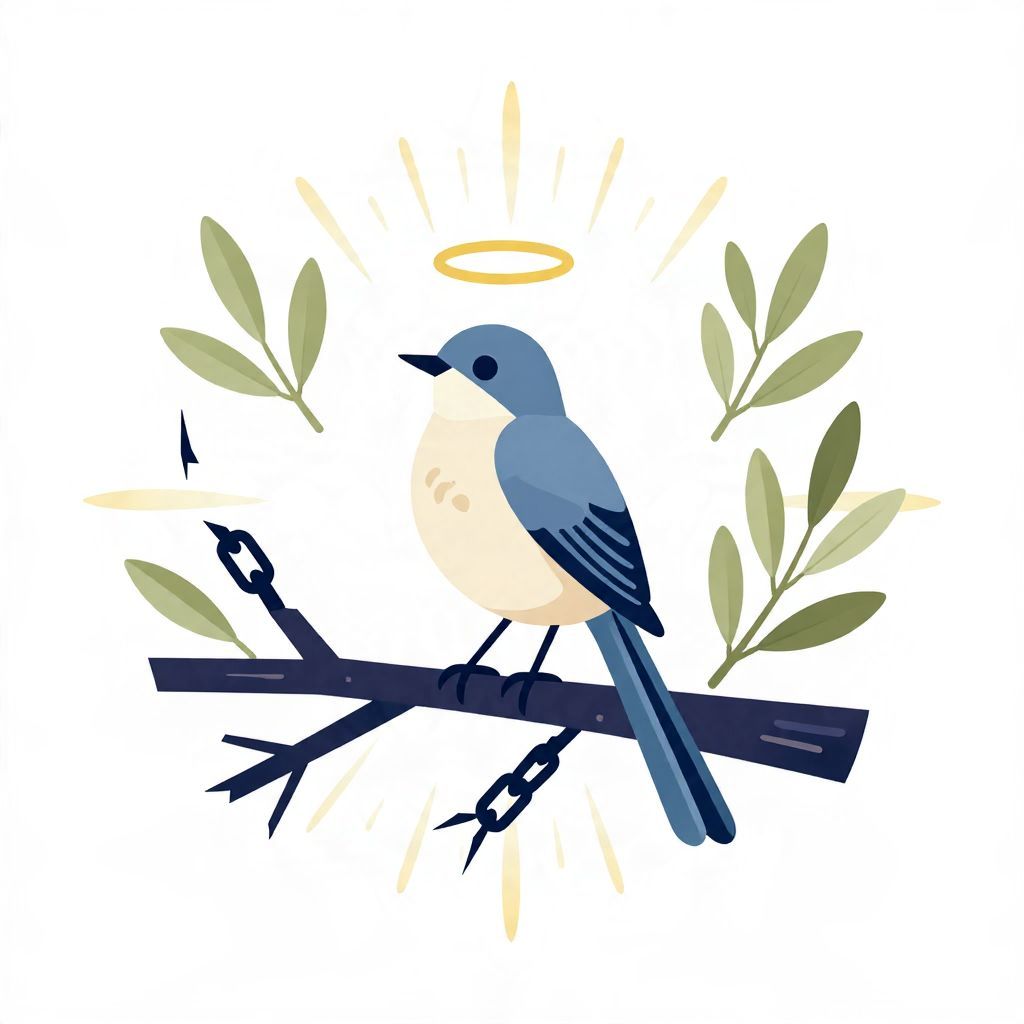
If you’re asking, “Why is it a sin to kill a mockingbird?” the answer lies in the novel’s central symbol: mockingbirds represent innocence, harmlessness, and the people who do no wrong yet suffer anyway. In To Kill a Mockingbird, “sin” is not just religious language; it is a moral warning about harming the vulnerable.
Harper Lee uses that idea to frame the novel’s deepest conflicts about justice, prejudice, and empathy. The phrase becomes a way of measuring human decency: a person who “kills a mockingbird” destroys innocence for no good reason.
Why is it a sin to kill a mockingbird in To Kill a Mockingbird?
It is considered a sin because mockingbirds, in the novel’s symbolism, do nothing but sing and bring beauty. They do not damage crops or threaten people, so harming them becomes an image of needless cruelty. Harper Lee extends that idea to characters who are innocent but still judged, mistreated, or destroyed by society.
What the mockingbird symbolizes
The mockingbird is one of the novel’s most important symbols. It stands for innocence, goodness, and harmlessness, especially in a world where prejudice can turn against those who least deserve it.
Miss Maudie’s explanation
One of the clearest explanations in the book comes through Miss Maudie, who explains that mockingbirds do not “do one thing but make music for us to enjoy.” This simple idea gives the symbol its power: to harm such a creature is to commit an act without justification.
From birds to people
The symbol broadens beyond literal birds. It comes to represent people like Tom Robinson and Boo Radley, who are vulnerable, misunderstood, and harmed by rumor, fear, or racism. In that sense, the “sin” is social as much as personal.
How the idea connects to the novel’s themes
Harper Lee does not use the mockingbird symbol in isolation. It is woven into the novel’s larger concerns: moral education, racial injustice, childhood innocence, and the gap between appearance and truth.
Innocence and harm
The novel repeatedly asks what happens when innocence meets a cruel world. Scout and Jem begin with a child’s instinctive sense of fairness, but they gradually learn that society often fails to protect the innocent.
Justice and prejudice
Tom Robinson’s story shows how prejudice can overpower evidence and truth. He is a clear example of a “mockingbird” because he is punished not for wrongdoing, but because of racial bias in Maycomb.
Empathy as moral vision
Atticus teaches Scout to understand other people by imagining life from their perspective. That lesson is closely tied to the mockingbird idea: once you truly see another person’s vulnerability, it becomes harder to justify cruelty.
Which characters are “mockingbirds”?
Several characters can be read as mockingbirds, though the novel most strongly points to a few key figures. This is an interpretive question, not a fixed list, but the pattern is clear.
- Tom Robinson — innocent in the legal and moral sense, yet destroyed by racism.
- Boo Radley — misunderstood by the town and treated as a source of fear rather than as a human being.
- Mayella Ewell — more complicated, but also trapped by poverty, abuse, and social powerlessness.
- Scout and Jem — children whose innocence is threatened as they learn painful truths about their community.
Tom Robinson is the strongest example because the novel makes his innocence central to the tragedy. Boo Radley is another important case because the town invents a false story around him, turning a private, harmless man into a public object of gossip.
Why “sin” matters in the title’s moral language
The word sin gives the symbol a religious and ethical weight. It suggests that harming innocence is not merely unkind or unfair; it is a violation of a deeper moral order.
A Southern moral framework
The novel is set in a culture shaped by Christian language and social codes, so “sin” carries strong force. Harper Lee uses that vocabulary to show how moral language can expose hypocrisy: people may speak of decency while participating in injustice.
Not just law, but conscience
The novel distinguishes between what is legal and what is right. The mockingbird idea belongs to conscience, not just courtroom procedure. It asks readers to judge actions by compassion, not by social convenience.
How the symbol works in the story
The mockingbird motif appears at key moments, especially when the novel shifts from childhood observation to adult moral understanding. It helps unify the book’s episodes into one larger argument about innocence and responsibility.
Scout’s growth
Scout begins by misunderstanding much of what she sees. Over time, she learns that people can be misread, hurt, or condemned before they are truly known. The mockingbird symbol helps mark that education.
Atticus as moral teacher
Atticus is the character most associated with the novel’s ethical core. His warning about mockingbirds is part of his broader lesson that power should be used carefully and that the defenseless deserve protection.
The courtroom and beyond
Although the trial is the novel’s most obvious injustice, the mockingbird idea also applies to everyday cruelty: gossip, exclusion, fear, and the refusal to see another person clearly. Harper Lee shows that harm does not always begin in a courtroom.
Literary techniques behind the symbol
Harper Lee’s use of the mockingbird is effective because it is simple, memorable, and layered. The symbol works on both a literal and figurative level, which makes it accessible to readers of different ages.
- Symbolism — the mockingbird stands for innocence and undeserved suffering.
- Foreshadowing — the idea prepares readers for later moral losses.
- Child narration — Scout’s perspective gives the symbol emotional clarity.
- Contrast — the beauty of the bird contrasts with the ugliness of prejudice.
Because the novel is told through Scout’s memory, the symbol feels both immediate and reflective. Readers experience the lesson as a child might first hear it, then understand its wider implications later.
Common interpretations and what they mean
Readers often ask whether the mockingbird symbol refers to one character or many. The most accurate answer is that it works as a general moral image rather than a one-to-one code.
Single meaning vs. layered meaning
At its simplest, the mockingbird means “do not hurt the innocent.” But the novel invites a broader reading: society should not punish people for being different, powerless, misunderstood, or simply inconvenient to the majority.
Why the symbol still resonates
The idea remains powerful because it is easy to grasp and hard to dismiss. Most readers recognize that cruelty toward the harmless feels especially wrong, and the novel builds an entire moral vision around that instinct.
Why this question matters to readers
Asking why it is a sin to kill a mockingbird is really asking what the novel believes about human responsibility. Harper Lee suggests that maturity means learning to protect innocence rather than exploit it.
That is why the symbol matters so much: it turns a small, natural image into a lasting ethical principle. The novel’s deepest message is that goodness should be recognized, not destroyed.
If you want to keep exploring the novel’s characters and context, you may also enjoy reading about how old Scout is in To Kill a Mockingbird and a related classic novel, what A Tale of Two Cities is about.