If you’ve ever wondered why Lord of the Flies has such a strange, unsettling title, you’re not alone. The phrase sounds biblical, ominous, and symbolic all at once, and that is exactly why it matters so much to William Golding’s novel.
The title refers to a corruption of the biblical name Beelzebub, often associated with the devil, and it points to the novel’s central concern: the darkness that can emerge within human beings when social rules disappear.
Why is Lord of the Flies called Lord of the Flies?
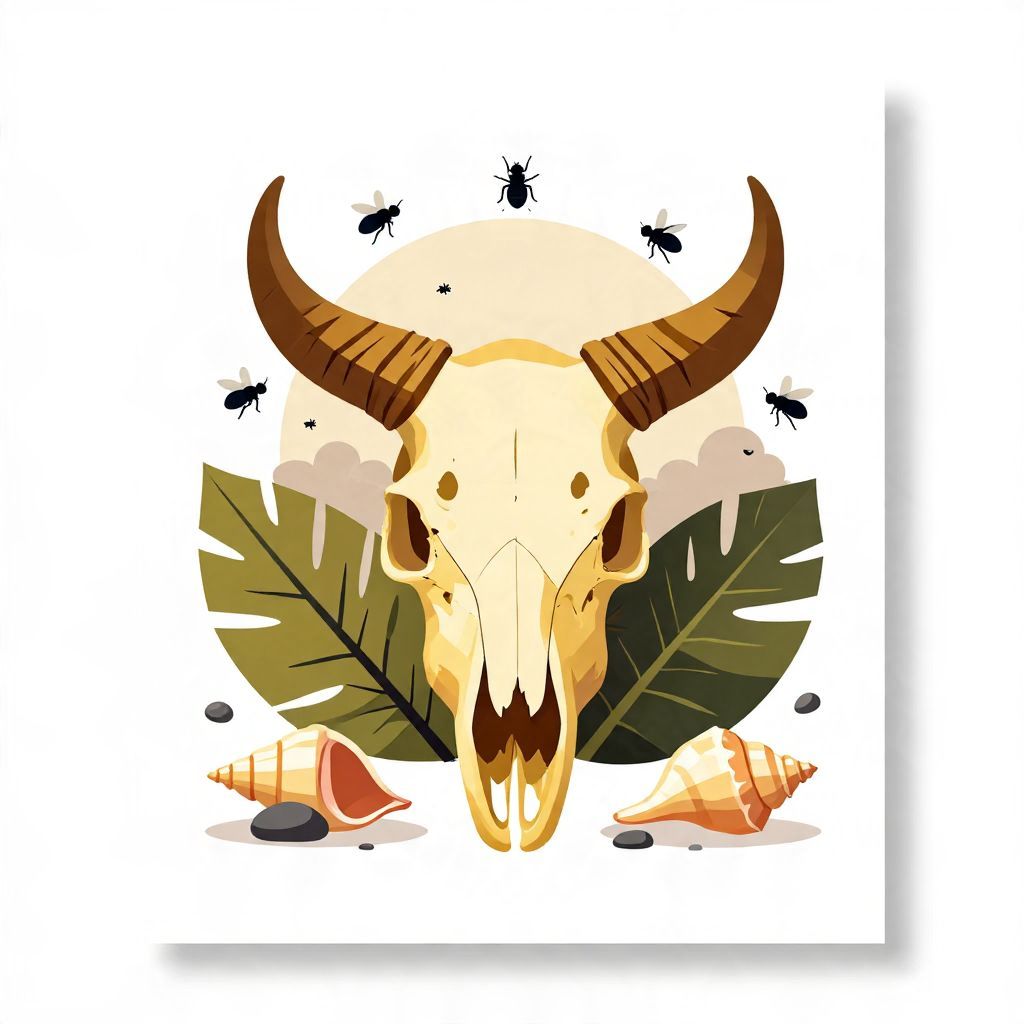
The title comes from the literal and symbolic “Lord of the Flies” in the novel: a pig’s head left on a stick, swarming with flies, which becomes a grim emblem of evil, fear, and the boys’ descent into savagery. Golding uses the phrase to connect physical decay with moral corruption.
The biblical meaning behind the title
Beelzebub and the “lord of flies”
“Lord of the Flies” is commonly understood as an English rendering linked to Beelzebub, a name associated in Judeo-Christian tradition with demonic power. Golding draws on that association to give the title a religious and moral weight beyond the island setting.
That background matters because the novel is not just about children stranded on an island. It is also a moral allegory about what happens when civilization weakens and fear begins to rule behavior.
Why Golding chose such a loaded phrase
Golding’s title signals from the start that the story will not be a simple adventure tale. Instead, it suggests a confrontation with evil, temptation, and the collapse of order. The title prepares readers for a novel in which symbols carry as much meaning as events.
The pig’s head scene and its importance
What the “Lord of the Flies” is in the novel
In the story, the boys kill a pig and place its head on a sharpened stick as an offering to the beast they fear. The head becomes covered with flies, and Simon later confronts it in one of the novel’s most famous and disturbing moments.
This object is the novel’s most direct explanation for the title. It is both a physical image of death and a symbolic image of the evil the boys have created among themselves.
Why the scene matters symbolically
The pig’s head is not just a gruesome prop. It represents the way the boys’ fear turns inward and becomes self-destructive. What they think is an outside monster is really a projection of their own violence and panic.
In that sense, the title points to a central idea in the book: the “beast” is not simply on the island. It is also inside the boys, in their impulses toward cruelty, domination, and abandonment of responsibility.
How the title reflects the novel’s major themes
Civilization versus savagery
One of the novel’s key themes is the fragile nature of civilization. The conch, the assemblies, and the signal fire all represent order, but they gradually lose authority as fear and aggression spread.
The title reinforces this theme by suggesting that beneath social rules lies something darker and more primitive. Golding’s point is not that children are uniquely evil, but that human beings are capable of sliding into savagery when restraint disappears.
Fear and the creation of monsters
The boys’ terror of the beast drives much of the plot. The title helps show that the real danger is not an external creature but the imagination of fear itself, which distorts judgment and fuels violence.
Once fear becomes collective, it can be manipulated. That is why the title feels so apt: it names a force that seems supernatural, but is actually rooted in human behavior.
Power, ritual, and corruption
As the boys form tribal rituals, the pig’s head becomes a kind of idol. The title captures how quickly symbolic acts can become corrupt when they are built on terror rather than understanding.
Golding uses this corruption to show how language, ceremony, and leadership can be twisted. The “lord” in the title is not a noble ruler but a grotesque parody of authority.
Why the title is so effective
It creates unease before the story even begins
The phrase “Lord of the Flies” sounds strange and disturbing, which makes it memorable. Even before readers understand its meaning, the title prepares them for a novel that is unsettling rather than comforting.
That unease is intentional. Golding wants readers to feel that the story will challenge easy ideas about innocence, childhood, and morality.
It works on both literal and symbolic levels
Good literary titles often operate in more than one way, and this one does exactly that. Literally, it refers to the rotting pig’s head. Symbolically, it points to evil, decay, and the dark forces shaping the boys’ behavior.
Because of that double meaning, the title remains powerful even after readers finish the book. It is not just a label; it is a clue to the novel’s deepest concerns.
What the title tells us about Simon’s role
Simon’s insight into the beast
Simon is the character most able to understand what the “Lord of the Flies” represents. He recognizes that the beast is not a separate creature but something connected to the boys themselves.
His insight makes him one of the novel’s moral centers. He sees more clearly than the others, but his truth is not welcomed, which makes the title even more tragic.
The title and the novel’s tragic structure
The pig’s head scene is tied to Simon’s death and the breakdown of reason on the island. The title therefore points not only to symbolism but also to the novel’s tragic movement from order to chaos.
By the end, the “Lord of the Flies” stands for the triumph of irrational fear and violence over empathy and self-control.
Common questions readers ask about the title
Is the title meant to be literal?
Partly, yes. It refers to the actual pig’s head on the stick. But Golding uses that literal object to express a larger symbolic meaning about evil and human nature.
Does the title mean the boys are possessed?
Not in a straightforward supernatural sense. The novel is better understood as a psychological and moral allegory. The “evil” in the book emerges through the boys’ choices, fears, and group behavior rather than through a confirmed external demon.
Why not call the novel something simpler?
A simpler title would not capture the novel’s layered meaning. Golding’s phrase is unsettling, allusive, and symbolic, which suits a book that explores how quickly civilization can unravel.
Key details to remember
- The title refers to Beelzebub, a name linked to demonic evil in biblical tradition.
- It also refers to the pig’s head left on a stick, covered with flies.
- The title symbolizes corruption, fear, and the darkness within human beings.
- It supports the novel’s themes of civilization versus savagery, power, and moral collapse.
- Simon’s insight helps explain the title’s deeper meaning: the beast is not just outside the boys, but within them.
Why the title still matters to readers today
Lord of the Flies remains memorable because its title captures the novel’s central warning in just a few words. It suggests that civilization is fragile, fear can be contagious, and human beings are not as innocent as they may seem.
So, why is Lord of the Flies called Lord of the Flies? Because the title names both the novel’s most important symbol and its deepest idea: that the real monster is often the one people create, then fail to recognize in themselves.
If you want to explore the novel’s symbolism further, you may also find these related articles useful: what the beast symbolizes in Lord of the Flies and what the Lord of the Flies symbolizes.