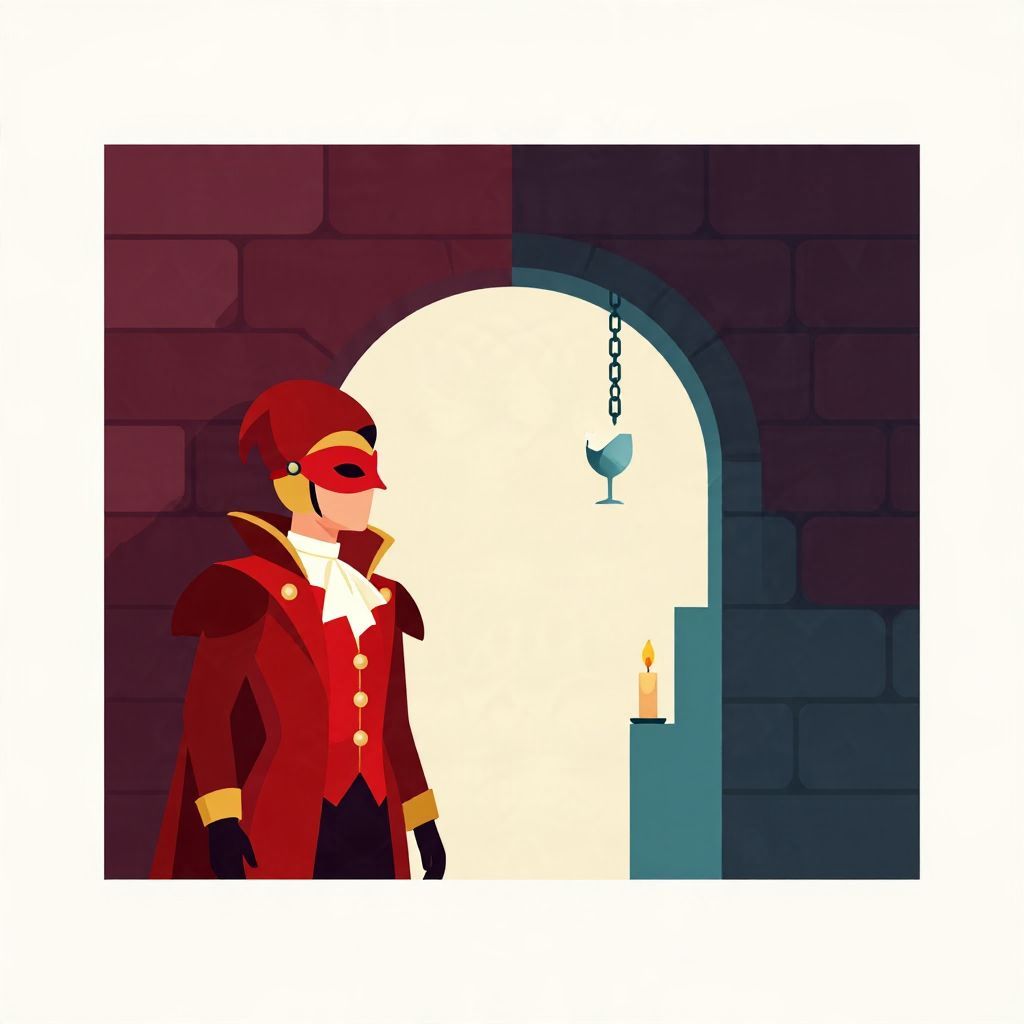
If you’re asking what Fortunato did to Montresor, the short answer is that Edgar Allan Poe’s story never gives a single clear offense. Montresor claims Fortunato has injured him “a thousand times” and that he will take revenge, but the exact wrong is left vague on purpose. That uncertainty is central to the story’s power.
The Cask of Amontillado is less about a provable crime than about obsession, pride, and revenge. Readers are meant to question both men’s motives, especially Montresor’s reliability, while watching a chilling act of calculated vengeance unfold.
What did Fortunato do to Montresor?
In Poe’s story, the exact offense is never identified. Montresor says Fortunato has caused him “a thousand injuries” and an insult that he must punish, but Poe withholds the details. This ambiguity makes the tale a study of revenge, pride, and the dangers of taking offense too far.
Book summary of The Cask of Amontillado
The story follows Montresor, who lures Fortunato into the catacombs during carnival season by promising to let him taste a rare wine called Amontillado. Fortunato, who prides himself on knowing about wine, eagerly follows him deeper underground.
As they descend, Montresor pretends concern for Fortunato’s health while quietly guiding him toward his trap. When they reach a hidden niche, Montresor chains Fortunato inside and walls him up alive, leaving him to die in the darkness. The story ends with Montresor claiming that no one has disturbed the bones for half a century.
Spoiler note: the ending
The final horror is not only the murder itself, but Montresor’s calmness. Poe closes the tale with a confession told many years later, which makes the narration even more disturbing because the speaker shows no remorse.
Why the story leaves Fortunato’s offense unclear
Poe’s decision not to name the insult is deliberate. By withholding the cause, he shifts attention away from the facts of the quarrel and toward Montresor’s psychology. The reader is pushed to ask whether the revenge is justified, exaggerated, or entirely self-serving.
The vagueness also mirrors the story’s unreliable narration. Montresor presents himself as rational and wronged, but because we hear only his version, we cannot know whether Fortunato truly committed a serious offense or whether Montresor is inflating a slight into a murder-worthy grievance.
Main characters and what they represent
Montresor
Montresor is the narrator and avenger. He is intelligent, patient, and methodical, but also deeply cold. His careful planning shows control; his need to punish shows vanity and fixation.
Fortunato
Fortunato is a wealthy, confident man who prides himself on his expertise in wine. He is vulnerable because of his arrogance and because he underestimates Montresor. His name, which suggests “fortunate,” becomes bitterly ironic.
Supporting figures
Minor characters appear only briefly, but they help set the scene. The carnival crowd, the servants, and the family context all support the sense that Montresor can act without interruption or accountability.
Themes in The Cask of Amontillado
Revenge
Revenge is the story’s central force. Montresor does not simply want Fortunato harmed; he wants a punishment that he believes will be complete and final. Poe presents revenge as a consuming obsession rather than a satisfying resolution.
Pride and vanity
Both men are driven by pride. Fortunato’s confidence in his own knowledge makes him easy to manipulate, while Montresor’s pride makes him unable to let an insult pass. The story suggests that wounded ego can become destructive when it turns into vengeance.
Deception
Nearly every interaction in the story is a performance. Montresor uses politeness, false concern, and flattery to guide Fortunato toward death. The tale shows how language can disguise cruelty.
Isolation and entrapment
The catacombs are more than a setting; they are a symbolic trap. As the characters move deeper underground, the atmosphere becomes increasingly enclosed, reflecting the tightening noose of Montresor’s plan.
Symbols and setting
The catacombs
The underground vaults symbolize death, secrecy, and burial. They also create a physical descent that mirrors the moral descent of the narrative. The setting makes the final act feel inevitable once the pair enters the darkness.
The carnival
Carnival contrasts with the catacombs. Above ground, there is noise, masks, and celebration; below ground, there is silence and death. That contrast heightens the story’s irony, since Fortunato is surrounded by festivity while walking into his doom.
The jester costume
Fortunato’s costume, especially the cap and bells, reinforces the irony of his fate. He is dressed for laughter, yet he becomes the victim of a deadly joke. The costume also suggests how Montresor sees him: as someone foolish enough to be led astray.
Literary techniques Poe uses
Unreliable narration
Montresor tells the story in a way that invites suspicion. He never proves his grievance, and he speaks with eerie confidence about murder. This gap between what he says and what the reader believes is one of Poe’s most effective techniques.
Dramatic irony
The reader understands much earlier than Fortunato that the wine tasting is a trap. Fortunato’s cheerful trust makes the scene more tragic and unsettling, because we watch him walk toward danger without realizing it.
Foreshadowing
Poe plants repeated hints that something is wrong: the damp catacombs, the nitre on the walls, Fortunato’s cough, and Montresor’s insistence on turning back. These details quietly prepare the reader for the ending.
Irony
The story is built on irony. Fortunato, who believes himself clever, is deceived. Montresor, who seeks control, is haunted by his own need to recount the crime decades later. Even the title of the wine, Amontillado, becomes part of the trap.
Why the story still matters
The Cask of Amontillado remains widely read because it is compact, memorable, and psychologically sharp. In a few pages, Poe creates a story about social insult, private resentment, and the terrifying logic of revenge.
It also works as a character study. Fortunato’s mistake is not only that he trusts Montresor, but that he cannot imagine a grudge severe enough to threaten his life. Montresor’s mistake is more chilling: he believes revenge can restore balance, yet the story leaves him morally ruined.
Is Montresor justified?
The story does not answer that question directly, and that is part of its design. Some readers speculate that Fortunato may have mocked Montresor, insulted his family, or damaged his standing in some way. But none of those possibilities are confirmed in the text.
Because the offense is hidden, the more useful question may be whether any insult can justify murder. Poe seems to suggest that once revenge becomes absolute, it destroys proportion, reason, and humanity.
Who should read this story?
- Readers interested in classic Gothic fiction
- Students studying unreliable narrators or irony
- Anyone exploring themes of revenge and psychological suspense
- Fans of short stories with a dark, memorable twist
Quick review
The Cask of Amontillado is one of Poe’s most effective short stories because it combines a simple setup with deep psychological unease. Its power comes from what is said, what is hidden, and what is never explained.
If you came here wondering what Fortunato did to Montresor, the honest answer is that Poe never tells us for sure. That uncertainty is exactly what makes the story so haunting.
For more literary analysis, you may also enjoy a closer look at the theme of The Cask of Amontillado and an analysis of the theme of Harrison Bergeron.