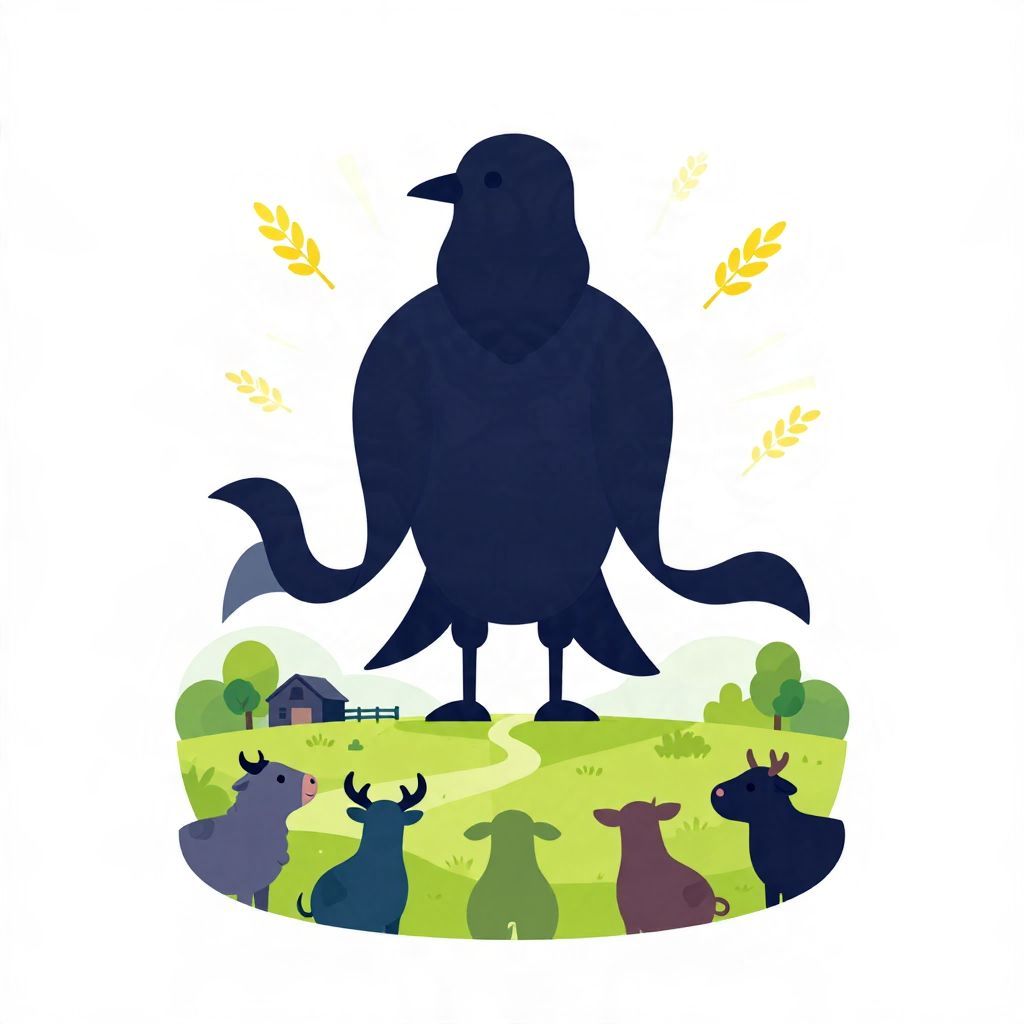
If you’re asking who Moses represents in Animal Farm, the short answer is that he is usually read as a symbol of organized religion, especially the way religion can be used to comfort people while also helping preserve power. Orwell gives Moses a special role on the farm: he speaks of Sugarcandy Mountain, a promised afterlife that distracts the animals from their harsh present.
That interpretation fits the novel’s political satire, but Moses is more than a simple symbol. He also shows how belief, consolation, and manipulation can overlap when authority wants obedience rather than truth.
Who does Moses represent in Animal Farm?
Moses represents religion as a social force, particularly the kind that offers hope of reward after death while discouraging resistance in the present. In Orwell’s allegory, Sugarcandy Mountain works like a comforting illusion: it gives the animals something to believe in, but it also helps keep them passive under exploitation.
Why Orwell includes Moses in the novel
A figure of consolation
Moses is not one of the main political leaders, and that matters. He appears at the edges of the story, telling the animals about a better place after death. His tales are soothing, especially to animals whose daily lives are full of labor, hunger, and fear.
Orwell uses this to show how people in difficult conditions may be drawn to promises that cannot be tested. The comfort is real, but so is the danger: if hope is always shifted into the future, injustice in the present can continue unchallenged.
A tool of control
On the farm, Moses’ stories are tolerated and sometimes encouraged because they do not threaten the rulers. That makes him different from characters who directly challenge power. His religion does not organize rebellion; it redirects attention away from it.
This is one reason readers often connect Moses to the historical role of religion in supporting established authority. Orwell is not simply mocking faith itself. He is criticizing how belief can be used, by leaders or institutions, to make oppression easier to endure.
How Moses fits the allegory
Religious symbolism in the novel
Animal Farm is an allegory, so many characters and institutions have symbolic meanings. Moses is part of Orwell’s broader critique of systems that shape public belief, including propaganda, ideology, and religion. He belongs to the novel’s pattern of competing narratives: the pigs rewrite history, Squealer manipulates language, and Moses offers a heavenly alternative.
Together, these figures show that control is not only physical. It is also mental and emotional. Whoever controls the story of reality can control how others respond to suffering.
Why Sugarcandy Mountain matters
Sugarcandy Mountain is Moses’ imagined paradise, where animals supposedly go after death. It is easy to read this as a parody of heaven, but the point is sharper than simple parody. Orwell shows how a promised reward beyond life can make present hardship seem bearable, even natural.
That idea is central to the novel’s political meaning. If the animals believe their suffering will be compensated later, they may be less likely to demand justice now.
Moses and the theme of propaganda
Different kinds of falsehood
One of the most interesting things about Moses is that he is not the same as the pigs, even though all of them shape belief. The pigs lie strategically to maintain power. Moses tells a story that is not presented as a political lie in the same direct way, but it still functions as a distraction from reality.
That difference helps Orwell broaden the novel’s critique. Propaganda does not always look like a formal speech or a rewritten commandment. Sometimes it arrives as a comforting myth that makes people easier to govern.
Why the animals listen to him
The animals are vulnerable to Moses because they are exhausted and frightened. When life is brutal, a story about a peaceful afterlife can feel deeply appealing. Orwell understands that belief is not only intellectual; it is emotional and practical.
In that sense, Moses is believable. He is not a cartoonish villain. He is a reminder that people often accept comforting ideas not because they are foolish, but because they are suffering.
Does Moses change over the course of the book?
Yes, but only slightly. At first, Moses is treated with suspicion by the pigs, because his stories compete with revolutionary enthusiasm. Later, he is allowed back on the farm, which suggests that the rulers have learned to tolerate anything that keeps the animals docile.
His return is significant because it shows that the regime is willing to use whatever helps preserve stability, even if that means embracing what it once rejected.
Common exam or discussion points about Moses
- Symbolism: Moses represents religion, especially religion as consolation.
- Function in the plot: He distracts the animals from their suffering with the idea of Sugarcandy Mountain.
- Thematic role: He supports Orwell’s critique of manipulation, obedience, and false hope.
- Allegorical purpose: He helps show how power can be maintained through belief, not just force.
- Tone: Orwell treats him with irony, but not with simple contempt.
Is Moses only a symbol of religion?
Religion is the main reading, but some readers also see Moses as a broader symbol of any belief system that comforts people without changing their circumstances. In that sense, he can stand for escapism, denial, or the human desire to imagine justice when reality feels unbearable.
Still, the most established interpretation is religious. If you are answering a class question or writing an essay, that is the safest and most accurate explanation to lead with.
How to write about Moses in an essay
A simple thesis idea
You could argue that Moses represents religion in Animal Farm, and that Orwell uses him to show how promises of heavenly reward can discourage animals from challenging injustice on earth. That thesis is clear, text-based, and easy to support with the role of Sugarcandy Mountain.
What to mention in support
- His stories of Sugarcandy Mountain.
- The way the animals react to his tales.
- His relationship to the pigs’ changing attitude toward him.
- The novel’s wider concern with propaganda and control.
Why this character matters
Moses may seem minor, but he helps Orwell make a larger point. Power is strongest when it can shape not only what people do, but what they hope for. Moses represents a kind of hope that is comforting yet politically harmless to those in charge.
That is why his presence matters so much in such a short novel. He helps explain how oppression can survive even when everyone knows life is unfair.
If you want to compare Moses with other symbolic figures in Orwell’s novel, you may also find it helpful to read about who Napoleon represents in Animal Farm.