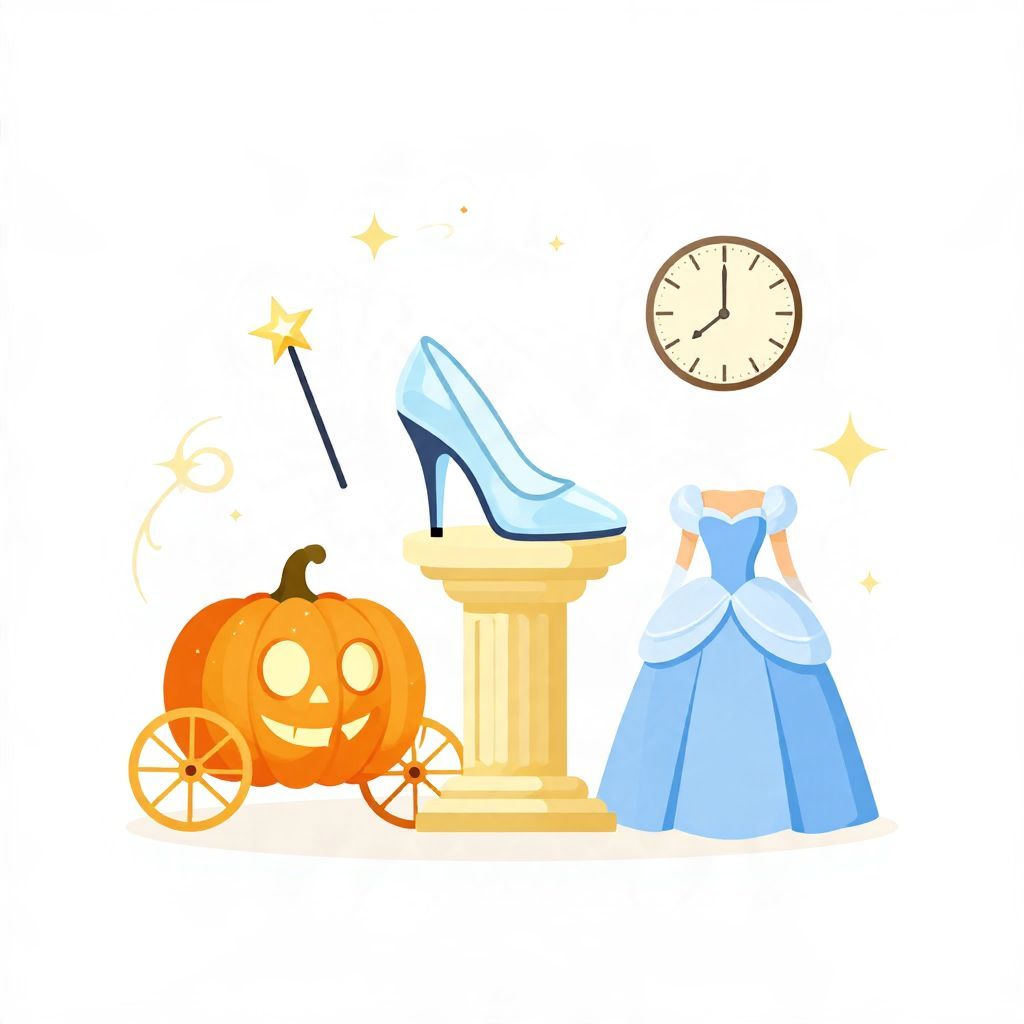
When readers ask what is the theme of Cinderella, they are usually looking for more than a fairy-tale summary. They want the deeper idea the story keeps returning to: how hardship, kindness, hope, and transformation shape a person’s fate.
Cinderella is a simple story on the surface, but its themes have made it one of the most enduring tales in world folklore. Different versions emphasize different lessons, yet the core emotional appeal remains the same: a mistreated heroine is eventually recognized, rewarded, and changed by a moment of grace.
What Is the Theme of Cinderella?
The main theme of Cinderella is hope rewarded after suffering. The story also explores kindness, justice, resilience, transformation, and the idea that inner worth matters more than social status. Across versions, Cinderella’s patience and goodness are contrasted with cruelty and vanity, creating a moral pattern in which virtue is eventually seen and honored.
Why Cinderella’s Theme Still Resonates
Cinderella endures because it speaks to a universal wish: that unfairness will not last forever. The story offers emotional comfort by imagining a world where hidden value is finally recognized.
That appeal is not only about romance or wish fulfillment. It is also about dignity, survival, and the belief that a person’s identity is not defined by how others treat them.
1. Hope in the face of hardship
One of the clearest themes in Cinderella is endurance through suffering. Cinderella is often isolated, overworked, and belittled, yet she does not lose her essential goodness.
This makes the story especially powerful for readers who recognize the experience of being overlooked or underestimated. The tale suggests that hardship is real, but not final.
2. Kindness as a form of strength
Cinderella is usually portrayed as gentle, polite, and generous, even when others are cruel to her. In many versions, this kindness is not passive weakness; it is a moral strength that distinguishes her from the people who mistreat her.
The story implies that compassion has value even when it is not immediately rewarded. Cinderella’s character matters before the transformation, not only after it.
3. Justice and recognition
Another major theme is the restoration of justice. The tale creates a sharp contrast between the unfair treatment Cinderella receives at home and the eventual public recognition she gains at the ball or through the prince’s search.
This is why the story feels emotionally satisfying: the world of the tale corrects an imbalance. Cinderella is not merely rescued; she is seen.
Core Themes in Cinderella
While the exact emphasis varies by version, several recurring themes appear again and again in literary retellings and folk versions of the tale.
- Transformation — Cinderella’s life changes dramatically, often through magic, but the deeper transformation is social and emotional.
- Inner worth — The story values character over wealth, beauty, or family rank.
- Perseverance — Cinderella survives humiliation and labor without giving up.
- Justice — Cruelty is exposed, and goodness is rewarded.
- Identity — The tale asks who Cinderella really is beneath her assigned role.
- Hope — The story insists that a better future is possible, even from a position of powerlessness.
Character Roles and What They Represent
Cinderella
Cinderella often functions as the moral center of the story. She is not usually written as ambitious in a worldly sense; instead, she represents patience, decency, and hidden potential.
Her character also reflects a classic fairy-tale pattern: the underestimated figure whose true value is revealed only after a dramatic change in circumstances.
The stepfamily
The stepmother and stepsisters often symbolize envy, vanity, and social cruelty. They are not simply personal antagonists; they embody the forces that try to keep Cinderella in a lower position.
In some versions, they are comic and exaggerated. In others, they are more psychologically harsh, making the story feel closer to domestic realism.
The fairy godmother or magical helper
The magical helper represents intervention, grace, or fate. This figure makes visible a central fairy-tale idea: help can arrive from beyond ordinary social structures.
Depending on the version, the helper may be a fairy godmother, a tree, birds, or another supernatural force. The function is similar even when the form changes.
The prince
The prince is often less a fully developed character than a narrative catalyst. He represents recognition, mobility, and the possibility of a new life.
In literary terms, he is part of the story’s resolution structure: the one who confirms Cinderella’s identity and restores her to public visibility.
Symbols and Motifs That Support the Theme
The glass slipper
The glass slipper is one of the most famous symbols in fairy-tale literature. It stands for uniqueness, fit, and recognition: only Cinderella truly belongs to it.
It can also be read as a symbol of identity. The slipper does not create Cinderella’s worth; it reveals what was already there.
The pumpkin, dress, and carriage
These magical objects symbolize temporary transformation. They show how quickly Cinderella’s external circumstances can change, even if her inner self remains the same.
That contrast matters. The story suggests that appearance and status are unstable, while character endures.
The midnight deadline
Midnight introduces tension, but it also reinforces the theme that transformation is temporary unless something deeper changes. The magic cannot last forever, which makes the moment both beautiful and fragile.
In many readings, midnight reminds us that social change is difficult and that wonder must be balanced by reality.
Literary Meaning: What Cinderella Is Really Saying
At its heart, Cinderella is a story about recognition. Cinderella begins as someone whose value is ignored, then becomes someone publicly acknowledged as worthy of love, status, and happiness.
That recognition can be read in several ways. Morally, it rewards goodness. Socially, it challenges the assumption that rank equals value. Psychologically, it gives shape to a common human desire: to be understood for who you truly are.
Fairy tale structure and moral clarity
Cinderella uses a classic fairy-tale structure with clear oppositions: good versus cruel, humble versus proud, hidden versus revealed. This simplicity is part of its power.
Because the story is so direct, its themes are easy to grasp even for young readers, yet the emotional and symbolic layers remain rich enough for adult interpretation.
Transformation as social fantasy
The tale is often read as a fantasy of upward mobility. Cinderella moves from servitude to celebration, from invisibility to admiration.
But the story is not only about becoming rich or marrying well. It is about escaping humiliation and entering a world where one’s true worth can finally be acknowledged.
Different Versions, Different Emphases
Cinderella exists in many cultural forms, and each version can shift the thematic emphasis slightly. Some versions are more focused on obedience and virtue, while others stress cleverness, endurance, or supernatural justice.
Because of that, it is better to think of the tale as a family of stories rather than one fixed text. The theme remains recognizable, but the moral tone can change depending on the tradition.
- Some versions emphasize obedience and patience.
- Some emphasize magical rescue and wonder.
- Some place more weight on family cruelty and social injustice.
- Some retellings modernize the theme into self-discovery and independence.
How to Explain Cinderella’s Theme in One Sentence
If you need a concise answer, you could say this: The theme of Cinderella is that kindness, patience, and inner worth can survive cruelty and eventually be recognized and rewarded.
That sentence captures the story’s emotional center without reducing it to only romance or magic. It also reflects why the tale continues to be adapted in literature, film, and children’s storytelling.
Why the Theme Matters in Literary Study
In literary analysis, Cinderella is often used to show how folklore communicates cultural values through repetition and variation. The tale is simple enough for children, but its themes invite discussion about gender roles, class, family power, and social mobility.
It also demonstrates how symbols and plot can carry meaning without lengthy explanation. A lost shoe, a midnight escape, and a sudden recognition scene can express an entire moral worldview.
Quick Takeaway
The theme of Cinderella is not just “a girl gets a prince.” It is a story about surviving cruelty, preserving goodness, and being recognized for one’s true value. That is why the tale has lasted for centuries: it turns hope into narrative form.
If you want to explore more Cinderella-related literary questions, you may also enjoy reading about Cinderella’s real name and where Cinderella takes place.